Comet 3I/ATLAS Reveals Wobbling Jets and X-ray Glow in Historic Flyby

“It started with just a faint dot on the ATLAS survey data, a ‘garden variety’ transient object noticed by astronomer Larry Denneau on July 1st, 2025. Shortly afterwards, its orbits were calculated to confirm the shocking fact: comet 3I/ATLAS is not from around here. In fact, this comet has been hurtling through the interstellar medium for billions of years and making its one-and-only pass on its way out of our solar system. Surely enough, on December 19th, 2025, it came as close as 168 million miles to our home planet. This is just about as rare an event for astronomers as one can imagine just in time to study it before it disappears into our galaxy forever.”
1. A Rare Interstellar Visitor
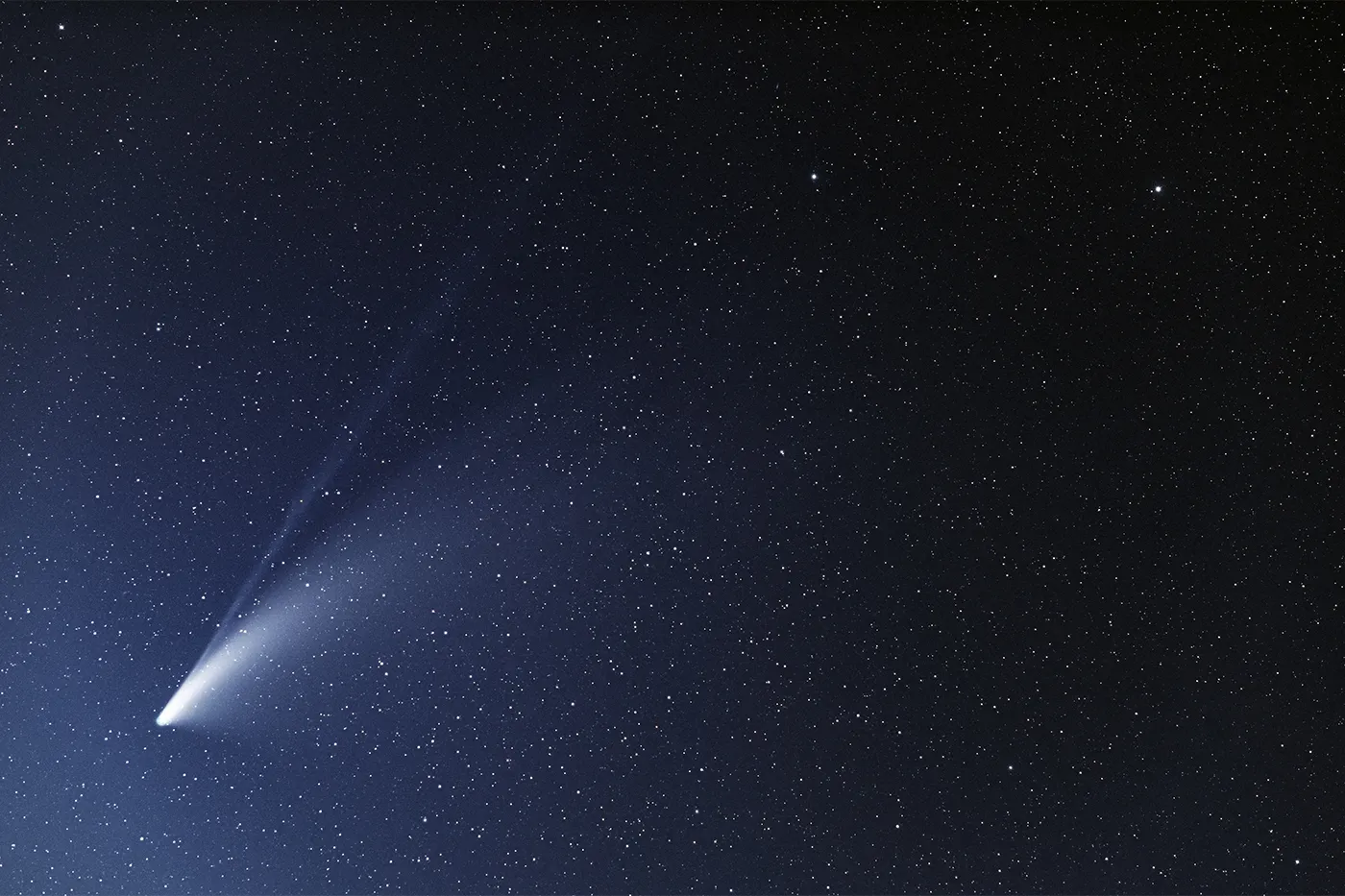
3I/ATLAS is the third known interstellar object, after 1I/‘Oumuamua in 2017 and 2I/Borisov in 2019. In contrast to ‘Oumuamua, an asteroid, ATLAS is an active comet, sporting a coma and double tails produced by vaporization from sunlight. With its nucleus measuring between 1,000 feet and 3.5 miles, ATLAS is moving at 144,100 mph away from our solar system in March 2026, orbiting Jupiter and sporting a hyperbolic orbit that will take it no home again.
2. Discovery and Global Observation Campaign
It was detected by the ATLAS telescope in the Chilean observatory, but soon, other telescopes and spacecraft throughout our solar system were on the hunt. NASA orchestrated a record-breaking observation campaign using a dozen different assets, ranging from orbiters at Mars to solar mission spacecraft at the rim of the sun itself. It was even glimpsed by the Perseverance rover on Mars. These collective sightings are helping scientists determine how the ATLAS comet compares to comets that originate in our cosmic neighborhood.
3. Wobbling Jet Confirms Rotation
A major discovery was made by the Two-meter Twin Telescope at the Teide Observatory on the island of Tenerife. After 37 nights worth of observations, a faint and slender jet of material was observed to emanate from a highlatitude area on the sunlit side of the nucleus. This material had a subtle periodic waggle that enabled estimates for the rotational period of 15.48 ± 0.70 hours. As quoted by Miquel Serra-Ricart, “Comet 3I/ATLAS is an extraordinarily normal interstellar comet,” with the processes for activity despite being an interstellar comet ”much the same as for local comets.”
4. X-ray Glow Extending 250,000 Miles
The European Space Agency’s satellite XMM-Newton and Japan’s XRISM satellite found an enormous X-ray halo around ATLAS, extending 400,000 kilometers from its center. The lighting is a result of gases in its coma being exposed to the solar wind and is indicative of how its volatile materials react to their energy-rich surroundings after an eternity in space.
5. Insights from Europa Clipper Ultraviolet
The Europa Clipper spacecraft from NASA, bound for Jupiter, took advantage of a rare opportunity to study ATLAS from 103 million miles away while observations from Earth telescopes were obscured from the Sun. The ultraviolet spectrograph on the Europa Clipper captured a “behind the tails” observation of the comet with signatures of oxygen, hydrogen, and dust that reveal high levels of outgassing post-comet perihelion passage in October. “Our observations have enabled a unique and nuanced view of the comet,” said Kurt Retherford of the Southwest Research Institute.
6. Spectral Fingerprint & Composition
The reflectance spectrum of ATLAS was obtained using ESO’s X-SHOOTER instrument with wavelength coverage from 300-2500 nm. The comet has been observed to have a moderately red slope, being approximately 1.86 times redder than 2I/Borisov, although this might be because of the presence of bigger dust grains or space weathering. What is surprising is that the upper limit of water and hydrogen cyanide production was low, indicating that it must be rich in CO₂.
7. Comparing Interstellar Inter
Every interstellar object has had a unique tale to tell. While ‘Oumuamua behaved in a way that made people wonder about alien craft, Borisov acted much like known solar system comets, only with altered chemistry. The ATLAS represents a midpoint among these objects – different in chemistry but similar in appearance – allowing astronomers to improve their theories about how material is transmitted from planets to interstellar space. There could be dozens every year that could be intercepted while en route, with the aid of future sky surveys, such as the Rubin Observatory.
8. Public Fascination and Viral Speculation
Since the day of its discovery, ATLAS has captured everyone’s imagination. There were rumors of it being of alien origins, but then NASA Associate Administrator Amit Kshatriya was unequivocal about it, saying, “It looks like a comet, acts like a comet, and by all accounts, it is a comet. But it originated outside of our planet’s solar system.” The apt timing of its arrival, when there was a lot of talk about finding life in space, helped it go viral.
9. Methods to Successfully Identify and Monitor ATLAS
It was too small for viewing without magnification and needed an 8-inch telescope. For many, online viewing from Gianluca Masi’s Virtual Telescope Project was the way to see it, although waiting because of weather conditions was frustrating. Websites like NASA’s Eyes on the Solar System allowed viewing orbit tracks, or telescoping apps identified its location near Regulus in Constellation Leo. But as it heads away into the outer reaches of our solar system, it will be years before the findings of this visit come into focus. In its wobbling jet, its X-ray emission, and its ultraviolet spectrum, researchers search for much more than a comet: they see a messenger star in which, for a moment, a divide between worlds is crossed.