Scientists Found a Stress Limit Where Liquids Snap
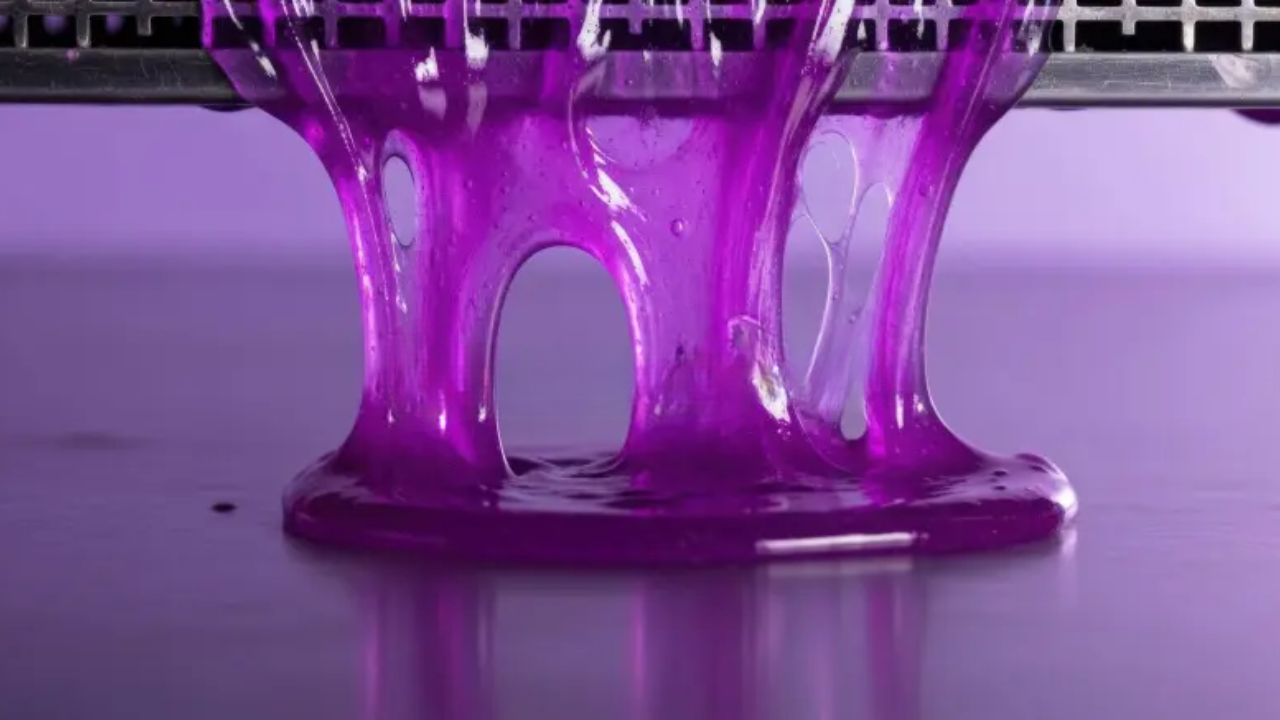
Liquids were not supposed to do this. A team of scientists from Drexel University has shown that if the stretching of a liquid occurs fast enough, even the most ordinary of liquids will stop flowing and fail in a fashion that appears to be shockingly solid. The liquid that was used in this study did not simply continue to neck down into a smaller and smaller string. Instead, it reached a certain threshold of stress and then snapped. This contradicts one of the presuppositions that was originally used as a background for the way that classical fluid dynamics works. The presupposition that was contradicted was that ordinary liquids do not shatter from the influence of a certain kind of tension but instead continue to flow away from it.

The reasons why this occurred are the viscosity of the liquid and the rate. When the liquid was pulled slowly enough, it was able to respond to this by flowing and relieving the pressure. However, if the liquid was pulled fast enough, then the pressure was applied before the liquid was able to respond. The way that this occurred was explained by Thamires Lima of the university. Our findings show that if pulled apart with enough force per area, a simple liquid a liquid that flows will reach what we call a point of ‘critical stress,’ when it will actually fracture like a solid. The speed that this liquid was pulled varied depending on the viscosity. The threshold that was reached in this study was around 2 megapascals of tension.
The researchers were amazed at what they had discovered, which is why they conducted the experiment more than once. The researcher, Nicolas Alvarez, said, “What we observed was so unexpected that we needed to repeat the experiments a few more times to make sure it was real.” The high-speed imaging revealed that the liquid was separating in the same manner that brittle materials would. The separation caused a loud noise. “The fracture caused a very loud snapping noise that actually startled me.”
But what makes the findings more interesting is that even if they had changed the liquid system, the findings still remained the same. According to the Drexel University report, When we used a chemically different simple liquid with similar viscosity, we still observed fracture in the liquid system. When we carried out tests with temperature changes, we still saw evidence of stress-governed behavior. It is in that sense that we say that what we have discovered is not only interesting but also significant, indicating that fracture in liquid systems is not entirely dependent on elasticity but on whether viscosity can be used as a temporary stress-governed system.
The finding is also of interest in relation to manufacturing processes in which extension, thinning, and fracture control are used in liquid systems. In fiber spinning and jetting, these processes are already carried out in a limited range in which the liquid is extended without fracturing. In rheology studies of thickened liquid systems in manufacturing processes, it has already been shown how much the structure of molecules affects stress response in fluids, such as shear thickening and thinning, thixotropy, and elasticity. In one such 2026 study of polymer, guar-based, and xanthan-based fluids, it was found, in particular, that with more entangled structures of molecules, it is not only possible to make the fluid less susceptible to deformation but also to greatly affect its thermal stability and recovery after being subjected to shear stress. The finding of Drexel University is not comparable to such rheology studies of liquid systems, although it is of interest in another sense, in relation to the complexity of the liquid-solid distinction in fluid mechanics.
There is also an engineering side. The researchers at Drexel discovered that it was possible that their findings could be used in hydraulics, 3D printing, or even in blood vessels. They also discovered that cavitation could be a possible mechanism of interest. Cavitation is something that is studied in relation to pumps, propellers, etc., where bubbles form. If it is discovered that liquid fracture is linked with cavitation, then it could have consequences for what engineers believe in relation to what is safely liquid in something that was previously thought to be safely liquid. The only change is conceptual. A liquid can be a liquid, yet it can break.