Victor Glover Says Artemis 2 Must Reach Beyond NASA’s Biggest Fans
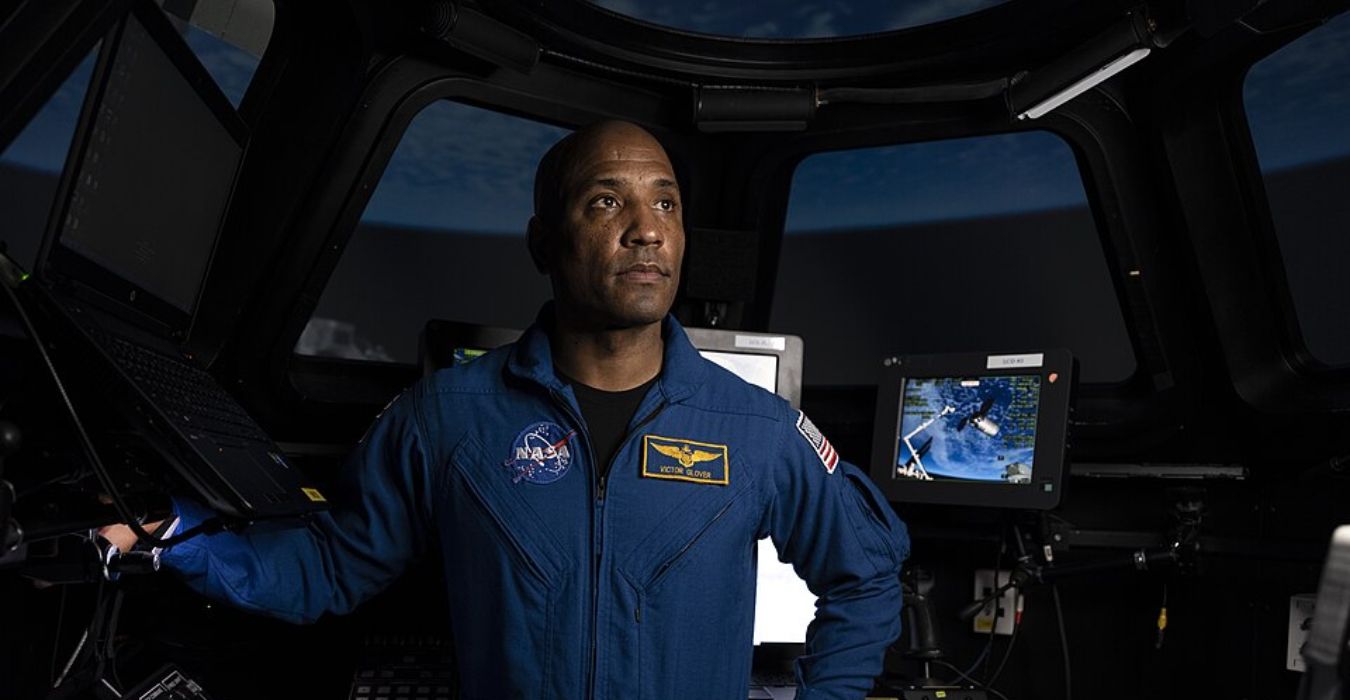
“Those people, we work for them, too.” With those words, NASA astronaut Victor Glover defined the Artemis 2 mission as something beyond a scientific test of the hardware needed to return to the moon. Glover is the pilot of NASA’s Artemis II mission, the space agency’s first crewed mission to fly by the moon in more than half a century. The mission, scheduled to launch in 2024, is intended to be an approximately 10-day test of the space agency’s new heavy-lift rocket, the Space Launch System, and the Orion spacecraft, which will carry Glover, commander Reid Wiseman, mission specialist Christina Koch, and Canadian Space Agency astronaut Jeremy Hansen on a journey around the moon and back to Earth. For NASA, the Artemis 2 mission is a test of the space agency’s new heavy-lift rocket and the Orion spacecraft, which will carry astronauts on a journey to the moon and back. For Glover, it is a test of his role in the public eye.

That is why Glover has talked less about his personal achievements than about his audience. The Artemis 2 mission will make history by launching the first woman and the first non-American astronaut beyond low Earth orbit. Glover also is scheduled to make history by becoming the first Black astronaut to venture beyond low Earth orbit, but Glover has talked about the mission in terms of his audience, not in terms of his personal achievements.
His own background also lends an unusual weight to such an argument. Glover, who was picked by NASA in 2013 to be an astronaut, flew on the Crew-1 mission to the ISS and had 3,000 flight hours in over 40 aircraft before taking this role. He has said of his own mission: It’s really training, simulation, trust, and redundancy. And those are really key words in how we’re approaching this mission. This is also in line with the philosophy of the Orion spacecraft. It carries five independent flight computers, which include layered propulsion and other redundant systems to ensure survival of its crew in case of an emergency, with help days instead of minutes away.
This is relevant to Artemis 2 because it is not simply a symbolic flight around the moon. It is the first time astronauts will fly with the Orion and SLS. It is also intended to validate life support systems, navigation, communications, and manual systems in deep space. During this flight, it is expected to involve proximity operations, flying beyond near-Earth navigation support, passing behind the moon during radio blackout, and returning at lunar reentry speeds. It is also intended to follow the uncrewed Artemis I test flight in 2022. It is also intended to provide a baseline for other missions tied to NASA’s Moon-to-Mars exploration plans. However, Glover’s public statements also look backward.
He referenced Gil Scott Heron’s “Whitey on the Moon” as a reminder that there have always been citizens of a nation that have felt disenfranchised from the benefits of a nation’s space program. He referenced the famous confrontation between Apollo 11 protesters and the leaders of NASA that occurred in 1969 at the Kennedy Space Center as a reminder of the need to be heard, not ignored. In this way, the mission of the Artemis 2 spacecraft can be seen as a test of whether or not that institution of listening still exists. The spacecraft may be hurtling toward cislunar space, but Glover’s argument begins and ends on the planet where the true constituency of any space program does not simply include those who are cheering on every step of the way. This may be one of the things that will endure longest with respect to Artemis 2. Not only are humans going back to deep space, but also the case for going has to be made person by person.