


Artemis II Earth Photos Show What Orion Must Do Next
Artemis II’s early Earth images matter because they are more than postcard views from deep space. Imagery collected by Orion gives a glimpse of how the spacecraft operates in the harsh conditions of space. It also highlights the importance of the mission as the next step of NASA’s first manned journey to the Moon in decades. While taking four astronauts far beyond low Earth orbit, Orion also confirms the capabilities that will be further developed as the space agency prepares for even longer voyages to Mars.

One of the earliest images shows the planet surrounded by fragments of the spacecraft’s structure, including its service module located below the crew capsule and responsible for maneuvering, orbital changes, and energy supply. This detail is important as it showcases that the European Service Module is capable of performing its critical functions during the mission as designed.
Apart from showing the functionality of equipment, imagery is important from another angle as well. NASA reports that Orion carries a Nikon Z9 camera alongside a Nikon D5 used by astronauts for manual photography. The latter is one of the reasons why the mission plays a significant role in developing a set of practices and equipment astronauts will use to capture images of space during subsequent missions to the Moon, including challenging conditions of terrain observation in extreme lighting.
But there is still more to consider – the mission has been tasked with collecting scientific data from the fly by, which was performed during its fourth day. Astronauts had to complete a dozen of science objectives and observe over 30 different objects during their passage near the Moon. NASA says that observations of brown and blue hues on the planet’s surface can help understand its mineral content and geological age better. The mission therefore demonstrates how crucial human perception of space and interaction with equipment are for conducting space research.
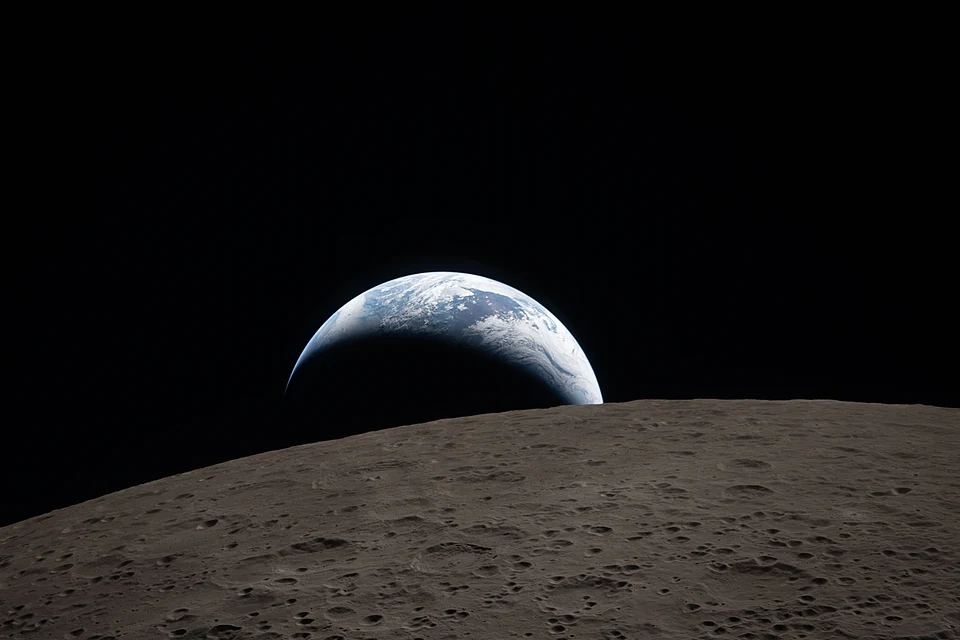
While completing its tasks, Orion has broken one more record – the spacecraft reached the distance of 252,756 miles from Earth, making this voyage one of the farthest ever. NASA also reported on Earthset that happened behind the Moon, Earthrise as the spacecraft appeared, and its passage through a solar eclipse, which lasts up to an hour. These events are remarkable, but also serve to test a wide range of capabilities, such as communication and performance, of both humans and spacecraft in space missions.
Overall, the Orion spacecraft is designed specifically for life support, communication, navigation, radiation shielding, and returning to Earth at high speed. The mission does not stop after astronauts send images of Earth from afar. Instead, they become proof of how effectively the spacecraft, the crew, and the mission design work in deep space.


