Artemis II Can’t Land on the Moon for One Crucial Reason
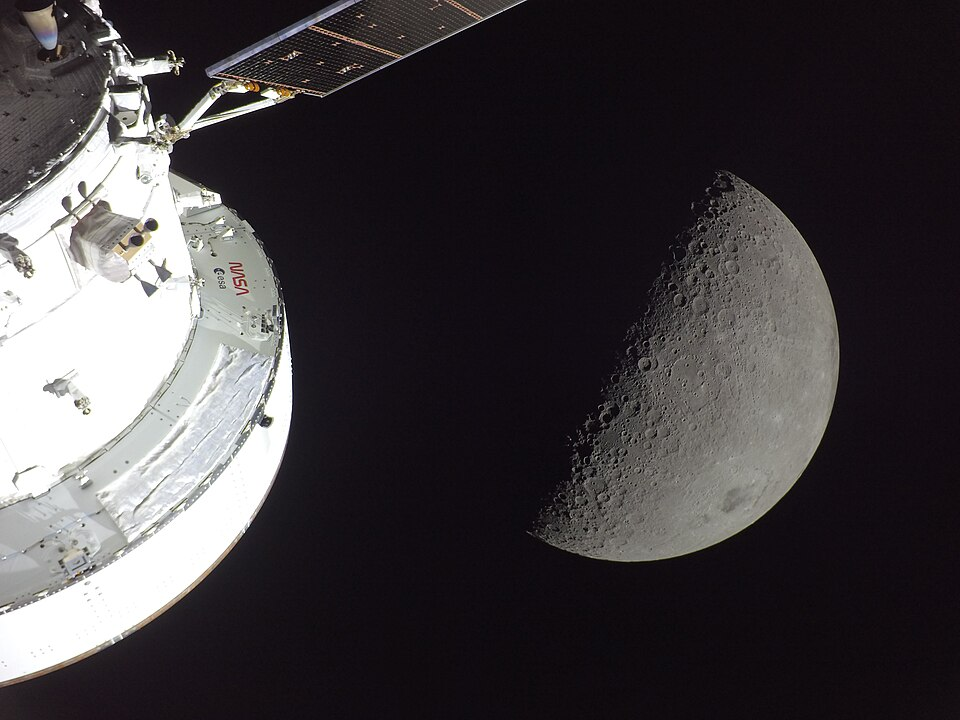
What prevents a moon mission from turning into a moon landing? For the Space Launch System (SLS) and Orion spacecraft combo, it has already stopped being a problem. After decades of development and several false starts, NASA’s Artemis II mission will mark the agency’s first piloted journey beyond low Earth orbit since Apollo 17 in 1972. So far, the mission has seen encouraging early results the successful deployment of solar arrays after liftoff and the planned sequence of burns to send Orion into the outbound journey towards the Moon. However, its true value goes beyond just completing another circumnavigation flight.

As Artemis III gets closer, its status as a surface mission gives way to one last test that the agency’s plan needs to pass before humans set foot on the lunar surface again. NASA’s Human Landing System (HLS) has yet to complete its critical phase of testing, and Artemis II is an invaluable chance to validate the Orion/SLS combination in the context of Artemis missions that will land on the lunar surface. This mission may not involve a lander, but it is all about setting the stage for the first mission that will land astronauts there.
In fact, Artemis III used to be considered NASA’s second lunar surface mission, while Artemis IV has always been assumed to be the first mission to actually get back onto the lunar surface. Now that it seems likely that Artemis III will be an orbital mission featuring commercial landers, the landing has been pushed back to Artemis IV at the earliest, scheduled for mid 2028. From NASA’s perspective, Artemis III needs to prove that landing architecture works better than landing on schedule.
Why? Because landing on the moon is no longer done by a single spacecraft designed by NASA. The HLS project requires multiple companies to develop the necessary landers, and in doing so it has created a need to make changes to the Artemis mission profile as a whole. One of the biggest changes NASA made is scrapping the requirement for a near rectilinear halo orbit for the lander vehicle. That move saved on propellant usage, but at the cost of complicating the docking process between the lander and the Orion capsule.
This is exactly why Artemis II still matters even if it doesn’t land. If everything goes according to plan with Orion and SLS launches, then the key question will be about whether a lander can arrive ready for docking, descend successfully to the South Pole of the Moon, and safely lift off from the surface. Additionally, NASA is expecting some additional testing for instance, tests for propellant transfer required by the Starship and Blue Origin versions of the lander.
However, it is worth noting that landing on the Moon’s southern pole is not an easy task. NASA has been targeting this location for years as potentially holding significant amount of water ice due to permanent shadows. The presence of water ice means that the landing location could provide the resources needed by astronauts for sustained presence on the lunar surface (i.e. breathable oxygen and fuel), but that location poses its own difficulties as well.
Artemis II might not be the moon landing that many expect it to be. In reality, it marks a crucial transition point when the rocket and spacecraft stop being just ideas that were proven to work on paper and become fully functional spacecraft. While the first landing is going to happen at Artemis IV, its success will be possible thanks to a successful execution of Artemis II.