Why Hypersonic Reentry Still Loses Contact at the Worst Moment
“Celestial navigation through the plasma sheath is a reliable way for reentry systems to navigate during GPS and radio blackout periods,” Elliott Sanders of Rhea Space Activity stated. It has been a challenge since the days of early human spaceflight, but the problem persists and takes on new meaning in today’s hypersonic world. Varda Space’s newest W6 capsule shows just how relevant the challenge is in modern terms: Not about keeping the connection open through the blackout, but about orientation and self navigation without any outside help.

The satellite was launched into space by SpaceX on its rideshare mission, Transporter16, with a small navigation module sponsored by the U.S. Space Force and Air Force Research Laboratory. The satellite contains two cameras and a flight computer aimed at demonstrating autonomous navigation in the hardest conditions of reentry amid plasma sheath generated by a 10 minute long blackout period characteristic of aerospace communications.
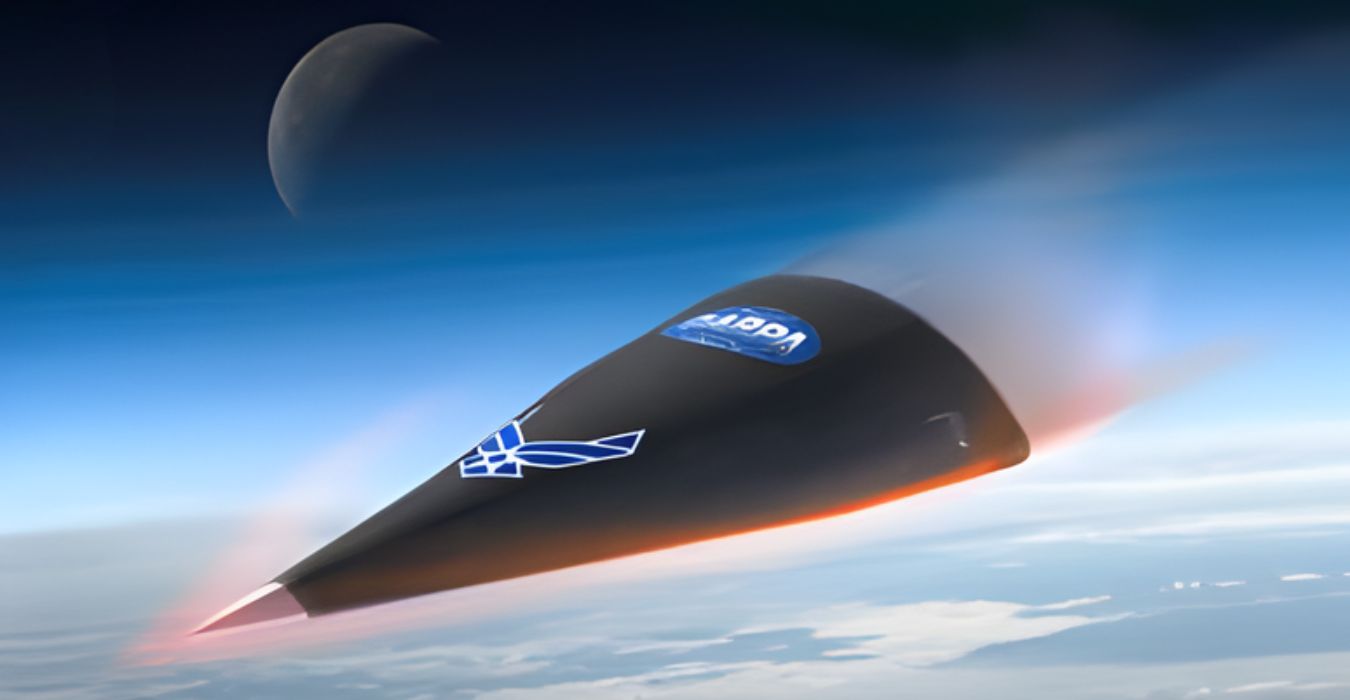
The role played by Varda makes the flight particularly interesting. The company built a reputation around the development and use of orbital manufacturing modules returned to Earth, but such vehicles can also serve as perfect research platforms for hypersonic navigation solutions. The reentry vehicles created by Varda descend with speeds higher than Mach 25, putting their instruments under stress similar to the one experienced not only in case of recovering the orbital module but for other hypersonic craft as well.
The principle behind the navigation technology employed by the company has ancient roots and a modern execution. Instead of using signals sent via satellite, the technology involves photographs of celestial objects and low Earth orbit satellites that can be compared to a library maintained by the U.S. Space Force and allow estimating position. According to Rhea, the Autonav software has heritage from deep space guidance systems, but in this flight, it will demonstrate whether this principle still applies to the distorted vision and extreme conditions of the atmospheric re-entry. As stated by the company, its camera design was developed based on the surveying of Starlink satellites performed with a spectrometer, another indication of how commercial satellites are entering the practical navigation environment. It might seem like a niche topic, but the engineering background is very broad.
Scientists have attempted to solve the problem of blackout by penetrating it with radio signals instead of bypassing for many decades already. The idea of using magnetically shaped plasma layer to minimize signal attenuation was proposed in 2017 and demonstrated to potentially reduce signal absorption for GPS, telemetry, and other communications while having certain disadvantages of implementation. Metamaterial based antennas able to penetrate the plasma layer more efficiently were also suggested as a solution. However, none of those techniques proved applicable in practice and explains why autonomous onboard systems are receiving increased attention as the key to addressing this issue: the focus is shifting from maintaining continuous connection to uninterrupted decision making.
Moreover, the W6 satellite tests the external heat protection material developed by Sandia National Laboratories and NASA heat shield tiles, creating a multi level platform for researching hypersonic re-entry issues. The fact is that the development of the hypersonic technology has evolved significantly from overcoming blackout and heat to navigation and protecting the vehicle in those critical moments when control over it from ground becomes impossible.