Why the Border Laser Approval Matters Beyond One Drone
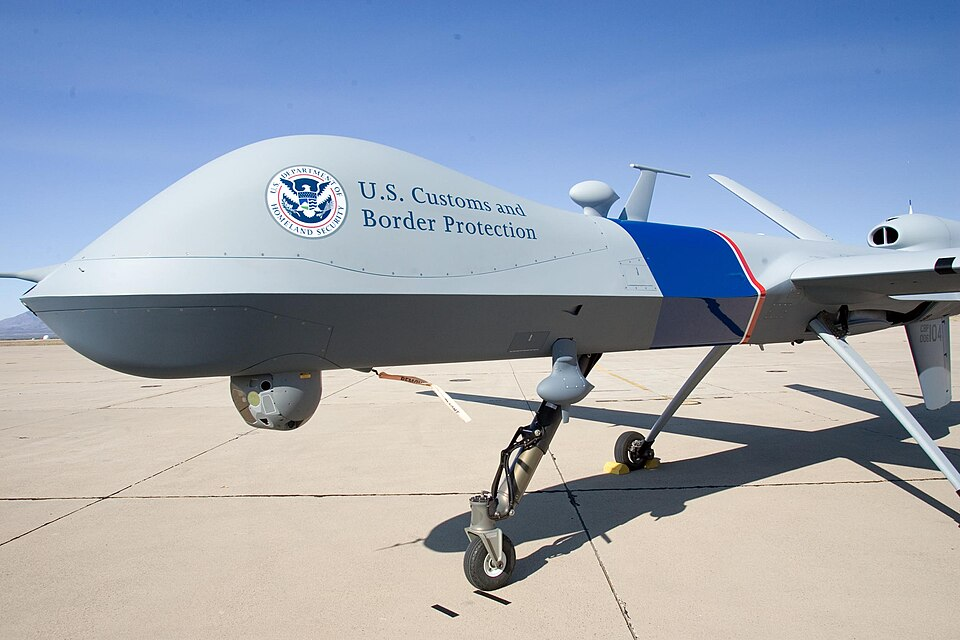
More importantly, the most important finding was not the laser weapon itself. What matters is that a counter drone weapon system would be effective without the risks to civilian air traffic. It represents a paradigm shift in the discussion of security in border airspaces. Unauthorized drones are no longer seen as a policing nuisance and a threat to runways.

Instead, an increasing number of cases indicate that they must now be considered within the context of a general low-level airspace security problem, which requires the implementation of sophisticated, military-grade technologies of detection, tracking, and defeating. Given the recent warning issued by the Army of the rising weaponization of unauthorized UAVs on the southern border by the cartel members, the approval of the new laser weapon represents a step towards more serious measures to secure these corridors without stopping civil aviation.
First, it is important to note that the use of a high-energy laser represents a completely new class of counter-drone technology. In contrast to jammers and kinetic interceptors, it allows focusing a powerful ray of energy to a target with pinpoint accuracy while having an immediate effect. It becomes evident from industry reports on new directed energy weapons, where one of the main features noted by experts is the precision of trajectory and low collateral damage. In this regard, the regulator’s focus on potential hazards for aircraft and airspaces becomes understandable. At the same time, despite all the technical promise of a laser-based weapon, there are certain constraints.
One cannot overlook the dependence of laser-based solutions on geometry, weather conditions, and strict firing rules. The latest analyses of legal and technical aspects of developing and using modern directed energy weapons always refer to the following problems: the need to take into account the line of sight, understanding the range of destruction, and possible degradation under adverse weather conditions (dust, fog, clouds). For example, the Israeli Iron Beam has demonstrated its decreased efficiency under the influence of these conditions. The issue acquires particular importance when it comes to airspace with numerous flights of both commercial airlines and special-purpose vehicles (surveillance planes).
This development shows that the modern approach to protecting border spaces with counter-drone solutions requires a holistic view on the matter. Besides destroying the intruding device, the system must quickly detect it and classify in order to determine that it should be defeated. To accomplish these tasks in a short period of time and correctly, the Army has been using modular and scalable counter-drone solutions, which integrate several sensor and software technologies for rapid decision making. Thus, the laser serves as an additional weapon component rather than a comprehensive solution.
This explains the wider importance of the regulatory approval. Indeed, it means that the most difficult task has been accomplished not in creating an efficient counter-drone tool but in integrating it into the national system of airspace regulation and safety. In this sense, the clearance sets a new standard for future developments in border security and critical infrastructure protection in general.