Why the SR-71 Never Flew Mach 3.56 Again
The highest speed reached during operation of the SR-71 does not reflect the capability for which the aircraft was designed, nor a demonstration of such. The flight was actually an unplanned excursion into an upper boundary of the aircraft envelope a phenomenon in its own right, offering unique insight into the engineering capabilities of the Blackbird.

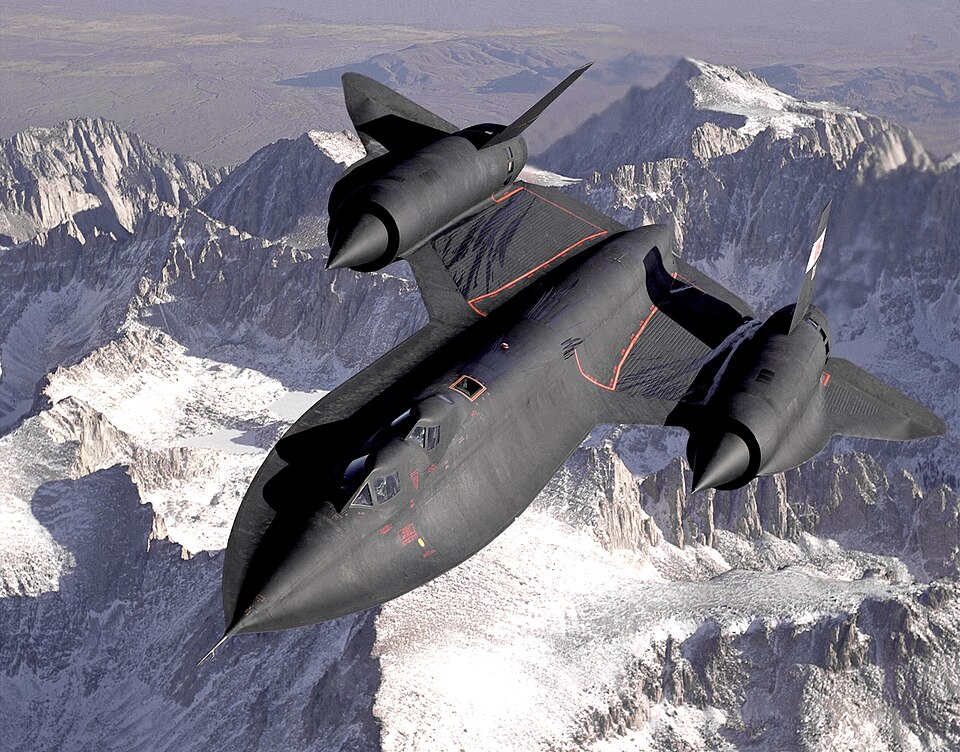
In fact, the SR-71 was designed to function at extremely high speed, rather than being a mere fast airplane. The Blackbird was an aircraft designed to fly at Mach 3+ and at altitudes of 85,000+ ft on a regular basis. Today, almost five decades after its first flight, it is still the fastest air breathing, manned airplane in existence. Its record-breaking speed results not just from powerful engine, but from optimal design as a whole.
Some details regarding aircraft structure explain why SR-71 was engineered this way. The Blackbird was mainly built out of titanium due to high temperatures of up to 1,000F reaching its leading edge during flight. While titanium provided required properties of high thermal resistance and sufficient structural strength, it was hard to work with and prone to contamination, making the construction much more complex. Moreover, the design of the SR-71 caused aircraft to expand upon heating, making the entire aircraft structurally “correct” only when already in use.
However, a greater limitation lay inside the nacelle. In the normal use, Pratt & Whitney J58 engines used by the SR-71 did not work in a conventional manner; beyond Mach 2.2, some of the airflow passed the compressor and turned the engine system into a turbo-ramjet propulsion system. In addition to that, the inlets worked as major sources of thrust. In normal cruise operations, each inlet had to be balanced to provide sufficient thrust.
It is thus clear why Mach 3.56 dash was not feasible. As explained by the former Blackbird pilot David Peters, the limit was imposed not by available engine power, but by temperature and inlet operation. Specifically, the temperature limit for inlet compressor was 427C (800F); in colder conditions, however, another limit came into play: at Mach 3.55, the spike would stop intercepting shock wave properly, and disturbances would affect control.
The Mach 3.56 flight, thus, provides more insight into Blackbird operation than drama. In the story told by Blackbird pilots, an A-12 aircraft, unable to function in warm air, lowered its nose into denser atmosphere and, finding suitable air conditions, “redlined everything” for a minute or so, achieving Mach 3.56. This was not a new cruise speed, but an outcome of dive and temperature combination.
The aircraft earned its fame not for an unrepeatable flight, but for its incredible ability to complete long-range flights at incredibly high speeds and survive in the face of miniscule interception windows. The high cost and intensive maintenance required for SR-71 operations, combined with mission environment changes and shifting towards unmanned vehicles, resulted in its demise. Thus, the case of SR-71 once again proves the truth that an extremely efficient design leads to an extremely efficient vehicle, yet not capable of anything outside its intended purpose.