Why the F-22 Raptor Still Shapes Air Combat
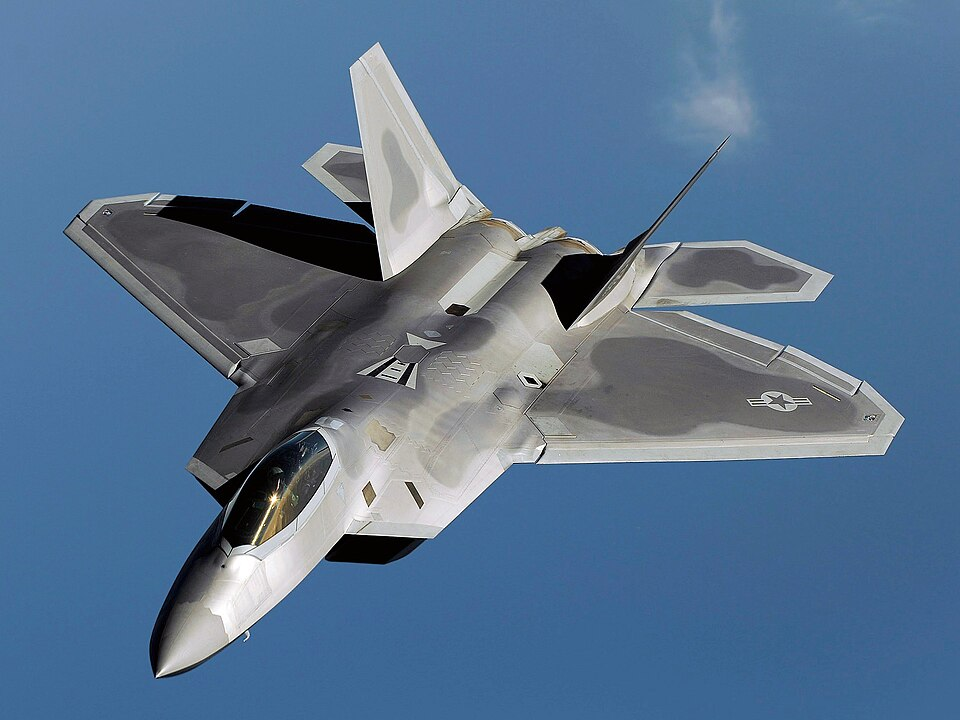
F-22 Raptor’s ability to cruise at supersonic speed without afterburner is a defining capability. While it saves fuel, minimizes thermal signature, and allows for stealthy arrival to a target area, it has changed the entire concept of high speed aircraft. This feature alone makes the F-22 a unique asset in its class. The aircraft was designed to achieve air superiority by reducing the amount of time required for detecting, making a decision, and attacking the enemy. As such, stealth configuration, internal weapons carriage, thrust vectoring, and integrated avionics were developed as an integrated package. In the Air Force’s description of the F-22 Raptor, it is stated that the aircraft offers superior stealth, supercruise, maneuverability, and integrated avionics.

Such an approach is critical today because modern air combat has much less to do with traditional stick and rudder flying, as pilots receive all the information needed via an integrated cockpit. As a result, the aircraft requires less input from the operator who can make decisions based on the data presented. Hence, veterans’ descriptions of the F-22 Raptor tend to resemble the process of inhabiting a machine designed to handle a fight autonomously. However, the experience of operating the aircraft cannot be considered purely abstract. One observer noted that “the F-22 Raptor above you sounded like a bomb going off over and over. The power of that plane is something you never forget.”
Such a statement is backed by facts. Scientists from Brigham Young University have measured the noise levels produced by a full scale military jet. To complete this task, the researchers utilized a large microphone array that allowed them to analyze the sound formation in the exhaust plume of the F-22 Raptor while it went from idle to afterburner levels.
Engines have always been the core element of the aircraft’s reputation. Each F-22 Raptor is equipped with two Pratt & Whitney F119 turbofans with thrust vectoring nozzles. In addition, the propulsion system has logged more than 500,000 engine flight hours, which proves that maintenance has become a critical factor in the operation of the Raptor. The Air Force lists the aircraft as a mach two class fighter that operates in altitudes above 50,000 feet and carries six AIM-120 and two AIM-9 air to air missiles internally. While the figures are impressive, the point is that the F-22 Raptor retains the advantages of its aerodynamic and stealth design by maintaining internal weapons carriage.
The aircraft has also experienced its share of challenges. Problems with the oxygen system were quite significant and forced engineers to change designs and conduct additional testing. This case demonstrates that the elite aircraft program requires not only cutting edge performance but also reliable life support systems, maintenance, and overall safety. Despite the problems, the F-22 Raptor remains the benchmark because it combined superior speed, stealth capabilities, and data management early on. Thus, sustained supercruise becomes a secondary parameter because the design philosophy itself has defined the parameters of modern air dominance fighters.