Artemis 2’s Moon Flyby Revealed the Far Side Few Humans Ever See
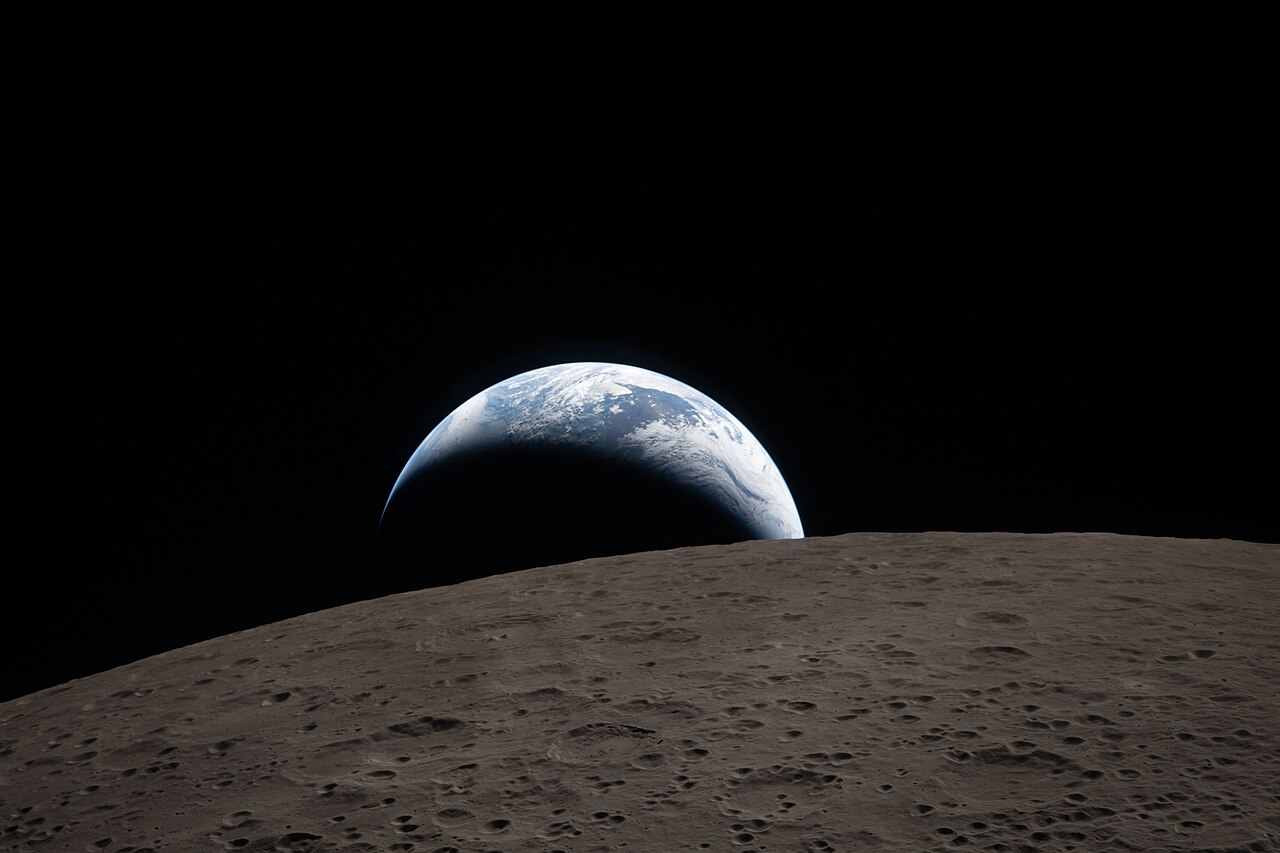
In what ways does astronaut visibility change behind the moon’s dark side? In Artemis 2’s case, it wasn’t the intrigue for its sake instead, it meant capturing rare and beautiful human images of a place that is barely visible from Earth. NASA’s crew of four aboard Orion captured images of a small area on the moon’s far side on the lunar flyby mission in April 2026. For starters, the idea of a far side is a mythologized concept: the part of the moon is often referred to as a “dark side” due to misconceptions, even though it isn’t always dark. Instead, as a result of the tidal locking of Earth and the moon, one hemisphere of the moon is constantly invisible.

From the very dawn of civilization, the idea of the “dark side” of the moon fascinated and puzzled humanity however, due to the geometry of the process, only a limited number of edge views were possible via libration. Only in 1959, the Soviet spacecraft Luna 3 was the first to send a photographic image of the invisible lunar hemisphere. The first people who saw this part of the moon were the crew of Apollo 8 in 1968, and Artemis 2 gave people the chance to observe the far side of the moon once again after 54 years of absence, as well as venture 252,756 miles away from Earth. The result of the Artemis 2 expedition will be not just a photo to put up in a frame the lunar hemisphere visible from this side offers some of the most unusual terrain in our Solar system, with highland regions, cratering and relatively few maria compared to the near side of the Moon.
However, that difference is significant. The nearside lunar maria are composed of ancient flows of basaltic material, which means that the far side preserves a different geology. This discrepancy between the two sides has been of interest for decades, as it may hint at thermal history and thickness of the lunar crust. Therefore, a crewed image taken from the far side of the moon might draw attention to these scientific aspects.
Of particular interest was the Orientale basin located on the near-limb of the moon, described by NASA as an object serving as a basis for comparison with other rocky worlds like Mercury or Pluto. The basin, as a product of an asteroid collision, provides valuable insights in regards to impact craters of other planets.
It should be noted, however, that the far side has much more significance aside from photographing. As mentioned above, the far side of the moon serves as an ideal place for radio astronomy due to its shielding effect against electromagnetic waves from Earth. With robotic missions such as China’s Chang’e 4 and Chang’e 6 providing samples from the region of Apollo basin, it seems that lunar exploration is only beginning.