Mars Robots May Need Soft Muscles, Not More Wheels
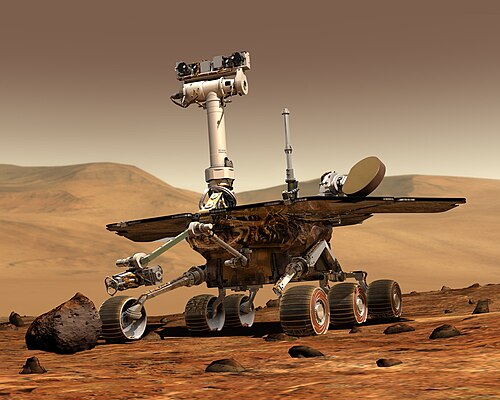
More wheels have always been the straightforward solution to rough planetary terrain. The newly released prototype points to a new path. Scientists collaborating with the European Space Agency are building a soft robot capable of crawling by mimicking the artificial muscle system. The mechanism replaces the standard motors and joints with deformable parts allowing the robot to keep moving regardless of any kind of damage. While the classic rover moves by rolling on four or six wheels, the latest prototype crawls in the same way an inchworm would, stretching out and contracting a rolled-up dielectric elastomer actuator.

What makes the design especially appealing is not necessarily the biomimicry. It is the tradeoff. Modern planetary robots are driven towards the use of heavy-duty hardware, additional steering mechanisms, and rigid transmission precisely because of the need to constantly correct unpredictable terrain. The Gothenburg researchers seek to change the balance and move part of the correctional effort inside the body of the robot. “The core challenge we were trying to solve was achieving multidirectionality in soft robots without the need for complex electronics or multiple actuators,” Dr. Hari Prakash Thanabalan of the University of Gothenburg stated. In other words, the design aims less to imitate the movements of an earthworm and more to reduce the control complexity required in the conditions of space.
Equally significant is the material used. The actuator includes compliant electrodes made of single-walled carbon nanotubes. According to the researchers, such electrodes are capable of continuing operation even after a cut or puncture and additionally provide some protection from radiation. Experiments and computer simulations demonstrate radiation resistance to alpha and proton particles up to 10 MeV. This characteristic is crucial because the problem of radiation hardening is frequently discussed solely within the context of electronics. Yet the mobility of the soft robot also depends on its ability to retain its mechanical properties.
Indeed, resilience became one of the major factors in designing modern bio-inspired space robots. A recently published review paper discusses this trend, stating that in the foreseeable future, the main goal will no longer be the improvement of movement efficiency alone, but also the robot’s ability to crawl on rough granular soils, rocky surfaces, caves, and other terrains that limit the movement possibilities of conventional wheeled vehicles. The inchworm robot also fits into the same scheme as the focus on compliance, low-power consumption, and minimal on-board electronics.
It is worth noting that the most surprising discovery was not initially intended by the designers. When performing tests on a lab-simulated 3D-printed terrain covered in grooves, the front legs of the inchworm robot started catching in the grooves and changing the orientation. At an angle between 0 and 30 degrees, the robot automatically started turning to a greater extent with no help from any additional actuators or navigation equipment. As Dr. Thanabalan put it: “We realised that the robot was ‘hooking’ its front legs onto the grooves on the surface.” Indeed, it is sometimes worth remembering that the terrain not only restricts the robot but can also guide it.
However, this technology faces significant challenges. First of all, the present experiments only involve simulated conditions in the laboratory and do not prove that a soft robot could successfully operate in outer space. Secondly, while the inchworm design may allow for a reduction in the mass of the equipment, it still does not guarantee resistance to thermal cycling, dust, fatigue, and efficient sensory equipment incorporation. The next steps undertaken by ESA, in particular, trials in the Mars Yard at ESTEC, will serve mainly as a filter in this case.