Why Police Drones Need Radar Before Airspace Gets Riskier
The idea of deploying more public safety drones may seem simple until you start to think about the problems inherent in a crowded sky.
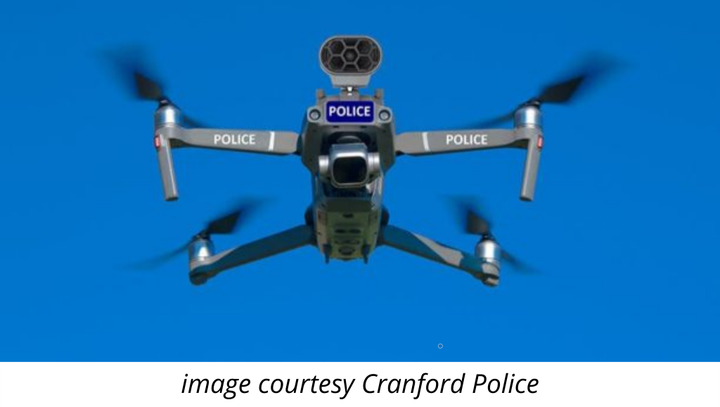
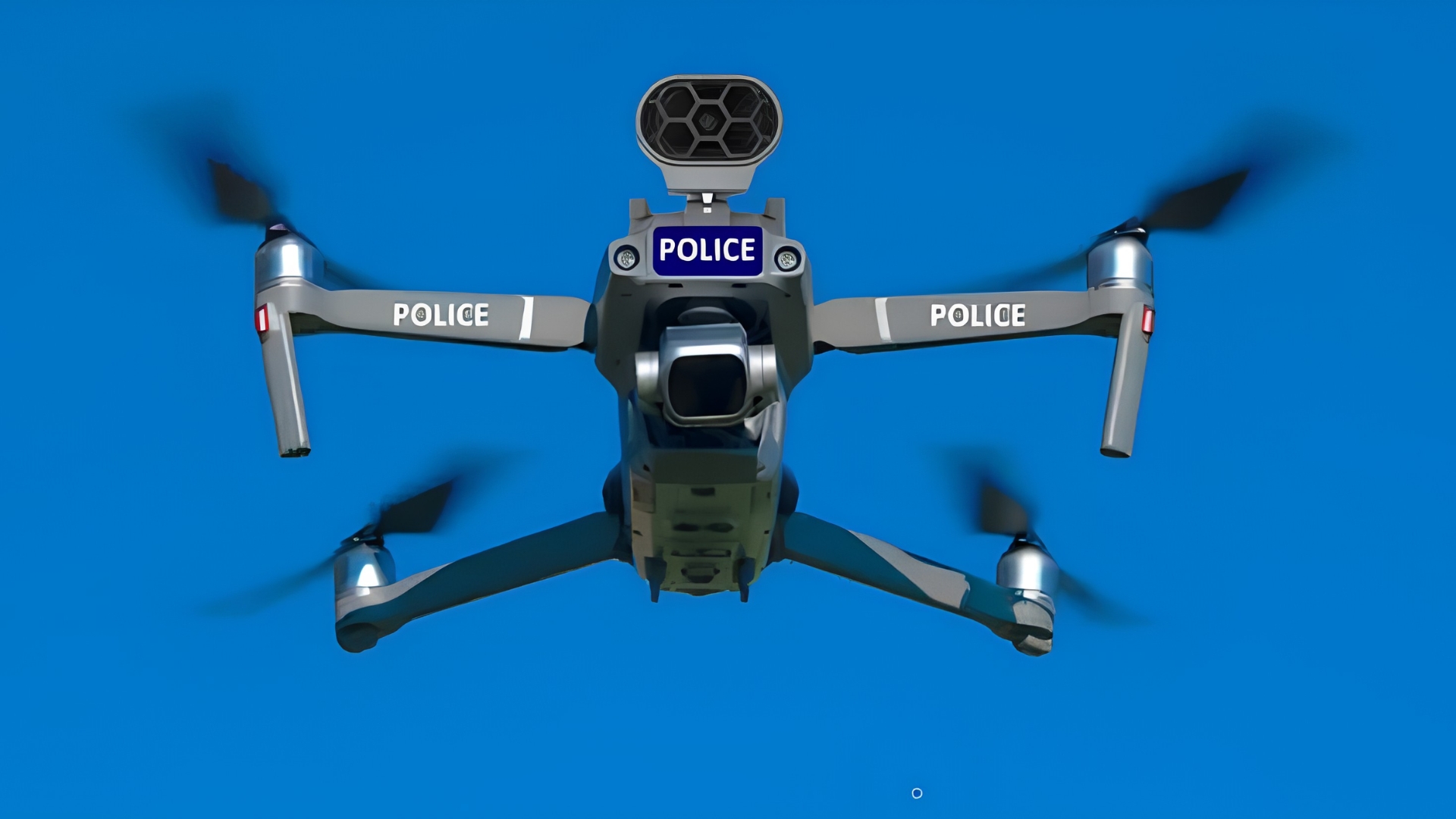
That is why there is so much interest these days in pairing public safety drones with radar-based airspace situational awareness technology. Drone as First Responder projects have been proliferating rapidly because they allow agencies to deploy their drones right after the 911 call, delivering real-time video information ahead of ground personnel. The challenge goes beyond being able to fly the authorized drone. The challenge lies in maintaining situational awareness of all that is moving, loitering, and potentially interfering in the same airspace.

Integration between Axon and Echodyne symbolizes a new trend in UAVs. Expanding a fleet of drones is as much dependent today on detection equipment as it is on aircraft themselves. When operating within a public safety context, drones work in very congested airspace adjacent to structures, utility lines, trees, and other drones, which were traditionally beyond the reach of typical aerial survey tools. Radar is vital in such an operation because it works where optical systems fail to do so in the dark or rainy weather or even in densely packed urban environments.
It is that warning window which really matters. The usefulness of a drone scout before officers depends upon its ability to maintain separation from both obstructions and other planes which do not wish to cooperate while still being able to carry out a mission that does not have to be small-scale. While detect-and-avoid stacks tend to include multiple sensor technologies, radar is required for long-range, all-weather detection where other lighter-weight sensors such as optics and LiDAR fall short. As industry recommendations for unmanned aircraft systems point out, detect-and-avoid stacks are built around sensors, processing power, position information, and communication equipment, with radar contributing long-range detection abilities for speedier and denser operations.
This can be seen by considering a recent experiment using pulse radar for collision avoidance for drones. The device was created to help in detection of obstacles within a range of up to 1-3 km, far greater than what is typical in FMCW radar systems, which tend to have maximum range within a few hundred meters. In testing of this technology, it was observed that the detection of structures coincided perfectly with visual identification of those same structures within that range, with a low likelihood of 1.5 percent of error in detection.
Such capability has a profound effect on scalability for police agencies. There is no reliance only on the human operator spotting obstacles, which is an acknowledged weakness with BVLOS flights. Further, there is the ability to operate in areas with heavier air traffic which might include non-cooperative traffic. Some DAA solutions have pointed out that non-cooperative flights remain one of the most difficult problems for systems which utilize cooperative technologies like ADS-B.
Eric Hertz from Axon put the issue of public safety into perspective, stating that police agencies were increasingly using drones for faster response and increased situational awareness. However, better scalability meant having safe systems in place for dealing with more air traffic. It was thus a less visible aspect of the drone revolution the sensing system which would enable more and more drones to fly safely together.