Alien Planet Winds Hit 15,000 MPH and Expose Hidden Magnetic Shields
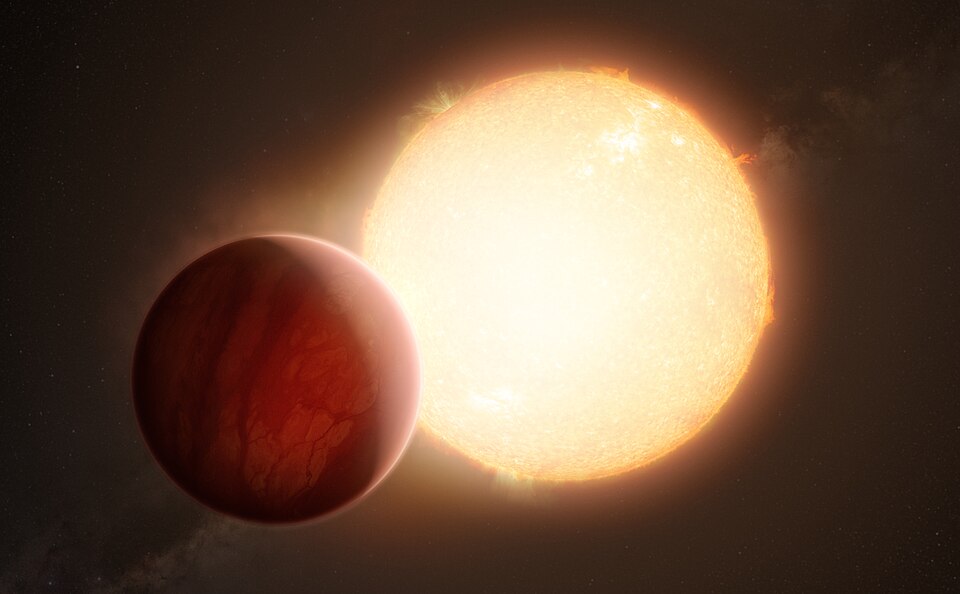
How is an invisible magnetic field observed around a planet, so far away that it is several tens or hundreds of light years away? Then it was a matter of weather strong enough to grab and rip through unknown skies at speeds greater than 15,000 mph. It is a new discovery of seven gas giant planets known as “hot Jupiters” that whirl around their parent stars in the perpetual day-night cycle. First, they used the Very Large Telescope (VLT) and the Gemini North observatory to determine velocities up to 4,470 mi/h to 15,530 mi/h in those atmospheres. Well, that’s just what’s more than the ~930 mph maximum altitude gusts on Jupiter and the extreme weather was no exception. It was a reference to something more powerful, the magnetic field which acts as a planet brake on the charged atmospheric particles.

First of all, something that was somewhat surprising was not only the high speed of the wind. No, on this not all planets were faster if they were hot. The research revealed that there was more flow on cooler worlds in the sample; they did not follow simple theory of increased flow for increased heat. This mis-match enables astronomers to make a first estimate of the strength of a magnetic field because the ionised parts of the gas are influenced throughout the globe by a magnetic field. All became means of measurement, and an estimate of the strength of the magnetic field of the planets was determined half Jupiter’s and about four times more intense than Saturn’s.
The laboratory Lagrange, Observatoire de la Côte d’Azur, have published a press release announcing “this breakthrough opens a completely new window on exoplanet research. It’s the first time we can compare the magnetic environments of other worlds a key step toward ultimately understanding which planets can stay alive, keep their water, and perhaps even, one day, host life as we know it.”
This overall view is significant because magnetic fields have a lot more to do than disrupt auroras. The magnetosphere around Earth is protective of our inhabitants from energetic particles from the sun, and helps in minimising the loss of particles from the atmosphere, over time. That’s the same one I mentioned earlier for the Exoplanet projects. During the Hubble observations of the magnetosphere of HAT-P-11b they found the magnetic tail extended out by charged carbon streaming away from the planet, allowing magnetic interactions to be seen on worlds outside the solar system. Nobody had any idea if the radio signals sent from YZ Ceti b was connected to the rocky nature of its star, or whether the signal was a result of interaction between the planet and its star. However, astronomers had been expecting that airborne planets would throw out a magnetic field through their interaction with a star, and they were looking for a good verification of that.
There is also a route on the hot-Jupiter, which is the route of atmospheric wind physics. If it is very hot in the upper atmosphere of a world, and it’s partially ionized, so that the magnetic forces can leave a trace that is measurable that can be very useful. North-south winds have now been traced and characterized in the atmospheres of the planet HAT-P-70 b, which orbit the star HAT-P-70, which have already been mapped by astronomers, who were moving at an average speed of nearly 18 000 km/h (about 11 000 mph). Furthermore, one indication in the form of a picture. So if these big planets have powerful global magnetic fields, they would produce quite a show of auroras (Northern and the Southern!) on planets which really have no night or morning.
That’s the more profound evolution for exoplanet science. The magnetic field are no more a take it on the one’s. Now they have become a deserving area of study for the astronomers, to compare and fold in the bigger picture of how planets remain stable, withstand the intense conditions in stella environments and how planets evolve over time.