Artemis II Lunar Flyby Sharpens Orion’s Deep-Space Readiness
While the recent Artemis II’s seven-hour fly-by of the moon may seem like a symbolic moment in space history, in reality, the mission marked a practical verification of the capabilities and readiness of the NASA crew, spacecraft and support systems for conducting the deep space missions with humans on board.

After completing its outbound journey to the moon and turning the spacecraft toward Earth, the four-member crew had finished the most crucial part of its mission executing a human lunar fly-by with observation and operation tasks performed and the Earth return path already mapped. This aspect of the flight is especially important because the upcoming Artemis missions need a certain amount of experience in planning, operating and controlling such kind of mission in preparation for more complex lunar expeditions.
It is worth noting that the flight has also set a new distance record for the crewed missions leaving the Earth at a distance of 434,533 kilometers from our planet (Apollo 13 previously recorded 400,171 kilometers). From the perspective of aerospace, this milestone is important mainly as an indicator of the mission envelope expansion for which the crew, the spacecraft and control system should be adapted. Moreover, Orion was operated farther away from the Earth compared to any other spacecraft used for human flights, which is important due to new requirements regarding communication, operation and planning of the mission from such a remote location.
During the fly-by, Orion approached to a mere 6,545 kilometers from the Moon’s surface and executed more than two dozen observation targets using camera technology to document impact craters and other features including a view of the far side of the Moon. Prior to the mission, the astronauts had been engaged in years-long studies of lunar geographics and geology by NASA in order to make it possible for the flight to combine its testing functions with preparation of the future mission operations and experiments.
As the main concept underlying the Artemis II mission, it should be mentioned that the crewed exploration technology remains useful only with a proper mission architecture. In terms of the latter, the flight was aimed at providing the opportunity for the crew to observe the area according to a pre-prepared observation plan and to identify and describe various aspects of the lunar surface in real time. The primary target among the others was Orientale Basin a huge impact crater consisting of three concentric rings with an outer diameter of nearly 950 kilometers. Moreover, the crew managed to see locations of Apollo 12 and Apollo 14 missions’ landing sites.
These observations are important not only as elements of public interest. In reality, these pieces of information obtained by the astronauts during their mission will help to shape the further course of action in future missions and allow NASA to better prepare for scientific research conducted from lunar orbit and ultimately, from the lunar surface. Besides, this part of the mission shows that humans remain the most important sensory element in the spaceflight process.
While observing the lunar surface from the spacecraft, the crew members witnessed a total solar eclipse due to blocking of the Sun by the moon as well as visibility of Mercury, Venus, Mars and Saturn. These observation activities are valuable for adding more information to the mission. However, in terms of the systems involved in the flight, it is crucial to note that Orion proved itself as a crewed platform capable of performing missions beyond Earth orbit with different lighting conditions and geometries as well as different communication opportunities.
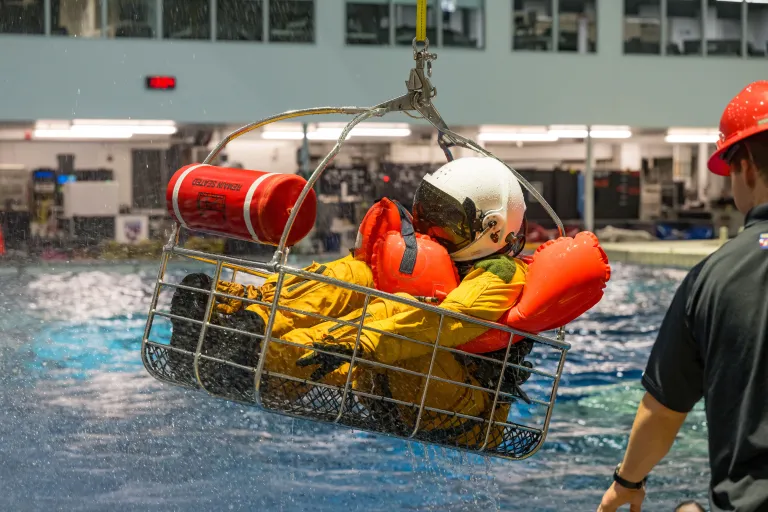
The ten-day design of the mission also plays a significant role in this context. As per the plans of NASA, Artemis II will conclude its mission with a Pacific splashdown on April 11, Australia time, bringing data on operation of the spacecraft during the entire lunar mission as well as human performance indicators throughout the mission. Following the completion of the flight, the crew will be subject to physical and health evaluation and debriefing, while data will be retrieved from Orion for post-mission analyses.
This follow-up step is vital because it directly relates to future missions and provides important insights for preparing and conducting them safely. According to NASA’s schedule, Artemis III mission will involve sending another crew of astronauts to practice dockings with the lunar landers in Earth orbit. Furthermore, Artemis IV mission will aim at achieving a south pole landing of two astronauts in 2028. Hence, the current mission should prove the capabilities of the spacecraft in the simplest form to make sure that it can be used successfully for more complex purposes in the near future.
David Whitaker — associate editor for AMI’s aerospace and drone systems desk, specializing in aircraft programs, spaceflight, UAVs.