Artemis 2 Nears Pad Rollout as NASA Clears Safety Work
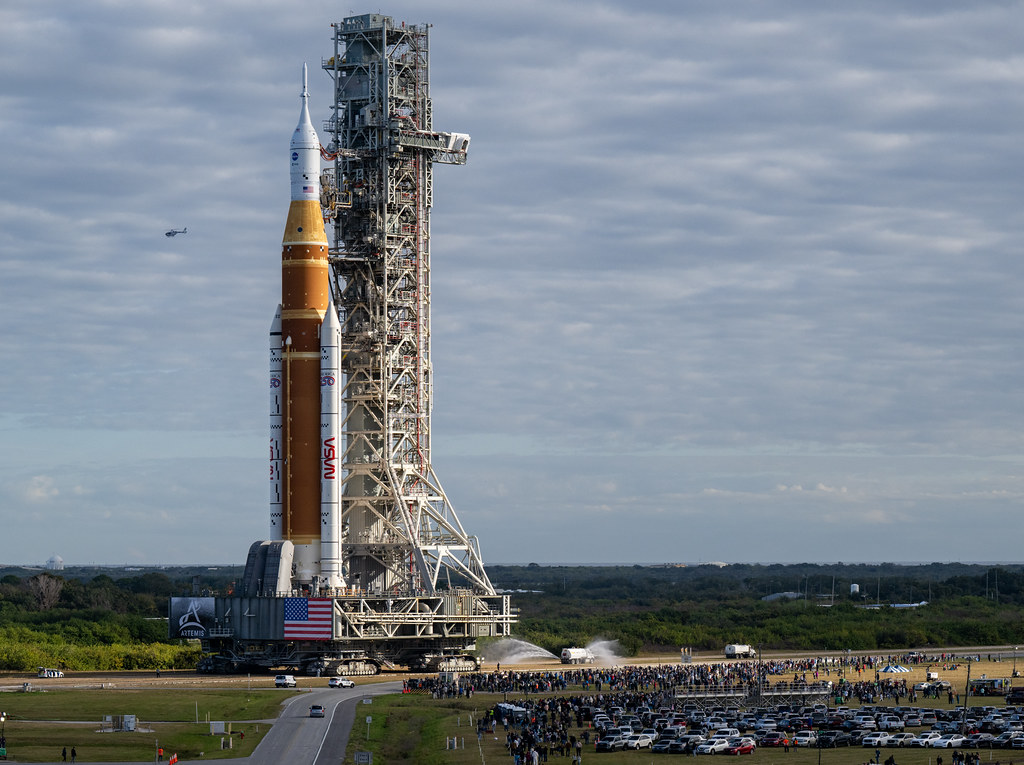
The Artemis 2 mission is approaching the point at which it stops being an assembly process and becomes a launch discipline. In other words, the SLS and Orion stack, as described by NASA, will move from Kennedy Space Center’s Vehicle Assembly Building to Pad 39B, signaling a transition from integration to pad operations.

It matters, because Artemis 2 is not just another mission on the countdown clock. It is currently set as the first crewed mission beyond low-Earth orbit in more than 50 years. Four astronauts are supposed to fly a ten-day mission around the moon and return. If Artemis 1 last year successfully demonstrated the architecture without a crew, Artemis 2 will verify its behavior with astronauts inside and crew-facing systems activated in the environment similar to future moon missions.
What remains to do are the types of details that can determine whether the launch is real or hypothetical. Engineers recently addressed a bowing cable in the vehicle’s flight termination system that was out of specification. The teams also solved a minor issue with the supply of breathing air to Orion and installed a new valve in the hatch pressurization system. None of those things changes the architecture, but each one is part of the safety chain to ensure the health of the crew, the range, and the pad prior to launch.
Rollout of the vehicle, as described by NASA, is expected no sooner than January 17. It consists of a four-mile drive at the rate of one mile per hour taking around twelve hours. Upon reaching the launchpad, however, the vehicle needs to be connected to ground-based systems, such as the electrical grid, environmental controls, and cryogenic fuel interfaces. Therefore, rollout represents a shift to yet another phase of the integration cycle.
A wet dress rehearsal follows later in January and represents perhaps the clearest indicator of a vehicle launch readiness. For the heavy-lift system, a wet dress involves fueling the tanks, conducting multiple countdown and roll-back cycles, and then safely draining the propellant without igniting the engine. For SLS, such a rehearsal becomes particularly informative because of its connection to the thermal conditioning of cryogenic fluids and the related processes of valve management, leak detection, and sensor behavior.
NASA also plans to involve the closeout crew at the wet dress rehearsal in order to practice the procedure of hatch closing and pad departure for the final moments of the countdown prior to launch. As a result, the rehearsal simulates the crew operations in addition to the systems check and validation.
After that, if the wet dress rehearsal goes according to plan, the mission managers can proceed to the flight readiness review to establish a launch date. According to current information, Artemis 2 can be launched within its first launch window on February 6. There are additional launch dates available in both February and April, depending on orbital parameters.
The selection of launch dates is important in that they provide critical conditions for testing various elements of a mission. The launch window is defined in part by an extended shadow in space that limits solar energy available for the spacecraft to recharge its batteries. It thus demonstrates how closely the launch of Orion is tied to its ability to manage spacecraft power.
For a mission as complex as Artemis 2, the launch preparation should reflect the complexity of the mission plan. It is designed as a step-up in complexity from the Artemis 1 mission, as after launch, Orion will have to perform a number of functions and maneuvers in space, including entry into the high orbit of the Earth, completion of systems checks, entering a free-return trajectory in lunar orbit, executing manual maneuver in proximity of the upper stage, completing communication tests, and performing a variety of science missions along the way. Thus, the goal of current activities prior to launch is the validation of the entire mission profile, which is why the focus is on closing out various aspects of the mission.
By David Whitaker — Associate editor for AMI’s aerospace and drone systems desk, translating flight systems, aircraft programs, spaceflight, and UAV developments into accessible technical stories.