F-35 Readiness Slide Shifts Focus to Sustainment Capacity
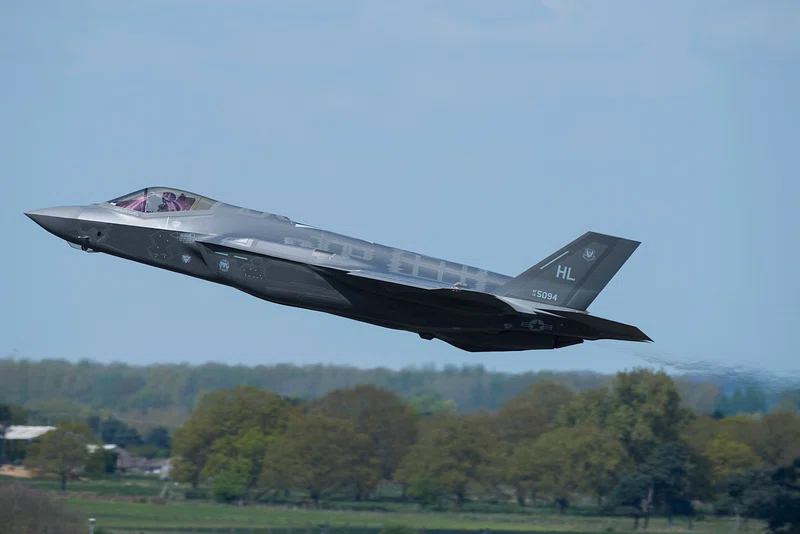
The latest F-35 readiness situation offers yet another reminder that purchasing state-of-the-art combat aircraft is one thing, while sustaining them in a reliable operating condition quite a different engineering task altogether. And judging by recent reports, the latter seems to be occupying the foreground.

As always with any aircraft program, the critical parameter of discussion is the so-called full mission-capable rate. According to one report citing U.S. Air Force figures, this indicator is reportedly sitting at only 25% for fiscal year 2025, meaning that aircraft can perform all their assigned missions. Note this distinction from the mission-capable rate, which only indicates the capability to execute at least one of such missions. This difference is particularly crucial when evaluating actual usable capacity of any fighter fleet, since even large fleets will be of limited use if only a portion of them is mission-ready.
The response to such a low readiness level is also massive in scale: according to the report in question, this readiness reset will require no less than $13.7 billion investment to recover by 2030. This very timeframe is revealing in itself as a way of saying that readiness issues are rarely solved by a one-off measure. Fighter fleet readiness normally takes a long time to reverse due to several interconnected reasons: parts manufacturing, repairs capacity, depot maintenance capacity, software update and integration capability, corrosion control, technical documentation for maintenance, etc.
This is where the actual significance for the United States lies. While the F-35 is definitely a flagship of sorts, this program is also one of the largest sources of tactical airpower for the USAF. Hence, issues in sustaining this fleet are far-reaching not only in financial but also in operational terms, shifting the burden from aircraft themselves onto the wider industrial infrastructure and maintenance capabilities.
For general audiences, it is useful to note the difference between two common readiness metrics used in aircraft maintenance: mission capable rate, meaning the ability to complete at least one type of mission, and full mission capable rate, indicating the ability to complete all missions assigned to this particular aircraft. As can be easily inferred from above, a drop in the full mission capable rate is a clear sign of serious readiness problems.
The problem is that maintenance issues in modern programs tend to pile up and build upon each other: for example, lack of spare parts results in longer aircraft downtime, shortages in depot repairs result in longer waiting for aircraft to become available again, software upgrades with delays and restrictions mean a longer period of non-readiness for new aircraft, and corrosion or other recurring maintenance challenges simply occupy additional man-hours, depriving aircraft of opportunities to gain additional readiness.
Thus, the aforementioned readiness reset plan looks designed to solve precisely these maintenance-related issues. Since aircraft readiness is defined largely by what happens to them in the course of maintenance operations, rather than in the course of production, addressing problems with sustaining aircraft should take place precisely where maintenance happens, and where problems appear.
In addition, the fact that readiness recovery is supposed to take place in 2030 already signals to the fact that this problem is long-term and structural, thus requiring a long-term solution. Increasing repair capacity, fixing parts supply issues, coordinating software updates and maintenance operations, etc. none of these is an easy task to complete, and it requires time even when backed by increased funding. After all, money alone cannot magically increase labor capacity or repair capacities; at best, it will allow ordering more parts, but this, too, takes time.
Finally, some quick notes regarding the European context: while there is talk of some kind of dispute with Dassault involved in this situation, the available data is scarce and hardly allows us to draw any conclusions except that advanced combat fighter programs are increasingly subject to readiness scrutiny in Europe, just like in the USA. In sum, the lesson for both sides of the ocean is clear: advanced fighter programs are increasingly assessed not just by their performance or deliveries but also by the sustainability of their support systems.
David Whitaker is associate editor for AMI’s aerospace and drone systems desk, responsible for covering flight systems, aircraft programs, spaceflight, and UAV developments.