Why Archer’s Midnight Scale-Up Depends on Dimensional Engineering Discipline
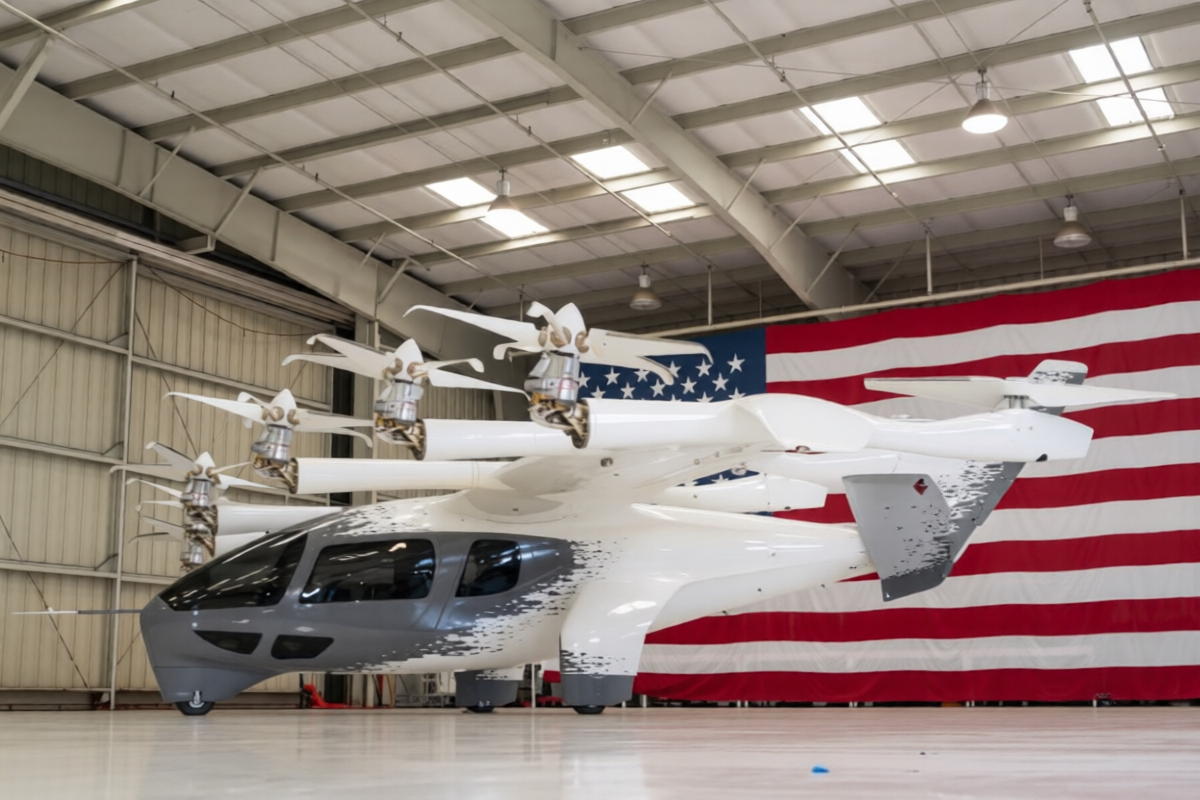
The Archer Aviation Midnight is in the midst of the FAA certification process, but FAA certification is only one half of the manufacturing process. As a composite eVTOL aircraft seeking to evolve from prototype stages to series production, the harder manufacturing task will be repeatability ensuring that the aircraft, no matter which is first, fiftieth or even five hundredth in the production queue, comes off the line to the same dimensional specification, fit level, controlled gap and quality management history.

This is where dimensional engineering ceases to be a back-office quality process and becomes one of the core production disciplines. At Archer, Srinivasrao Balaga, Senior Manager of Dimensional Engineering, manages the team responsible for ensuring that Midnight components meet their dimensional specifications and assemble consistently. It was his team that established the dimensional engineering approach and quality data management systems of the program, and it is important because composite aircraft construction does not afford the luxury of casual assembly techniques.
The manufacturing challenge of an eVTOL project is a strange one from a purely manufacturing perspective. Traditional aircraft programs could often afford relatively low build rates and the ability to catch variations before an aircraft enters service. Consumer products can afford high-volume manufacture, but dimensional variations would show themselves through cosmetics or user perception issues, not airworthiness concerns. The challenge with eVTOL is that it seeks higher rates while maintaining aerospace safety standards.
As such, an eVTOL manufacturing effort falls somewhere between those two extremes and this is especially problematic when working with composite structures. Composite structures present more sources of variation than metal structures, and the regulators have long known this and recognized that process control and repeatability were key to airworthiness not factory operations. The guidelines for establishing the airworthiness of a composite structure explicitly state that reproducible materials, controllable fabrication processes, monitoring of key characteristics and representative production approaches are essential.
Balaga’s approach to datum selection goes directly to the core of this challenge. Datum selection is the method by which the aircraft manufacturer selects how composite parts are referenced, held and measured throughout the manufacturing process. A flawed datum selection process means that all of the subsequent manufacturing steps become difficult. Proper hole placement, bonding lines, component spacing and assembly stack-up become increasingly challenging as the build progresses. His methodology for selecting an approach involves three main considerations: how parts are held throughout the assembly process, how accurately they can be placed and how component gaps can be monitored.
It may seem like a procedural choice, but it is in reality a design for manufacturing decision. The datum selection process on a composite aircraft determines whether technicians are working off stable structural references or attempting to adjust late in the assembly process for variations. Late adjustments become exponentially more costly. Every dimensional error detected and corrected adds delay and expense but, more critically for a certified aircraft manufacturer, it becomes a signal that the manufacturing process itself is not ready to handle higher-rate production.
As Balaga puts it, the lessons he learned in different industries brought him back to a basic truth: Each industry taught me something different about what variation actually costs. In automotive, it costs rework. In consumer electronics, it costs perception what a customer feels and how they perceive a product. In aviation, variation in the wrong place is a safety question. He hits the mark with his eVTOL focus; dimensional engineering is not merely an aesthetic exercise. It is a process of managing risk through structures, interfaces and documentation prior to the certification and maintenance of the aircraft.
In terms of his experience, the cross-sector background at Lucid Motors, Apple, Mahindra & Mahindra and aviation help to understand why Archer seems committed to approaching dimensional control as an integrated system not merely a checklist activity. The company-wide quality data management platform of the Midnight program combined with aircraft-specific dimensional precision targets point to the idea that Archer has sought to establish its digital thread for variation control, not mere defect detection. This matches the trend in high-volume composite manufacturing that emphasizes the need for early defect detection, traceability and quality data that ties back to production processes rather than relying on final product inspections. In high-volume composite aircraft construction, every step in the manufacturing process takes up machine time, labor hours and material inputs that must be accounted for.
He also published some of his own research on dimensional quality in the International Journal of Advanced Engineering, Management and Science regarding catching and correcting dimensional issues throughout the aircraft design and factory production process. His point is critical in a U.S. certification program involving composite structures the dimensional quality must be embedded in the product, tooling, assembly process and data infrastructure at the outset of development.
His summary of the manufacturing challenge facing the project is the most accurate one: “The question I am focused on is not whether we can build one aircraft that meets the specification. It is whether we can build the five-hundredth the same way as the first. That is what aviation at scale actually demands, and dimensional engineering is a large part of how you get there.”
This is the true manufacturing challenge facing the Midnight program and the larger U.S.-based eVTOL sector. FAA clearance progress will go some distance towards confirming the viability of the aircraft design, but actual commercial success lies in the ability to manufacture composite structures with consistent datum selection, strict quality data management and proper manufacturing processes.
Edward Collins – Senior editor for AMI’s coverage of advanced powertrains, driveline systems, manufacturing precision, materials science, and high-performance engineering.