Air Force Studies Reviving Boeing C-17 Production Versus Building New Airlifter
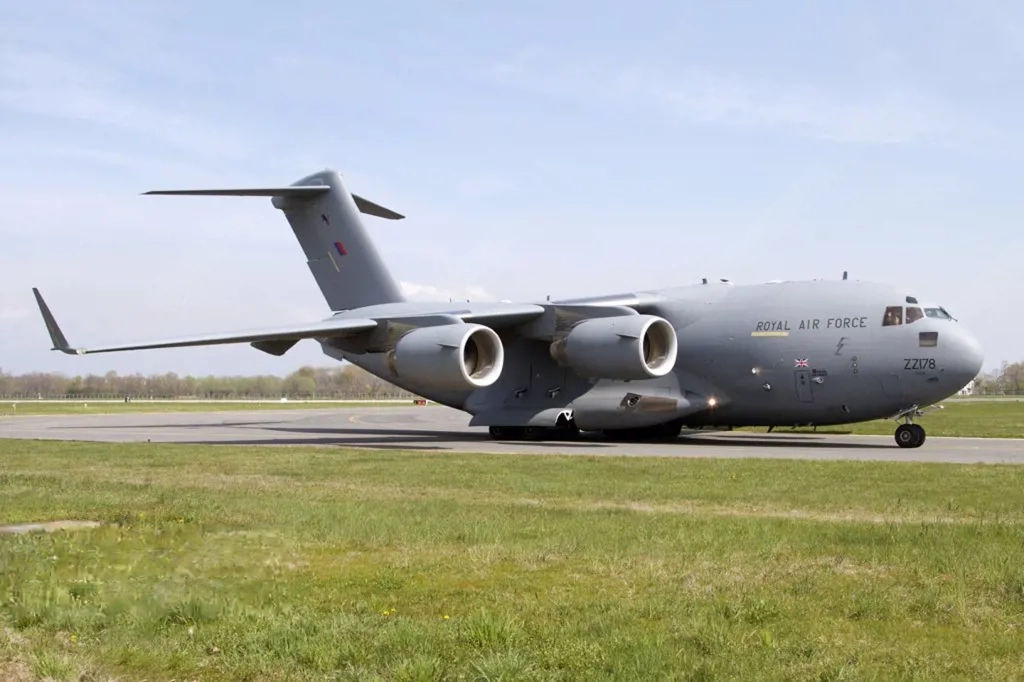
The U.S. Air Force has moved a once-speculative idea into a formal procurement study: whether Boeing can restart production of the C-17 Globemaster III more than a decade after its assembly line closed. The answer could determine whether the service revives a proven cargo aircraft, extends the lives of existing jets or pays to develop an entirely new strategic airlifter.

Air Mobility Command chief Lt. Gen. Daniel Tulley confirmed on Sept. 16 that the restart will be considered in the Air Force’s upcoming Analysis of Alternatives for replacing both the C-17 and the larger C-5M Galaxy. As detailed by National Defense, the service is asking vendors whether the former production machinery and dies can be restored, what that work would cost and whether an improved C-17 would make more sense than a new aircraft. No restart or procurement decision has been made.
A closed line is more than an idle factory
Boeing delivered the final C-17 in 2015 after producing 279 aircraft for U.S. and international customers. Reopening that line would not simply mean switching the machinery back on. The Air Force first needs to establish what tooling still exists, what condition it is in and whether the suppliers behind the original aircraft could resume work.
That distinction matters because large-aircraft production is a distributed industrial system. Final assembly depends on specialized tools, qualified processes, production documentation and vendors capable of supplying aircraft-specific parts. Even if major machinery was preserved, restoring the broader manufacturing chain could require new equipment, supplier qualification and workforce development.
Tulley identified price as a central unknown. A RAND Corporation analysis conducted more than a decade ago found that the C-17 production options it examined would require billions of dollars in new investment and would carry risk. That older estimate does not establish what a restart would cost now, but it demonstrates why recovering a closed line cannot be treated as a low-cost shortcut.
The C-17 itself would also need scrutiny
The comparison is not merely between an old aircraft and a new one. The Air Force must determine what an updated C-17 would require to remain useful across its future planning horizon. Tulley cited improved self-protection, connectivity and networking among the capabilities that could be considered.
Adding those systems could preserve the C-17’s established airlift role while updating its mission equipment. It could also increase the scope, cost and testing burden of a restart. New electronics and defensive systems have to be integrated with the aircraft’s power, cooling, data and cockpit architecture. The more extensively the design changes, the less a restarted aircraft resembles a straightforward continuation of the 2015 production configuration.
Keeping the current fleet longer is a separate option. A service-life extension could defer replacement without reconstructing the production system, although the Air Force still must decide whether extending existing C-17s provides better value than producing updated examples. The analysis is intended to compare those paths rather than assume that restarting production is automatically preferable.
A new airlifter remains the competing path
The Air Force’s stated plan has been for a Next-Generation Airlift platform to begin replacing the C-17 and C-5 in the mid-2040s. A clean-sheet aircraft would allow newer technologies and requirements to shape the design from the outset. The tradeoff is the time, expense and development risk involved in creating and fielding a new large transport.
Congress is also seeking more detail. A House Armed Services Committee report accompanying a draft fiscal 2027 defense policy bill directed the Air Force to prepare a formal briefing on possible new C-17 production. That direction calls for information, not an authorization to buy more aircraft.
Boeing said in June that unnamed C-17 operators had contacted it about a possible restart. Australia, Canada, India, Kuwait, Qatar, the United Arab Emirates and the United Kingdom operate the aircraft, while the multinational Strategic Airlift Capability initiative operates three. Those fleets could create an opportunity for international participation, but no foreign commitment has been announced.
The next meaningful result will not be an expression of operator interest. It will be evidence that the tooling, supplier base and modernization plan can be reconstructed at a defensible cost. Until vendors answer those questions, restarting the C-17 remains one candidate in a study not a return to production.
| More aerospace and engineering stories, right in your MSN feed. Follow AMI on MSN |
By David Whitaker — Associate editor for AMI’s aerospace and drone systems desk, translating flight systems, aircraft programs, spaceflight, and UAV developments into accessible technical stories.