2027 Chevrolet Colorado’s $33,500 WT Matches $50,800 ZR2 at 350 Horsepower
A $17,300 climb through the 2027 Chevrolet Colorado range buys no additional horsepower. The $33,500 WT and $50,800 ZR2 both use a 2.7-liter TurboMax four-cylinder rated at 350 horsepower and 450 pound-feet of torque. The difference lies primarily in the hardware around that engine: suspension, tires, four-wheel-drive equipment, off-road controls and convenience features.
Chevrolet’s 2027 Colorado specifications make the enhanced TurboMax standard across the six models it displays: WT, Custom, LT, Trail Boss, Z71 and ZR2. This effectively removes engine output as a step in the trim hierarchy. Buyers do not have to move above the work-oriented WT to obtain the highest listed power rating.
One engine rating, sharply different chassis hardware
Equal power and torque do not make the WT and ZR2 mechanically equivalent. The ZR2’s price supports a specialized off-road configuration that changes ground clearance, wheel control and how the truck applies its available output on loose or uneven terrain.
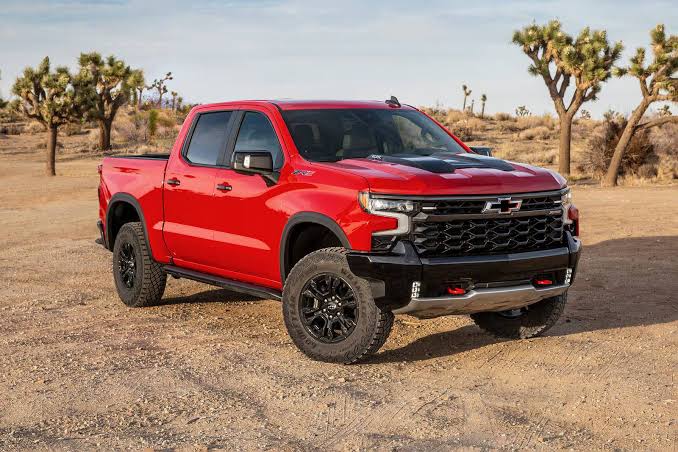
The Trail Boss begins that mechanical separation with a two-inch factory lift, 32-inch all-terrain tires, a two-speed automatic transfer case and four selectable drive modes. The ZR2 goes further with a three-inch factory lift, 33-inch mud-terrain tires, Multimatic DSSV dampers, launch control and Baja Mode.
Those components address functions that an engine-output figure cannot describe. Tire construction influences traction and on-road behavior, while lift height affects clearance and vehicle geometry. Dampers control wheel and body motion, and dedicated drive modes coordinate power delivery and stability systems for particular conditions. Chevrolet has therefore standardized propulsion output while continuing to distinguish trims through chassis capability.
The model-year change is substantial under the hood. Chevrolet listed the 2026 Colorado at 310 horsepower and 430 pound-feet, so the 2027 engine adds 40 horsepower and 20 pound-feet. Chevrolet identifies a new turbocharger, upgraded fuel injection, improved active thermal management and redesigned pistons among the revisions. The 2027 engine is specified for regular 87-octane gasoline.
More power does not raise the stated towing ceiling
Despite the output increase, maximum available towing remains 7,700 pounds with the required Advanced Trailering Package. The package is listed at $945 for WT and LT, while it is standard on some higher configurations. That requirement illustrates why horsepower alone cannot define towing capability.
Tow ratings account for the complete vehicle-and-trailer system, including the driveline, cooling capacity, tires, structure and combination dynamics. The historical SAE J2807 edition establishes minimum performance criteria at gross combination weight and a method for calculating trailer weight ratings. Its prescribed evaluations include vehicle-and-trailer performance rather than an engine specification in isolation.
Chevrolet lists a $2,095 destination charge, which brings a two-wheel-drive WT to $35,595 before options, taxes and other fees. The $33,500 WT and $50,800 ZR2 figures both exclude destination, preserving the underlying $17,300 trim-price difference.
The Custom sits near the bottom at $34,645 before destination, or $1,145 above the WT. Although Chevrolet presents it as a separate model card in the six-model comparison, it corresponds to a WT fitted with the $1,145 Custom package. The package adds 18-inch black aluminum wheels, all-season tires and black badging. Custom also appeared on Chevrolet’s 2026 page, so it is not a newly created name for 2027.
The shared engine code also has a useful boundary. Full-size Chevrolet Silverado 1500 and GMC Sierra 1500 applications carrying the L4B designation are listed at the same 350 horsepower but 455 pound-feet five more than the Colorado. A common engine code does not guarantee identical output in every installation.
For 2027, the Colorado’s trim ladder is consequently easier to read in mechanical terms: all six versions begin with 350 horsepower and 450 pound-feet. Moving from the WT to the ZR2 purchases the tires, lift, dampers and control systems intended to make that output useful in more demanding terrain, not a higher number from the engine.
| More aerospace and engineering stories, right in your MSN feed. Follow AMI on MSN |
By Thomas Caldwell — AMI’s senior editor for mechanical and mobility engineering, covering vehicle electronics, systems integration, electrification, chassis systems, propulsion, and safety policy.