Dodge Will Return to NASCAR’s Top Division After 15 Years Away
Dodge will return to the NASCAR Cup Series with Kaulig Racing in 2027, ending 15 years away from NASCAR’s top division and months of speculation about a comeback. Stellantis confirmed the program on Nov. 2, naming Kaulig as Dodge’s anchor team. The move will restore a fourth Cup manufacturer alongside Chevrolet, Ford and Toyota.
The first points-paying race is scheduled to be the Daytona 500 on Feb. 21, 2027. That will be Dodge’s first Cup start since 2012, when Brad Keselowski and Team Penske won the series championship during the manufacturer’s final season. Dodge previously left NASCAR after 1984 and returned in 2001.
Kaulig is expected to field two full-time Dodge Charger entries. The team currently runs two Chevrolet-aligned Cup cars driven by AJ Allmendinger and Ty Dillon, and both drivers are expected to retain their seats, although Kaulig has not confirmed that lineup. The team plans to announce its 2027 drivers during NASCAR’s season finale at Homestead-Miami Speedway.
The Athletic also reports that Kaulig is expected to enter a third Dodge part time in selected races, including the Daytona 500. That additional car has not been officially announced. NASCAR generally caps organizations that did not already operate four cars before the 2025 season at three full-time entries, so the reported plan would remain within the organization limit.
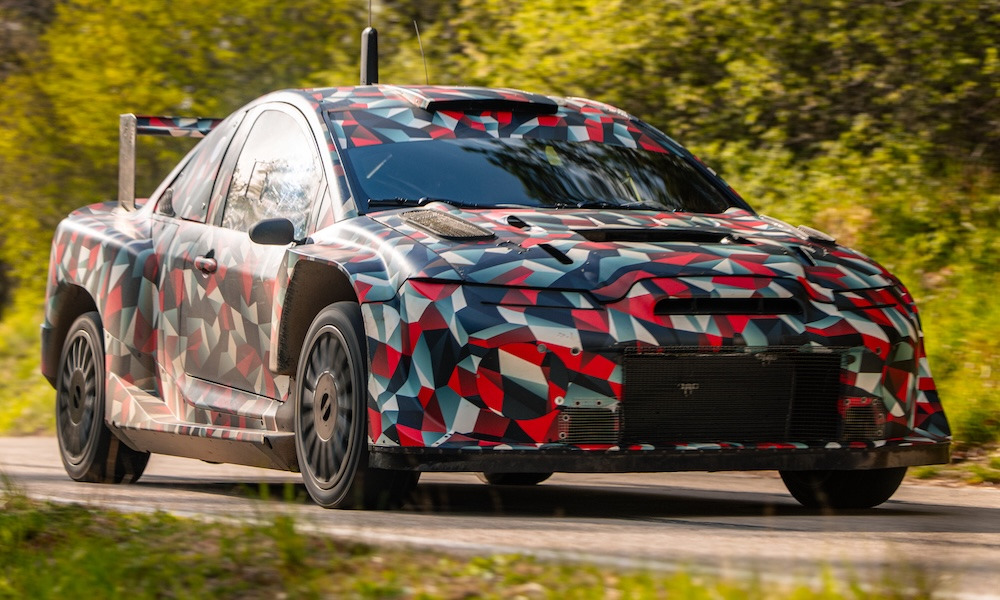
Dodge is due to unveil its Cup car on Dec. 4 at the Snowball Derby at Five Flags Speedway in Pensacola, Florida. NASCAR’s official announcement identifies the two full-time cars as Chargers. The engine supplier remains unannounced, although multiple reports indicate that ECR Engines is expected to build the powerplants. ECR, owned by Richard Childress, currently supplies Chevrolet engines to Richard Childress Racing and Trackhouse Racing.
A compressed development program
The schedule is more demanding than simply changing the badges on Kaulig’s existing cars. A new manufacturer body must meet NASCAR’s aerodynamic performance targets, and Dodge did not have an existing Cup template to revise. NASCAR Event Management President John Probst said the program went through the same computational-fluid-dynamics and wind-tunnel process used for other new body submissions, a process that normally takes about 18 months.
Dodge has passed the wind-tunnel phase using prototype components. Production-level body panels still must be checked to ensure the finished parts remain within NASCAR’s permitted aerodynamic range. Probst characterized that remaining check as routine, but the timing leaves Kaulig limited time to build cars and prepare them for Daytona.
Testing is constrained as well. NASCAR’s rules for incoming manufacturers allow no more than three tests in a national series. Each test can include up to three affiliated organizations with two vehicles apiece, can last no more than two consecutive days and must be completed by March 1. Tests are also restricted at newly paved tracks, new schedule additions and venues hosting a race within 60 days.
That framework explains the central risk in Dodge’s timetable. Stellantis executive Tim Kuniskis said the company could have spent three years planning, testing and refining the program, but instead intends to do all three “in real time, on the track.” He acknowledged that the approach will be “exponentially harder.” Race weekends will therefore serve two purposes: pursuing results while generating the setup, durability and operational knowledge that a longer private-development period might have supplied before the debut.
Kaulig does have a preliminary working relationship with Stellantis. The manufacturer returned to NASCAR through Ram’s Craftsman Truck Series program, where Kaulig fielded five trucks and recorded 18 top-10 finishes during the season described. Cup competition, however, adds a new body-approval process, a different engine program and a much larger coordination task across engineering, manufacturing and track operations.
Dodge’s return gives NASCAR its first fourth Cup manufacturer since the brand left after 2012. Whether the accelerated approach works will become clearer quickly: the driver lineup comes first at Homestead-Miami, the completed race car follows in Pensacola on Dec. 4, and then Kaulig must turn an approved design into race-ready machinery before the Daytona 500.
| More aerospace and engineering stories, right in your MSN feed. Follow AMI on MSN |
By Robert McKinney — Editor-in-Chief for AMI’s automotive and mobility coverage, with a mechanical engineering background and a decade reporting on powertrain systems, EV innovation, and global vehicle manufacturing.