Toyota Brings Celica Back for 2027 World Rally Championship, Road Car Later
The Toyota Celica is returning in 2027, but not first as the production sports car enthusiasts have been waiting to buy. Toyota has confirmed that a new GR Celica will compete in the 2027 World Rally Championship, while the mechanically distinct road-going model remains years away with its basic layout still unresolved.
Toyota is expanding its top-class rally operation into two teams with two model identities. Toyota Gazoo Racing will continue with the GR Yaris, while the new Toyota Racing team will field the GR Celica. Both will compete in the Rally1 category as equal entries rather than as senior and junior programs.
That creates an unusual split between what spectators will see and what the cars are underneath. The 2027 regulations introduce a shared control chassis and call for adapted versions of the turbocharged 1.6-liter four-cylinder engines currently used in Rally2. Toyota’s Celica and Yaris will therefore use the same key mechanical components, with their separate identities established primarily through the bodywork fitted over the common structure.
Celica bodywork, standardized rally hardware
The new framework gives Toyota a relatively direct route to reviving a familiar name in competition. Previous Rally1 rules allowed a manufacturer to homologate only one model. The revised approach permits a variant model when the principal mechanical components remain identical, allowing Toyota to run both the Yaris and Celica without developing two independent rally platforms.
Standardization reduces the engineering burden behind the second body identity. Toyota does not need separate chassis, suspension, braking and powertrain programs for each model, which would add development cost, spare-parts complexity and trackside support requirements. The two teams can instead operate mechanically similar cars while giving Toyota two recognizable shapes and names in the championship.
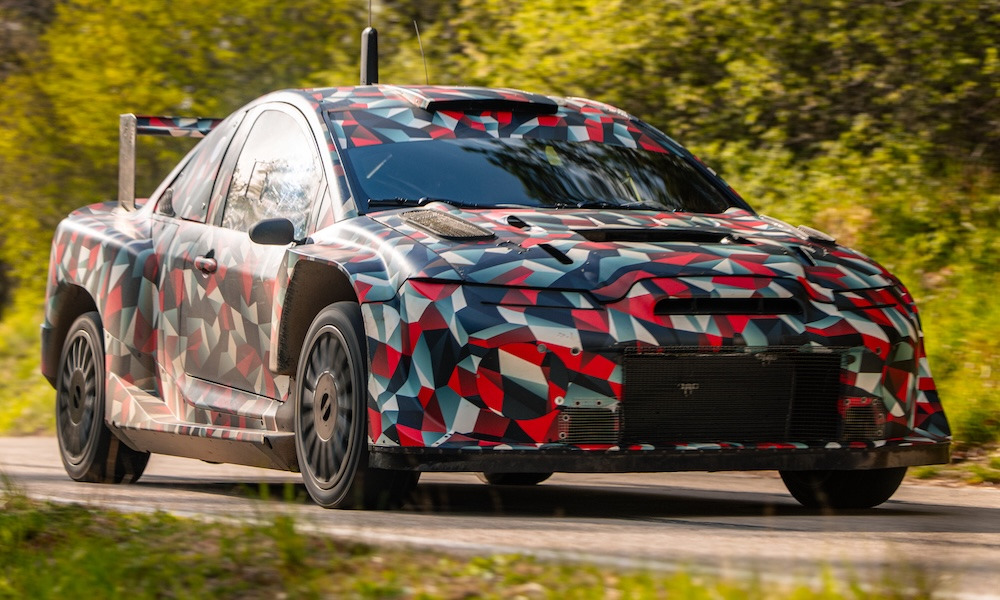
The GR Celica Rally1 will use a front-mounted engine, and camouflaged rally prototypes have already been testing. That configuration, however, offers little guidance about the eventual showroom car. It is determined by the rally package rather than by a requirement to reproduce a production Celica’s architecture.
The rules also remove the traditional expectation that a top-level rally car must be based on a corresponding road model. Toyota can homologate and race the GR Celica without first putting a Celica into dealerships. Rally-specific production requirements apply to the competition vehicle, not to a mass-market counterpart.
The production Celica remains an open engineering question
Toyota is still expected to develop a road-going Celica, but its platform, engine position, drivetrain and launch timing have not been confirmed. It could share little beyond styling cues and the badge with the 2027 rally car. Even the amount of rally bodywork that might influence the production design remains unclear.
Reports have connected the road car with two substantially different paths. One is a mid-engine platform under development at Toyota, potentially shared with a revived MR2. Gazoo Racing head Tomoya Takahashi previously described that architecture as being in the first of four development stages, with readiness not expected until closer to 2030.
That proposed platform has also been associated with a turbocharged 2.0-liter four-cylinder engine known as G20E, potentially producing more than 400 horsepower. A separate report has suggested an all-wheel-drive hybrid Celica. These remain unconfirmed possibilities rather than production specifications.
The other reported direction is a front-engine layout, which would align more closely with the Celica’s historical configuration. Toyota has not identified which route it will take, leaving major packaging questions unanswered: where the engine sits, which wheels it drives, whether electrification is included and how the car will be positioned relative to Toyota’s other performance models.
The rally program can move faster because those production decisions are no longer prerequisites. In 2027, Celica will describe the body and identity of a standardized Rally1 machine sharing its mechanical foundation with the GR Yaris. A road Celica, if it follows closer to 2030, will be a separate engineering project rather than a street version of the rally car.
| More aerospace and engineering stories, right in your MSN feed. Follow AMI on MSN |
By Robert McKinney — Editor-in-Chief for AMI’s automotive and mobility coverage, with a mechanical engineering background and a decade reporting on powertrain systems, EV innovation, and global vehicle manufacturing.