Boeing Puts SpaceX Network on Nine C-17s; Contracts Cover 19
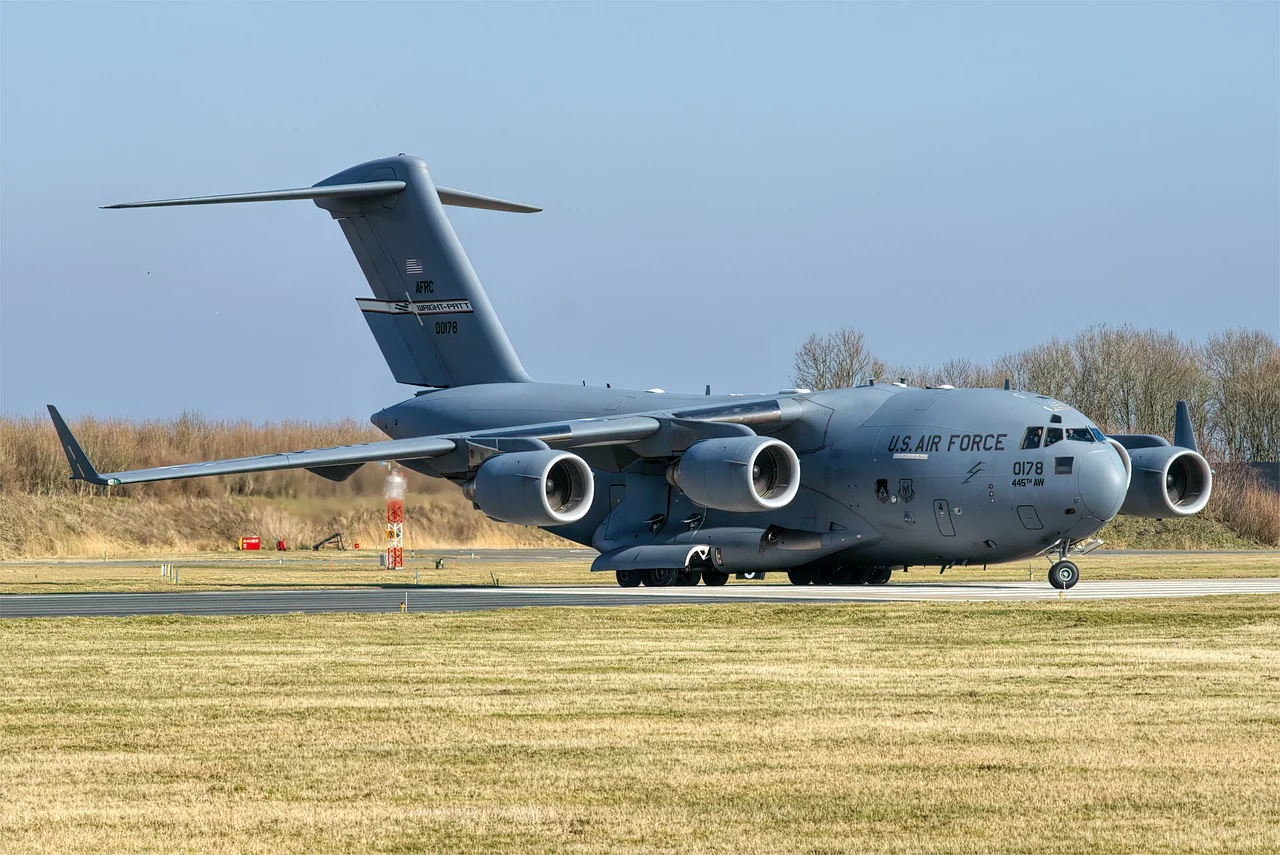
Boeing technicians at Port San Antonio have finished installing SpaceX’s Starshield satellite connection on nine U.S. Air Force C-17 Globemaster III cargo jets. Ten more are due by March under two contracts worth a combined $13.5 million, bringing the currently funded installation effort to 19 aircraft.

That is fewer than one in 10 of the Air Force’s 222 C-17s. The service expects follow-on agreements could eventually extend the network across the entire fleet, but the other 203 aircraft are outside the scope of the present contracts. The immediate program is therefore a limited production run rather than a funded fleetwide conversion.
Starshield is the government and defense version of SpaceX’s Starlink satellite-internet service. Installed on a C-17, it provides a satellite link intended to keep crews networked and able to exchange mission data while moving personnel and cargo worldwide. The work gives an established transport aircraft a new digital layer without changing its basic airlift mission.
Starshield supplies the link, while ATOMS organizes the data
The satellite service works with the Air Force’s Airlift/Tanker Open Mission Systems communications suite, or ATOMS. Sierra Nevada Corp. supplies the Starshield and ATOMS equipment and installation kits, according to the Air Force, while Boeing performs the C-17 integration work in San Antonio.
An Air Mobility Command description of ATOMS says the modular system can provide every crew position with secure tablets tied to tactical data. It also supports secure chat through which crews can receive mission updates, cargo changes and air-refueling assignments before landing.
The architecture is designed to use multiple beyond-line-of-sight satellite providers rather than depend permanently on one vendor. Starshield supplies the connection for the current C-17 installations, but the broader ATOMS approach gives the Air Force room to change communications services as networks, costs and requirements evolve.
That flexibility follows years of military testing involving commercial satellite constellations. The Air Force Research Laboratory’s Global Lightning program began in 2018 and has worked with more than 10 aircraft types. Its later work has focused on hybrid equipment capable of communicating through commercial and military constellations in low, medium and geostationary orbits.
Port San Antonio can perform the work, but expansion needs contracts
Boeing’s San Antonio operation is already part of the C-17 maintenance system. Established in 1998, the facility has more than 1.6 million square feet of enclosed area and 940,000 square feet of hangar space. Boeing also holds a reported $9.5 billion agreement covering heavy maintenance for the C-17 fleet, with work performed at the port.
Placing the communications modification inside an established maintenance center can combine new equipment work with an existing sustainment pipeline. A fleetwide rollout would still require additional kits, aircraft scheduling and installation capacity. Every jet brought in for modification must be balanced against the Air Force’s need to keep transports available.
Starshield-based ATOMS equipment is also being installed on limited numbers of KC-135 and KC-46 tankers and C-130 transports. Those installations show that the Air Force is pursuing a connected mobility fleet, although the publicly identified quantities remain limited rather than fleetwide.
For SpaceX, the C-17 work also marks an expansion beyond launching military spacecraft. At least $6 billion in Pentagon spending is tied to Starshield, including $4.2 billion in Space Force contracts associated with the Golden Dome missile-defense system. Starshield technology is also being introduced on some executive aircraft, Navy ships and unmanned boats.
The C-17 installation remains the clearest measure of near-term progress: nine aircraft are connected, 10 more are covered for completion by March, and bringing the same capability to the remaining 203 Globemasters depends on contracts that have not yet followed.
| More aerospace and engineering stories, right in your MSN feed. Follow AMI on MSN |
By David Whitaker — Associate editor for AMI’s aerospace and drone systems desk, translating flight systems, aircraft programs, spaceflight, and UAV developments into accessible technical stories.