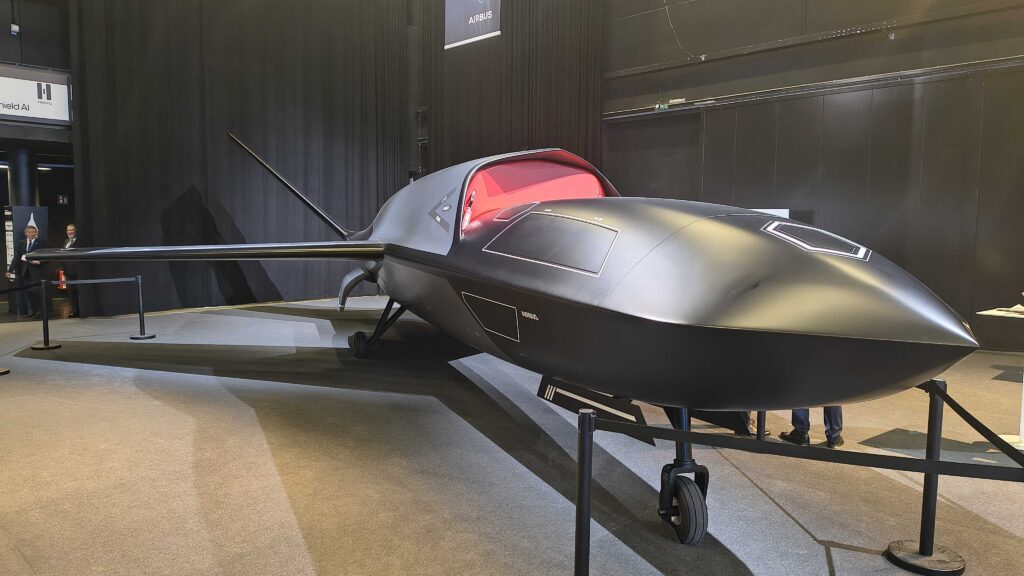
Geran-5 Reportedly Reaches 1,000 Kilometers Per Hour, Straining Ukraine’s Drone Defenses
Ukraine’s interceptor problem is no longer defined by aircraft speed alone. Serhiy “Flash” Beskrestnov, an adviser to Ukraine’s president on defense technologies, said Russia’s Geran-5 jet-powered drone had reached 1,000 kilometers per hour during certain maneuvers. Yet an interceptor capable of comparable performance would still be ineffective if detection, tracking, guidance or frontline operation lagged behind.
Beskrestnov made the claim while speaking with journalists in Kyiv on October 29. No independent measurement or detailed description of the maneuvers accompanied it, leaving the figure as an attributed peak rather than a confirmed sustained speed. Even with that limit, the claim raises the performance threshold facing Ukraine’s counter-drone developers.
Earlier interceptors are losing their speed margin
Ukraine’s first interceptor designs addressed a slower class of aircraft. “Our guys built interceptors that worked against the Shaheds at 300 km/h, but that’s no longer relevant,” Beskrestnov said. We needed to make new interceptors that would fly at 500, 600, 700 km/h.
The progression illustrates a moving design requirement. An interceptor developed around a target traveling approximately 300 kilometers per hour may have insufficient performance margin against a much faster jet-powered aircraft. Increasing propulsion performance can restore some of that margin, but it can also place greater demands on structures, flight controls, guidance hardware and manufacturing consistency.
The newly reported figure follows an earlier, more cautious Air Force projection. In an October 6 readiness update, Deputy Air Force Commander Yurii Cherevashenko said Russian jet drones could eventually reach 800 to 900 kilometers per hour. He said those speeds had not been recorded at that point and put the maximum for aircraft then in use at 600 kilometers per hour.
Higher speed compresses the whole detection chain
A faster target reduces the time available for sensors to establish and maintain a useful track. The resulting pressure extends through detection, classification, data transfer, automatic acquisition and guidance. Extra interceptor speed cannot recover time already lost because an aircraft was detected late or its track was unreliable.
A review and simulation study of counter-drone sensors describes radar, radio-frequency, optical and acoustic sensing as technologies with different ranges, measurement errors and operating limits. Combining them can improve coverage, but fusion introduces its own requirements: observations must be associated with the correct aircraft, synchronized in time and converted into a sufficiently accurate track.
Those are reliability and integration problems rather than headline speed figures. Automatic target acquisition must distinguish a valid track from false detections, while guidance depends on timely and accurate information. If either function performs inconsistently, a faster interceptor merely reaches an uncertain situation sooner.
NATO is examining the same broader architecture through its Layered Counter-UAS Initiative. NATO defines a counter-drone cell as sensors, a command and control node and response systems operating together, with data shared beyond the individual cell. Its current experimentation connects multiple cells across different manufacturers and countries, testing whether information can move reliably through the complete system.
Prototype performance must survive serial production
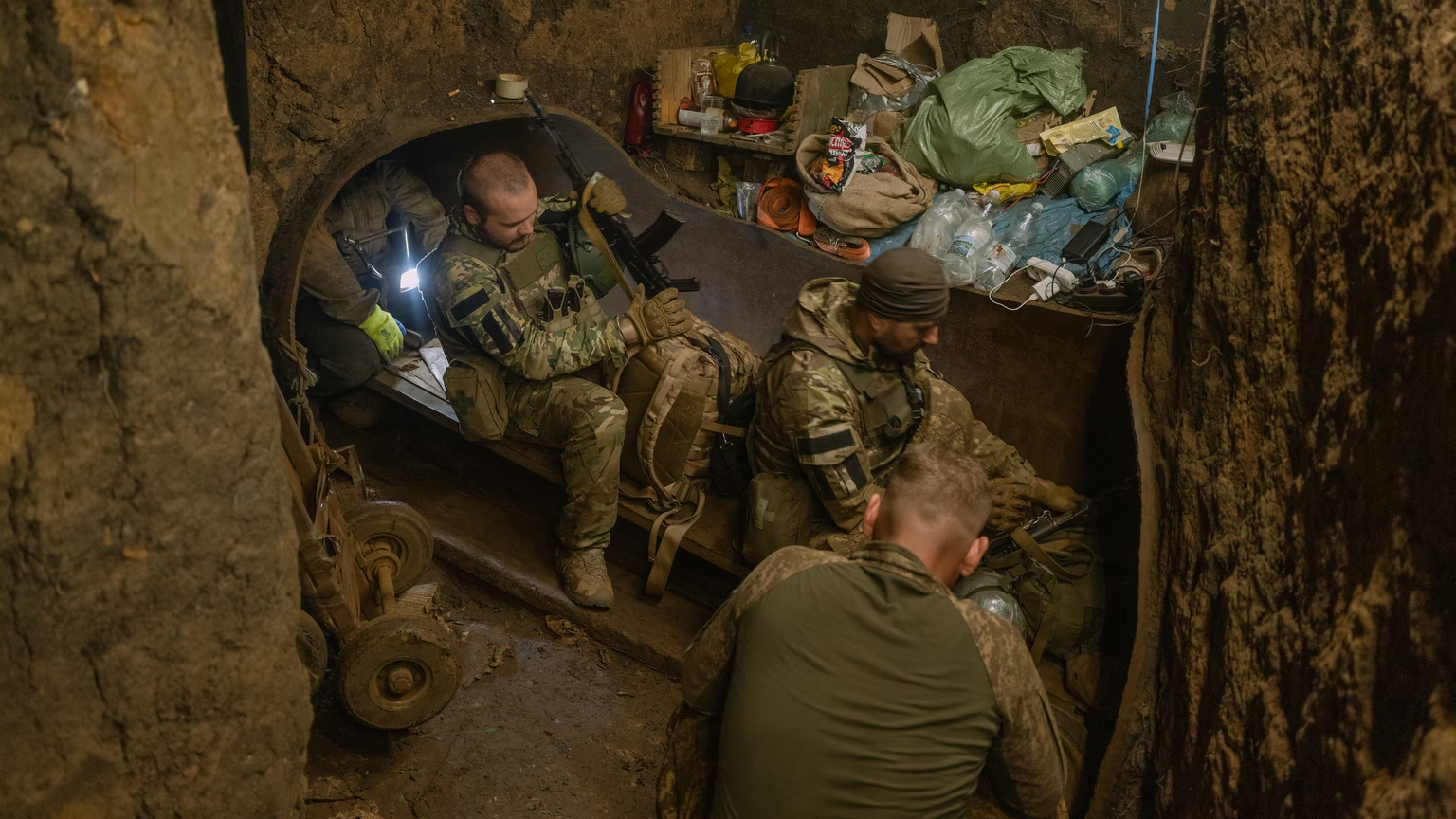
Ukraine’s industrial effort shows why a successful flight demonstration is only an intermediate step. Cherevashenko said on October 6 that 20 manufacturers were communicating with the Air Force and 14 were conducting flight tests. Six had achieved certain results, while three had results the Air Force considered promising. Delivery at the required scale was not expected before the end of November at the earliest.
Moving from those parallel development programs to serial output requires repeatable assembly, dependable components, quality control and an operating concept that frontline personnel can use without excessive complexity. Variations that are manageable in a prototype can become availability or reliability problems when multiplied across a fleet.
Operator simplicity is therefore a performance characteristic, not a convenience. Personnel must be able to understand system status and act under time pressure without being overwhelmed by ambiguous alerts or complicated interfaces. Greater automation can reduce workload, but only when acquisition and guidance remain predictable enough for operators to trust and supervise.
“Creating a model that flies quickly is only one part,” Beskrestnov said. And making a serial product that will be very easy to use is a completely different matter. The reported Geran-5 speed raises the upper boundary, but Ukraine’s harder milestone is delivering detection, acquisition, guidance and manufacturing that can keep pace with the aircraft.
| More aerospace and engineering stories, right in your MSN feed. Follow AMI on MSN |
By Stephen Wallace — Editor for AMI’s aerospace integration and unmanned mobility coverage, focused on drone manufacturing, VTOL systems, autonomous networks, and air-ground mobility links.