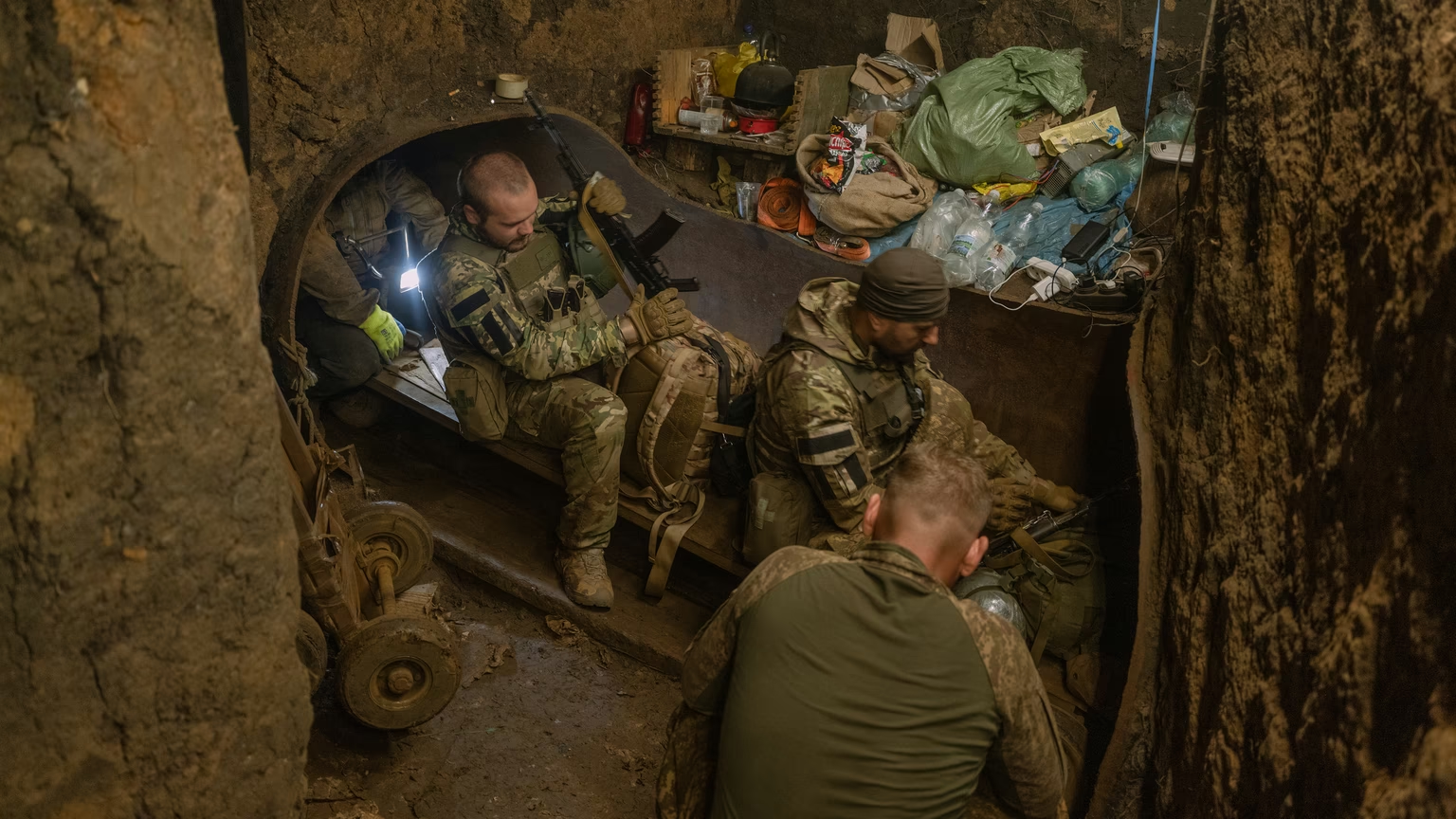
Ukraine Builds Nearly 6-Kilometer Underground Supply Route Beneath Drone-Watched Roads
Anti-drone nets can shield a road, but the shield itself becomes a daily maintenance burden. Ukraine’s Air Assault Forces now say they have taken a more permanent approach in part of Donetsk Oblast: an underground supply route almost 6 kilometers long, built to move personnel, food and ammunition without relying entirely on roads exposed to persistent drone surveillance.
Colonel Dmytro Pishko, head of the Support Forces Directorate at the Air Assault Forces Command, disclosed the completed route in an Ukrinform interview published Nov. 3. He described it as enabling “uninterrupted and camouflaged” movement between two settlements. Their names, the tunnel’s depth and its precise alignment were not disclosed.
The scale is significant because this is described as standing logistics infrastructure rather than a temporary passage for a single movement. It converts a recurring transportation problem keeping vehicles and people moving along watched roads into a fixed underground link. That shift trades the flexibility of a road network for greater concealment and continuity along one corridor.
Road protection has become an infrastructure system
Ukraine has continued expanding overhead nets and other anti-drone protection along important logistics roads. By early June, 822 kilometers had received protection installed since January. A later Ukrainian Ministry of Defence update said the State Special Transport Service had installed more than 1,640 kilometers of anti-drone protection since the beginning of 2026, including 86.65 kilometers added during October.
Those numbers show that road protection remains a large national engineering program rather than an abandoned approach. Roads connect many destinations, accommodate different vehicles and can be extended in stages. Ukraine’s strategy is therefore layered: continue protecting and repairing the broad surface network while placing selected links underground where exposure has become especially difficult to manage.
The weakness of overhead netting is upkeep. Pishko said protected routes must be inspected and repaired every day because damage can leave openings. The Ministry of Defence separately reported that more than 720 kilometers of frontline roads had undergone routine repair and maintenance since April. Installation totals alone consequently do not describe the full workload; protected roads require continuing inspection, restoration and material support.
An underground corridor changes that maintenance equation. It removes movement from direct observation along the covered section and is less dependent on an intact overhead barrier. It can also support repeated deliveries through the same concealed link. Its limitation is equally clear: a fixed corridor serves a defined route, while roads form a distributed network that can support changing destinations and volumes.
Construction does not remove exposure
Moving logistics underground also shifts risk toward construction and access activity. Pishko said Russian forces sent two first-person-view drones against one group working at an underground site and that squad leader Ivan Chokha brought both down. He did not identify the location, and the account does not establish whether that worksite formed part of the nearly 6-kilometer Donetsk route.
The episode illustrates the central engineering tension without changing the route’s reported status: underground infrastructure can conceal movement once available, but the workforce building and maintaining it can remain exposed. Fixed infrastructure also requires inspection, ventilation, drainage and access management as general operating needs, although no specifications for the Donetsk route have been released.
Pishko called the tunnel “another achievement of our engineering ingenuity” and said digging underground offers the most reliable protection closer to the front. The broader road program will still be needed because no single tunnel can replace a regional transport network. What the completed corridor demonstrates is a new threshold in drone-driven logistics: Ukraine considers surveillance over some roads persistent enough to justify moving a nearly 6-kilometer supply link below ground.
| More aerospace and engineering stories, right in your MSN feed. Follow AMI on MSN |
By Stephen Wallace — Editor for AMI’s aerospace integration and unmanned mobility coverage, focused on drone manufacturing, VTOL systems, autonomous networks, and air-ground mobility links.