Reflect Orbital Wins Test-Satellite Approval as 50,000-Mirror Plan Could Brighten Night Sky
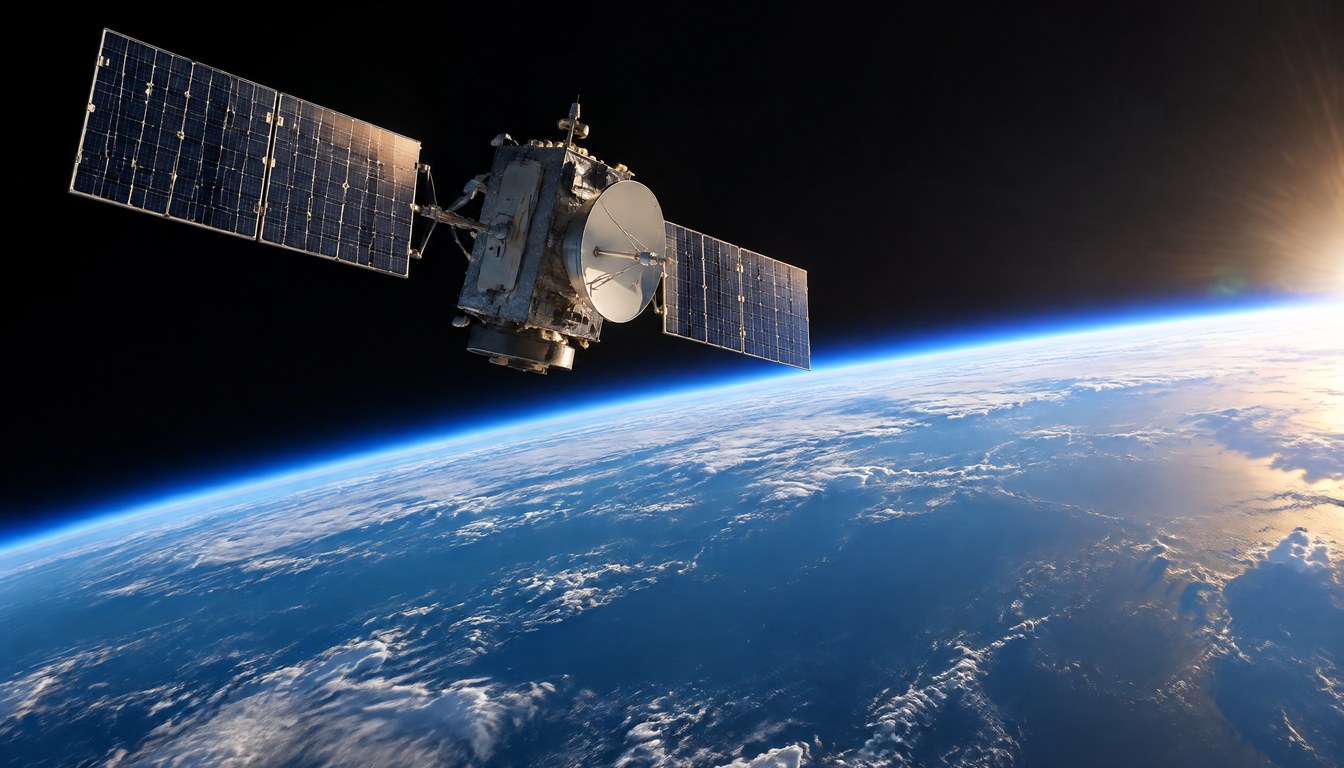
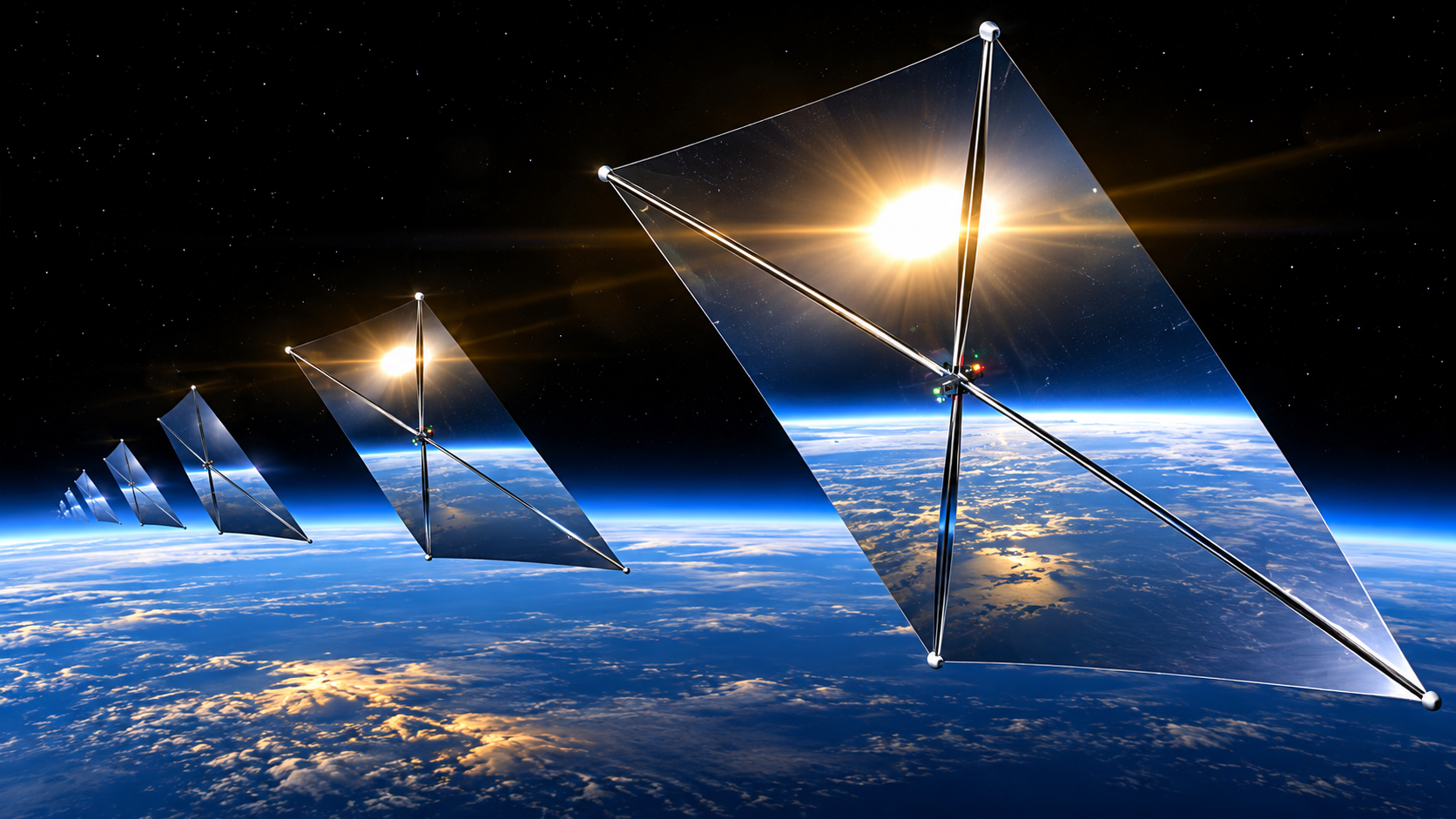
Reflect Orbital has cleared a regulatory step toward putting a mirror in orbit, but the light would not necessarily stay where a customer ordered it. The Federal Communications Commission approved the company’s Earendil-1 demonstration satellite in July, while astronomers warn that scaling the concept to 50,000 spacecraft could brighten skies far beyond the areas receiving the service.
The authorization covers one pathfinder, not the proposed constellation. Reflect Orbital currently has no satellites in orbit, and planned initial launches with India’s Skyroot Aerospace still require approval from the Indian National Space Promotion and Authorisation Centre. Even so, Earendil-1 matters because it would move the concept from floodlight simulations and engineering plans to a test involving reflected sunlight from orbit.
Reflect Orbital calls its business “sunlight as a service.” Customers could request nighttime illumination for applications including solar-power generation or search and rescue work. Sky & Telescope reported a proposed price of $5,000 per hour, a level that could put routine access beyond many rescue organizations even as nearby communities and observatories experience light that they did not purchase.
A beam in the atmosphere does not have a hard edge
The central engineering problem is atmospheric scattering. A mirror can aim reflected sunlight toward a defined footprint, but air molecules and aerosols redirect some of that light. The ground also reflects part of the beam back into the atmosphere, producing a wider glow whose intensity depends on atmospheric conditions and surface reflectivity.
A radiative-transfer study of the proposed system modeled both molecular and aerosol scattering under cloud-free conditions. It described Earendil-1 as an 18-by-18-meter pathfinder intended to illuminate a circular area with a radius of about 2.5 kilometers. Reflect Orbital’s larger operational design calls for 54-by-54-meter mirrors.
For a single 54-meter mirror, the researchers calculated illumination inside the beam at roughly 38 times the level produced by a full moon, approaching streetlight conditions. The mirror itself would appear about 40 times brighter than the full moon. Diffuse sky brightness within the illuminated area would resemble dusk shortly after sunset, making even the brightest stars difficult to see.
The effect also extends outside the nominal footprint. With average ground reflectivity, the modeled sky remained more strongly light-polluted than a full-moon sky across much of the view for an observer 14 kilometers from the beam center. In the beam’s direction, the glow could remain brighter than moonlit sky at roughly 34 kilometers. Those estimates assume clear conditions; clouds could reshape or spread the light differently.
One demonstration cannot answer a constellation-scale question
Earendil-1 can test deployment, mirror control and the ability to place reflected light over an intended area. It cannot by itself establish the cumulative effect of 50,000 orbiting mirrors. Constellation-scale consequences depend on how many satellites are illuminated at once, where their beams are directed, their orbital distribution and how often observatories encounter either the spacecraft or scattered light.
The European Southern Observatory’s analysis estimated that the full Reflect Orbital constellation could make the night sky three to four times brighter overall. Its simulations assumed that no beam was aimed directly at or near an observatory, yet concluded that the mirrors’ brightness and repeated passage through telescope images could still produce major observing losses.
This creates a policy mismatch between the scale of the authorization and the scale of the potential external effects. The FCC acted on one demonstration spacecraft. The public concern centers on a commercial network thousands of times larger, including diffuse sky brightness that would cross property lines and extend beyond customer sites. Michelle Wooten, an astronomer at the University of Alabama, framed the issue as one of public control: “Who owns the night sky?”
Environmental questions also extend beyond astronomy, although the specific biological effects of Reflect Orbital’s system have not yet been quantified. Research on artificial light at night shows that ecological responses depend on brightness, spectrum, timing and duration. Orbital illumination would therefore need assessment as a lighting system with a moving source and atmospheric reach, rather than solely as a satellite communications or launch matter.
Reflect Orbital tested a simulated beam near Independence, California, on October 10 using angled floodlights and invited search-and-rescue groups to observe. That ground exercise could demonstrate how directed illumination looks at a selected site, but Earendil-1 would provide the first relevant orbital test. The next regulatory and engineering milestone is whether the company secures launch authorization and measures not only the target area, but the skyglow experienced kilometers beyond it.
| More aerospace and engineering stories, right in your MSN feed. Follow AMI on MSN |
By David Whitaker — Associate editor for AMI’s aerospace and drone systems desk, translating flight systems, aircraft programs, spaceflight, and UAV developments into accessible technical stories.