Kazakhstan Restarts Atyrau-Samara Oil Route Carrying 200,000 Barrels Daily After Reported Drone Attack
A disruption inside Russia briefly stopped a major stream of another country’s oil exports. Kazakhstan has now restarted transit through the Atyrau-Samara pipeline after a reported drone attack in Russia’s Samara region forced the route offline, according to a November 3 update from Kazakhstan’s Energy Ministry.
The ministry said pumping resumed after a technical inspection and that the pipeline was operating normally. The interruption began overnight after the Samara Production and Dispatch Centre came under attack on November 2. Although the shutdown was temporary, it affected a route that moved 7.57 million metric tons of Kazakh crude in the first nine months of 2026 slightly more than 200,000 barrels per day on average.
A brief shutdown exposed a larger dependency
The rapid restart limits the immediate supply consequence, but it does not remove the structural issue exposed by the interruption. The Atyrau-Samara pipeline connects Kazakhstan to Russia’s Volga region, placing Kazakh exporters downstream of pumping, storage and transit infrastructure outside their own country.
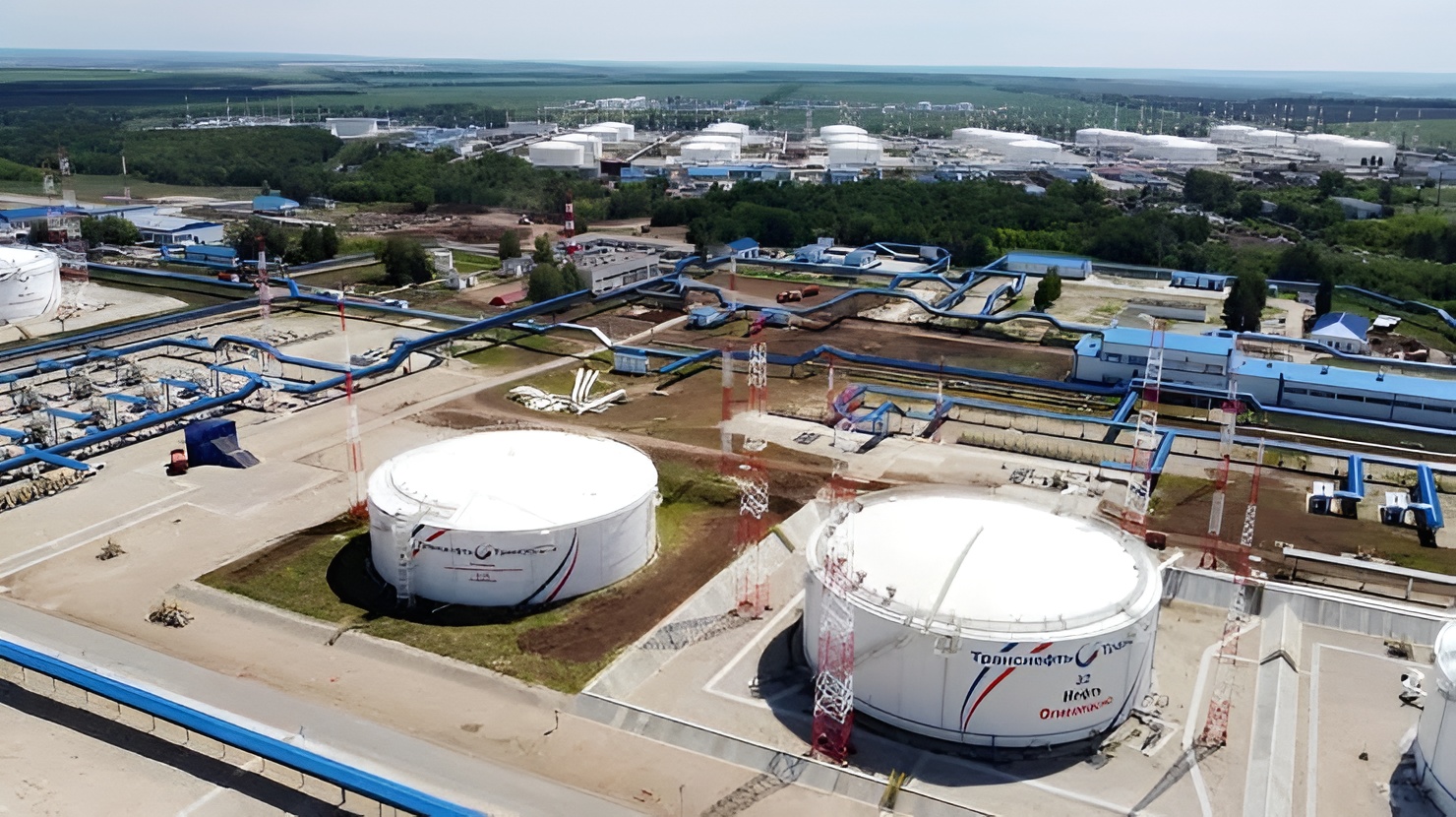
The Samara station is a substantial node in that network. It handles crude from Kazakhstan and western Siberia and has more than 1.6 million cubic meters of storage capacity. When a hub of that scale is taken offline for inspection, operators may have to suspend connected flows even before the condition of every component is publicly known. Inspection and restart procedures therefore become part of the disruption, not merely the response to it.
That is an important feature of tightly coupled energy systems. A pipeline cannot be assessed only by the condition of the pipe crossing the border. Its availability also depends on connected pumping stations, dispatch centers, storage facilities and downstream outlets. A failure or suspected failure at one operational node can interrupt throughput well beyond the location of the original event.
Kazakhstan’s exposure is broader than this single route because most of its crude exports use Russian infrastructure. The Caspian Pipeline Consortium remains the dominant corridor, carrying 64.8 million metric tons of Kazakh oil in 2025 about four-fifths of the country’s exports. Earlier in 2026, drone attacks disrupted shipments through that system’s Black Sea terminal and temporarily forced Kazakhstan to reduce exports.
Alternative routes cannot absorb the main flows quickly
Kazakhstan is increasing shipments across the Caspian Sea toward the Baku-Tbilisi-Ceyhan pipeline, but the difference in scale remains large. Approximately 1.2 million metric tons moved through that alternative in 2025, compared with 64.8 million metric tons carried by the Caspian Pipeline Consortium.
Expanding the trans-Caspian option requires more than spare pipeline capacity. Crude must be moved through ports, loaded onto tankers, carried across the Caspian and transferred again into the onward network. Port capacity, vessel availability, transit agreements and additional handling costs all limit how quickly the route can take diverted volumes. Falling Caspian water levels can also require vessels to carry lighter loads, reducing transport efficiency.
This makes diversification useful as operating insurance but not an immediate replacement for Russian corridors. A backup route contributes resilience only to the extent that it has enough available capacity, equipment and commercial arrangements when a primary route stops. Nominal access to another corridor does not mean hundreds of thousands of barrels per day can be redirected without delay.
Facility damage remains unresolved
The shipment suspension and restart are confirmed, while the physical condition of the Samara facility is less clear. NASA satellite fire-monitoring data detected a heat anomaly at the station on November 2, potentially indicating a fire. Samara regional governor Vyacheslav Fedorishchev reported a Ukrainian drone attack in the region but did not confirm damage at the oil station. Neither Russia nor Ukraine confirmed that the specific facility had been struck.
The restart after inspection indicates that operators were able to return the pipeline to normal service within roughly a day. It does not erase the cross-border consequence: an incident reported inside Russia was sufficient to halt a Kazakh export flow averaging more than 200,000 barrels per day. Until alternative corridors approach the capacity and operational flexibility of the Russian network, Kazakhstan’s oil logistics will remain sensitive to disruptions at infrastructure it does not control.
| More aerospace and engineering stories, right in your MSN feed. Follow AMI on MSN |
By Stephen Wallace — Editor for AMI’s aerospace integration and unmanned mobility coverage, focused on drone manufacturing, VTOL systems, autonomous networks, and air-ground mobility links.