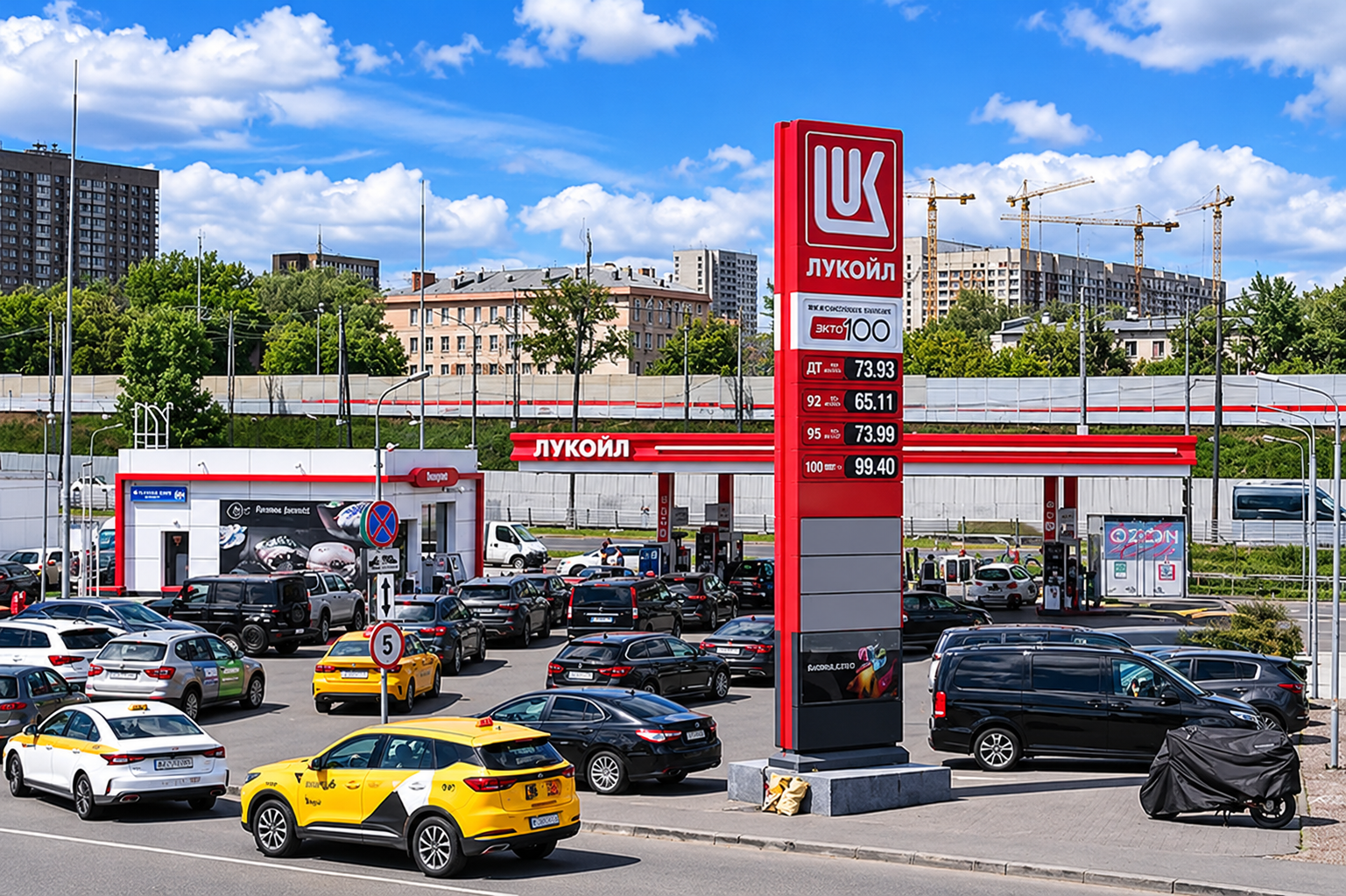
Russia Plans More Diesel Exports as St. Petersburg Availability Falls Below 40%
Russia is arranging additional diesel exports while the fuel is reportedly available at fewer than 40% of filling stations in St. Petersburg. That is a sharp deterioration from roughly 70% at the end of October, leaving drivers exposed to a distribution problem even as national production is described as sufficient for domestic consumption.

The pressure extends beyond the city. Some privately owned stations in neighboring Leningrad Region have limited purchases to between 30 and 50 liters per vehicle, while queues have produced reported waits of as long as 40 minutes. Stations in Sverdlovsk Region have also restricted sales, and Tatneft stations there reportedly stopped offering diesel. In Tambov Region, the regional operational headquarters said 29 of 214 filling stations lacked fuel after Governor Yevgeny Pervishov reported supply disruptions on October 26.
National supply does not guarantee local availability
The apparent contradiction reflects the difference between production volume and usable fuel at a particular pump. Diesel must move through several linked stages: refinery output, storage, wholesale allocation, rail or road transport and final delivery to filling stations. A country can produce enough fuel in aggregate while specific regions experience shortages if those stages are not synchronized.
German economist Yannis Kluge said, “Russia produces enough diesel fuel to meet its domestic consumption.” He suggested that the regional shortages may be connected to accelerated export organization through Primorsk, the Baltic port used to stage petroleum cargoes. That assessment points to allocation and logistics rather than a simple nationwide absence of diesel, although it does not establish a single cause for every affected station.
The announced export schedule calls for more than 300,000 metric tons in October, 500,000 tons in November and another 1 million tons thereafter. A 40,000-ton cargo loaded at Primorsk on October 22, but the vessel manager subsequently said its discharge country and port had not been finalized. The planned quantities therefore should not be treated as completed deliveries to the United States.
U.S. sanctions rules also changed the commercial pathway without guaranteeing a buyer. The Treasury Department’s General License No. 135, dated October 9, temporarily authorizes transactions involving the sale, delivery, offloading and U.S. importation of Russian-origin diesel through April 7, 2027. The authorization creates a legal channel for eligible transactions, but suppliers still require contracts, shipping arrangements and receiving terminals. Some cargoes may instead go to established destinations such as Brazil.
Exports can compete for the same logistics
Export staging can affect domestic availability even when total production exceeds national demand. Tanks, railcars, pipelines, loading slots and dispatch capacity are finite. Moving a large export parcel toward Primorsk may temporarily concentrate inventory and transport resources around a maritime route rather than the regional wholesale network serving filling stations.
Retail purchase caps are a typical response when replenishment becomes uncertain. Limiting each vehicle to 30 or 50 liters stretches remaining station inventory across more customers, but it also shifts part of the disruption onto drivers through more frequent visits and longer queues. The cap itself can intensify demand as customers refuel earlier than usual because they are unsure when the next delivery will arrive.
Refinery stability adds another constraint. Ukrainian drones reportedly attacked Russian refineries in Ufa, the Volga region and Samara Region on October 30, although the extent of any damage was not established. Without confirmed throughput losses, those incidents cannot fully explain the retail shortage. They do, however, add uncertainty to a network already balancing domestic deliveries, export commitments and regional transport capacity.
Russia lifted gasoline restrictions in 15 regions during October, indicating that one part of the fuel system had improved. The renewed diesel shortages show that recovery is uneven across products and locations. For drivers, nominal national sufficiency has limited practical value when fewer than four in 10 St. Petersburg filling stations have diesel and nearby stations ration each purchase.
| More aerospace and engineering stories, right in your MSN feed. Follow AMI on MSN |
By Thomas Caldwell — AMI’s senior editor for mechanical and mobility engineering, covering vehicle electronics, systems integration, electrification, chassis systems, propulsion, and safety policy.