B-52 Crash at Edwards Puts Test Safety Under Radar Focus
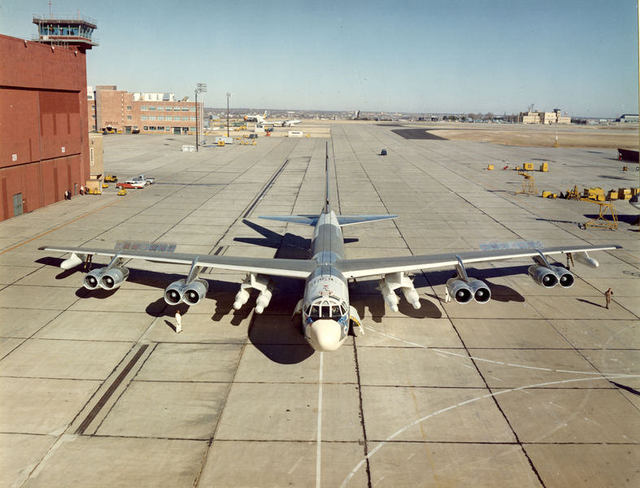
U.S. Air Force bomber crashes after takeoff in presumed fatalities, Edwards base official says The B-52H Stratofortress bomber, one of the oldest U.S. Air Force planes, crashed following takeoff on Monday, June 15, in a presumed fatal accident. Military officials report that the crash occurred at Edwards Air Force Base in California. All eight crew members on board were presumed killed as reported by Colonel James Hayes, a deputy commander at Edwards.

The bomber took off at 11:20 a.m. and immediately after takeoff crashed and burst into flames. According to Colonel Hayes, the accident is “deemed to be unsurvivable” as no names of the crew members could be released until notification of their families takes place. The crash is under investigation, but it is expected to take six months to find out the causes. Currently, no information is provided about what led to the crash of the bomber.
In terms of immediate consequences, the fact that the aircraft was flying a test mission in support of the radar modernization effort must be stressed. Test flying is different from the line flights in terms of risk level. Development flights are supposed to collect necessary data, confirm hardware and software performance, and certify the system or aircraft design for wide deployment. In case of an accident in a test scenario, special attention needs to be paid to flight-test discipline, configuration control, instrumentation, maintenance records, and risk management procedures within the program.
However, no information has emerged so far to prove some specific reason behind the accident. The crash is not confirmed to be linked to radar upgrade efforts, plane’s age, maintenance, or failure of a particular subsystem on board the B-52. For aviation specialists, that is the most accurate answer as to what really caused the aircraft loss.
It is worth mentioning that Edwards is a unique military facility in terms of its purpose and importance for the country’s aerial fleet. The base established in 1942 on Muroc Dry Lake, which had been renamed Edwards, is today an Air Force center covering more than 300,000 acres. The facility is known for flight test operations aimed at development of aircraft, airborne systems, and other supporting structures. Major accidents at this kind of facility may affect many aspects including test schedules, availability of ranges, engineering review processes, and others.
According to reports, the airfield had been shut down following the crash, all inbound aircraft had been diverted and non-commercial visitor passes cancelled. As mentioned above, any accident in a testing scenario may seriously affect base operations as well as change test calendar.
B-52 Stratofortress is an important part of the USAF bomber fleet even when undergoing modernization works. According to the description provided by Air Force Global Strike Command, the aircraft is a long-haul heavy bomber capable of carrying nuclear or conventional guided weapons and flying at altitudes of up to 50,000 feet. Thus, extending service life on an existing aircraft with its ongoing upgrade means a lot to the USAF in terms of its testing facilities. The issue should be approached with a high degree of caution due to potential dangers associated with the process.
To some extent, the crash may be considered a historical event because it is stated to be the first deadly B-52 accident on U.S. territory in decades. According to reports, two similar crashes took place earlier. One B-52 accident occurred in 1994 at Fairchild Air Force Base with four crew members killed. Another B-52 crash took place in 2016 in Guam; however, seven crew members survived.
It is too early to determine any trends concerning the accidents in the B-52 fleet as only two similar accidents took place. Nonetheless, the accident has certainly taken place at a time when the bomber continues undergoing modernization and upgrading to ensure its efficient operation.
The only thing to keep in mind about the accident is that a long investigation of events will soon begin with further analysis of what the accident implies for safety procedures within the program as well as its possible influence on aircraft test and fleet readiness.
By David Whitaker – Editor of AMI’s aerospace & drone systems desk, breaking down flight systems, aircraft programmes, spaceflight and UAV technology developments into understandable technical news stories.