Europa Clipper Powers Up for Journey to Jupiter
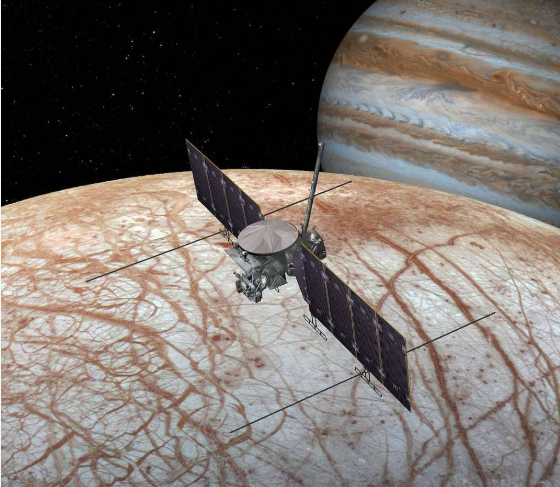
NASA’s Europa Clipper spacecraft is now fully powered for its long voyage to Jupiter following the successful deployment of its massive solar arrays. Each wing spans 46.5 feet (14 meters), making them the largest arrays NASA has ever built for a planetary mission. The deployment process began with the release of hold-downs that kept the arrays folded against the spacecraft’s body, followed by the careful unfolding of one wing at a time. With the arrays extended, the probe has a steady and reliable energy source for its multi-year journey.

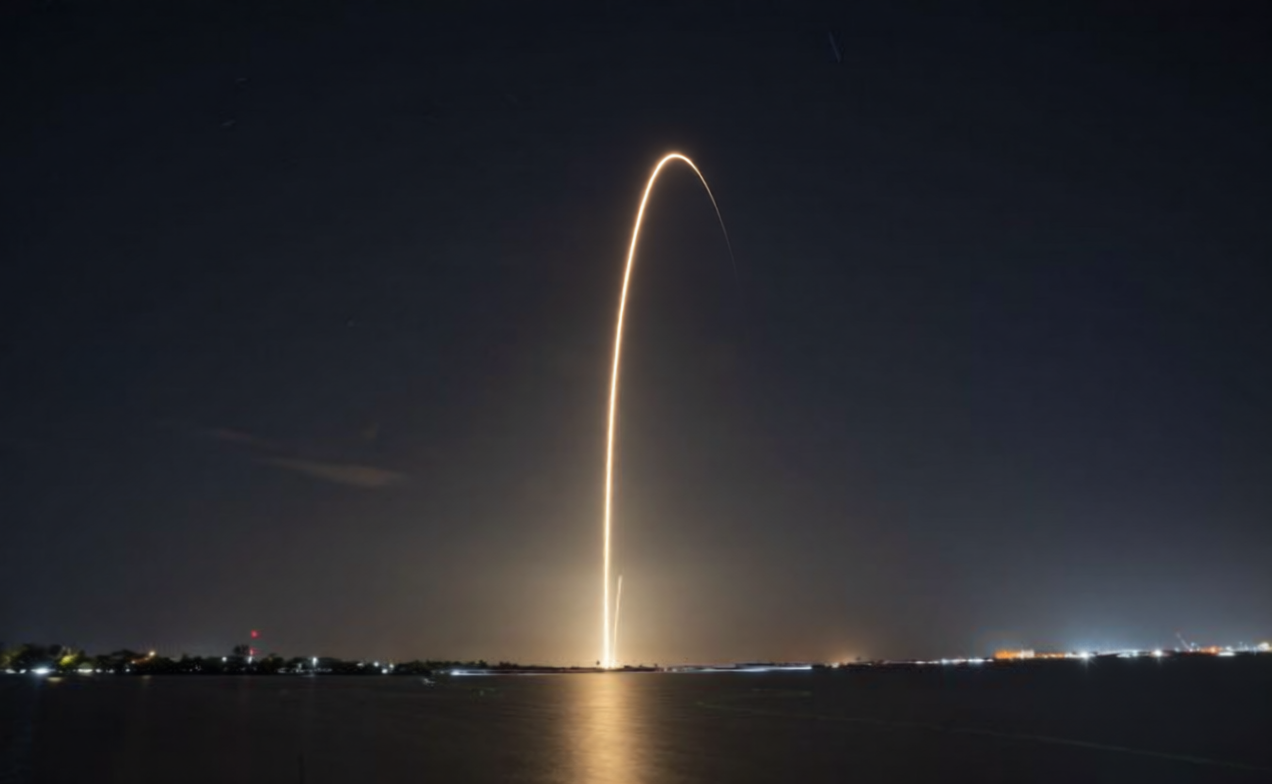
The mission began with a flawless liftoff from Kennedy Space Center’s Pad 39A on October 14 at 12:06 p.m. EDT (1606 GMT), riding atop SpaceX’s Falcon Heavy rocket. The triple-booster launch vehicle delivered maximum performance for this flight, with no attempt to recover the side boosters. These boosters had previously supported NASA’s Psyche asteroid mission, but for Europa Clipper, every ounce of fuel was dedicated to sending the spacecraft on its 1.8 billion-mile trajectory.
Following stage separation, the Falcon Heavy’s second stage reached a parking orbit before executing a final three-minute burn to place Europa Clipper on its interplanetary path. SpaceX reported “nominal orbit insertion” before the spacecraft separated from the upper stage. NASA’s flight control team at the Jet Propulsion Laboratory then acquired the signal, confirming steady telemetry and overall spacecraft health.
There was a brief report of an apparent venting issue in the propulsion system, but controllers noted that the system continued to operate as expected. With communications established, the spacecraft began warming up its onboard radios to transmit data back to Earth. The solar array deployment, scheduled about six hours after launch, marked the next major milestone and ensured the probe’s operational readiness.
The launch sequence itself was a tightly choreographed process. In the final hour before liftoff, SpaceX completed fueling operations for the Falcon Heavy’s core stage, side boosters, and upper stage with RP-1 kerosene and liquid oxygen. NASA launch director Tim Dunn confirmed all systems were “go” for propellant load and launch, adding, “We’ve got beautiful weather, a beautiful spacecraft and a great rocket.” Weather conditions were nearly ideal, with a 95% chance of favorable conditions at launch time.
Beyond its scientific payload, Europa Clipper carries symbolic cargo: millions of names submitted by the public, etched onto a chip, and “A Poem for Europa” by U.S. Poet Laureate Ada Limón. “You know, I really hope that as we embark on this incredible voyage together, that we are reminded of the wonders all around us,” Limón said during the launch broadcast.
Europa Clipper’s mission is driven by the quest to investigate Europa, one of Jupiter’s largest moons, believed to harbor a subsurface ocean beneath its icy crust. Scientists suspect this ocean has been stable for billions of years, making it a prime candidate in the search for habitable environments beyond Earth. “We think Europa’s been simmering away for the last 4 billion years, so it’s a great place to look to see if it’s been habitable,” explained Jenny Kampmeir, Europa Clipper’s science systems engineer.
The spacecraft is equipped with a suite of instruments designed to study Europa’s ice shell, ocean, composition, and geology. These include ice-penetrating radar, spectrometers, and high-resolution cameras, all of which will work together to build a detailed picture of the moon’s surface and subsurface. The solar arrays, engineered for maximum efficiency in the dim sunlight of Jupiter’s orbit, will provide the necessary power to run these systems during the mission’s flybys.
With the launch and early deployment milestones complete, Europa Clipper is now on its years-long cruise phase. It will rely on precise navigation, robust engineering, and continuous monitoring from Earth to ensure it arrives at Jupiter ready to begin its ambitious exploration of Europa.