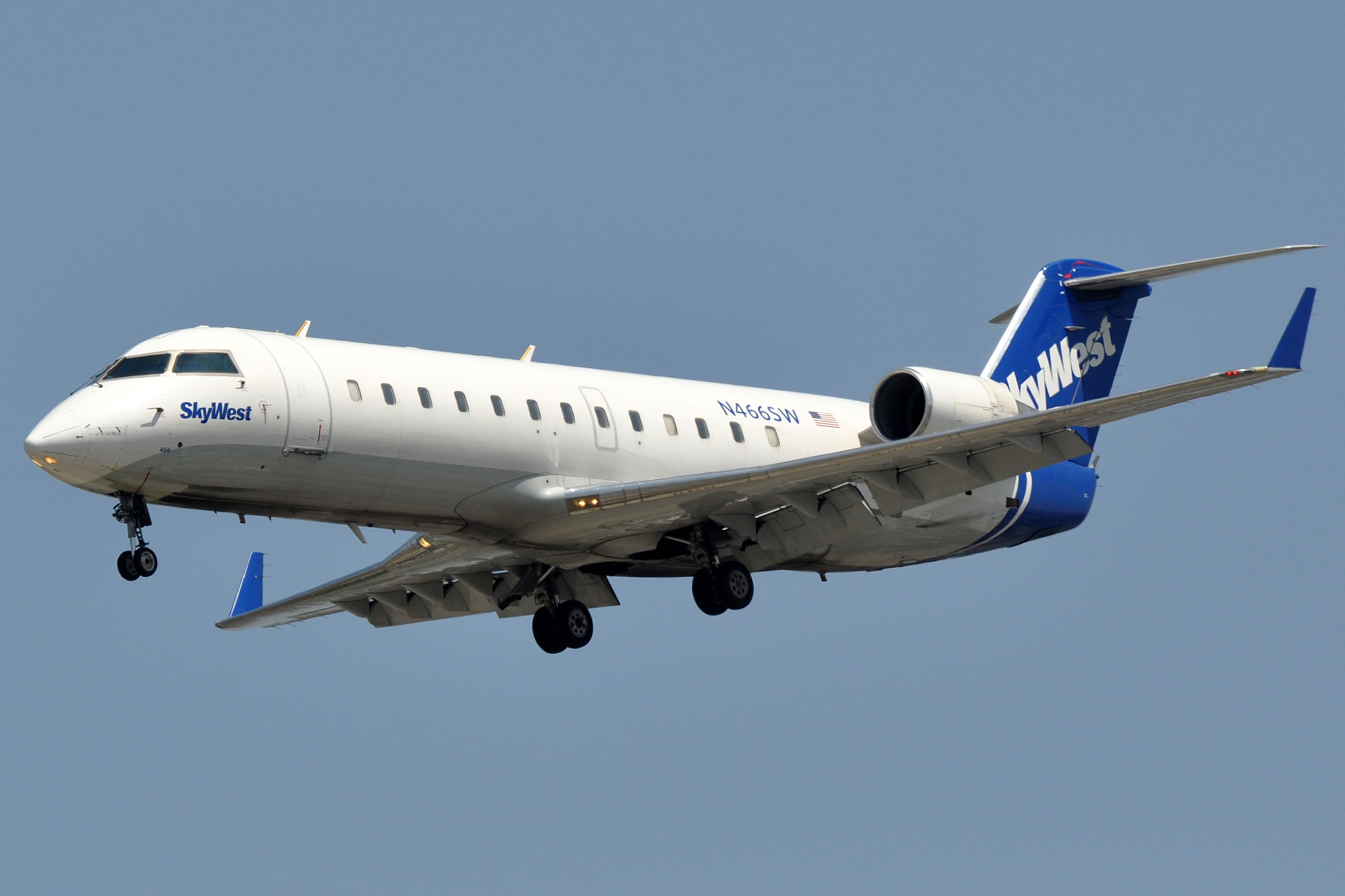
FAA Clears Cascade CRJ Freighter Conversion for US Operators
The U.S. Federal Aviation Administration has awarded STC No. ST12397NY for Cascade Aerospace’s Class E cargo conversion of the Mitsubishi Aircraft Corporation CRJ100, CRJ200, and CRJ440 aircraft in the CL-600-2B19 type category. This is important because a freighter conversion is more than the removal of seats and other passenger fittings. An STC is a certification process for a specific set of modifications to an aircraft design, and here, the process is focused on modifying a regional jet configured for passenger service to cargo-only use. Cascade described the conversion as involving the installation of a Class E cargo compartment, cargo floor reinforcement, and associated system modifications, capable of a payload of up to 14,000 pounds.

This is where the engineering story really lies. A strengthened floor is a key requirement in cargo work because cargo loading imposes very different structural considerations than does passenger seating. Class E is an important specification in certification terms because the classification of a cargo compartment directly impacts the aircraft’s airworthiness and operations. This means that any regional aircraft conversion needs to extend far past reconfiguring the interior to make the design work from a structural, systems and regulatory compliance perspective.
The FAA approval is based on previous Transport Canada and European Union Aviation Safety Agency certifications of the program, designated SA07-44 and EASA.IM.A.S.02285, respectively. For an operator or lessor, multi-authority certification is a big deal because it removes one of the most significant obstacles in aircraft modification projects. In spite of using identical hardware, the commercial attractiveness of an aircraft modification is greatly enhanced by the ability to obtain the approval for operation in major aviation markets where the converted aircraft might operate.
Cascade described the certification as the result of the engineering analysis, testing, regulatory coordination, and compliance demonstration activities performed to meet the airworthiness requirements of multiple regulatory authorities. This is the part of an aircraft modification project which often gets less visibility than the payload specifications. The importance of the STC process is that it provides the validation for not only the actual modification but also all the substantiations, tests and documentation required to establish the compliance of the modified aircraft with relevant regulations.
As an important milestone for this program, achieving FAA certification is confirmation of the maturity and robustness of our design, Greg Hatton, identified as the Certification Leader, stated. Together with the Canadian and European certifications, he continued, This will increase the operator’s confidence and flexibility.
On the U.S. market, the bottom line is simple: the approval does not introduce a new aircraft type but gives an established regional jet family an additional route into the cargo service under the approved modification. This would be appealing in cases when an operator wants to extend the service life of the CRJ airframes and employ them for regional freight transportations, remote community services or time-sensitive logistics missions without moving up to the larger freighter category.
Practically, it confirms the difficult part of the program the structural changes, systems integration and airworthiness compliance required to perform the conversion. For a U.S. operator, it is what makes the conversion a real aircraft modification from an operational perspective.
By David Whitaker — Associate editor for AMI’s aerospace and drone systems desk, providing technical coverage of aircraft programs, spaceflight and UAV developments.