Webb Data Recasts 3I/ATLAS as an Ancient Interstellar Relic
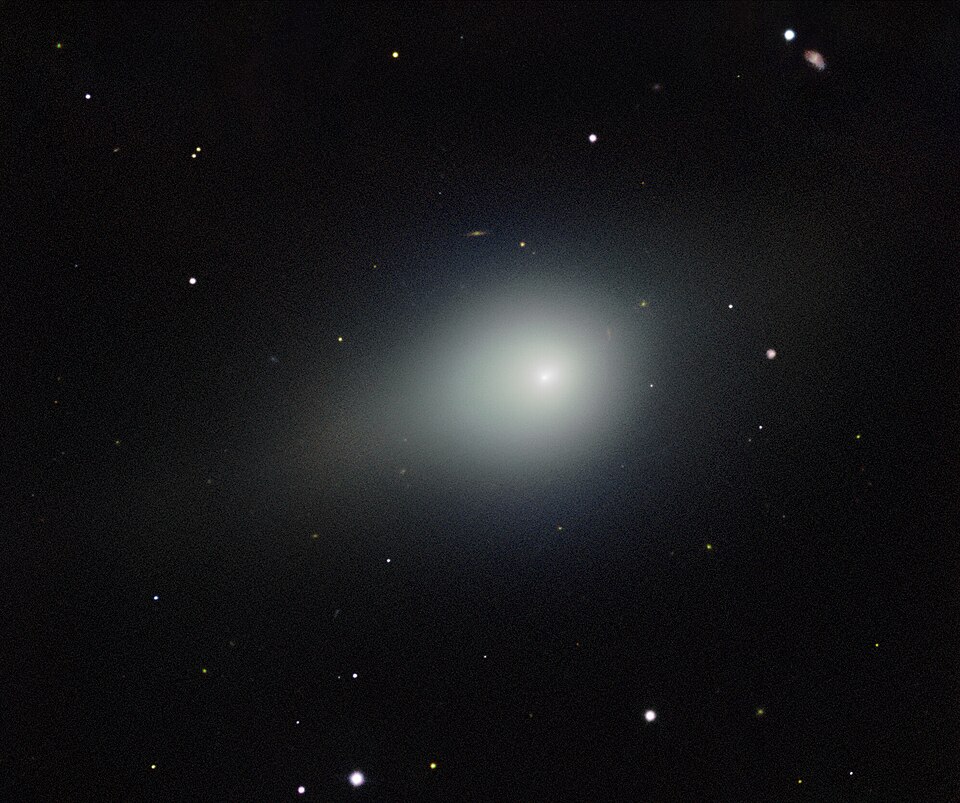
Whereas the more sensational news item regarding the interstellar object, 3I/ATLAS, is that it sparked some speculation about being an extraterrestrial spacecraft when it was discovered last year, the actual news item should be that NASA’s James Webb Space Telescope took the conversation a lot further. Namely, the most significant thing about 3I/ATLAS, which was discovered in July 2025, is that Webb enabled researchers to discuss its composition, isotopes, and possible history of formation.

That is significant because 3I/ATLAS is truly rare and unique. It is the third ever interstellar object recorded as visiting our Solar System and is only after 1I/ ‘Oumuamua and 2I/Borisov. There has been little certainty concerning its age, origin, and trajectory. The first rough estimations of the date of formation were placed somewhere around three to 10 billion years ago, but a new study published in Nature now claims that the interstellar comet might actually be 12 billion years old.
The difference now is that while before there has been speculation and estimations based on certain properties of the object, a scientific paper in Nature has now used Webb observations to come to an accurate understanding of the isotopic composition of 3I/ATLAS and hence, of its history and age. That is because in this paper, researchers say that “Here we report isotopic measurements of the interstellar comet 3I/ATLAS, which reveal an elemental composition unlike any Solar System body.”
One of the most noticeable elements of composition in the study was deuterium, or heavy hydrogen. According to the authors of the study, This interstellar comet has an extraordinary isotopic signature of 10 times as much deuterium as is seen in any Solar System body. In fact, according to a NASA update concerning 3I/ATLAS observations, Webb observations revealed extremely high deuterium levels and carbon ratios unseen in Solar System comets.
Isotopic ratios play a big part in studying the composition of an object because they provide an insight into the conditions under which the ices and other compounds have formed. As for carbon ratios, 3I/ATLAS also distinguished itself. We find the carbon ratios exceed those observed in bodies of the Solar System, nearby interstellar clouds, and protoplanetary disks, is how the researchers describe their findings.
All of these features combined show that 3I/ATLAS has formed in an extremely cold (about 30 Kelvin) and metal-poor environment. “Such extreme isotopic signatures indicate formation at temperatures about 30 Kelvin in a relatively metal-poor environment,” conclude the researchers.
And the capabilities of Webb become very clear. While it might be true that 3I/ATLAS is an example of how a great observatory finds an extremely distant object, in fact, it is much more it is an example of what a great observatory can do once it finds a target. Namely, Webb’s spectroscopy has enabled researchers to obtain the light spectrum of the comet and use it to measure the isotopic composition of hydrogen and carbon in it. In simple terms, it helped make sense of the fast-moving point of light in the sky.
Age estimation then came naturally from there. “The carbon isotopic composition implies that 3I/ATLAS may have accreted as long ago as 12 billion years, following a period of intense, early star formation,” write the researchers. If it is true, 3I/ATLAS is not only much older than the Solar System it could have originated in another time in the formation of our galaxy.
While this is not a fact but a theory, there is much less uncertainty now. Previously, the main question has been whether 3I/ATLAS is something unusual in the science fiction sense but now, astronomers are asking whether the isotopic signature indicates something about ancient star-forming processes.
That explains why the more sensational claims have faded now. Indeed, 3I/ATLAS had attracted attention after the claims that it could be an alien spacecraft but this month, the SETI Institute said that extensive radio observations did not show anything like that in 3I/ATLAS.
The object remains a natural interstellar comet it is just a natural interstellar comet with a composition that has not been seen anywhere before in our Solar System. And for American readers, this means that infrastructure is key. It is not enough to know that 3I/ATLAS has visited our Solar System. One needs to have the right tools to make measurements, to get information from the observations and to form a hypothesis. In aerospace terms, this means having a high-end observation architecture. That is how a discovery goes from mere observation to obtaining scientific evidence.
By David Whitaker — Associate editor for AMI’s aerospace and drone systems desk, translating flight systems, aircraft programs, spaceflight, and UAV developments into accessible technical stories.