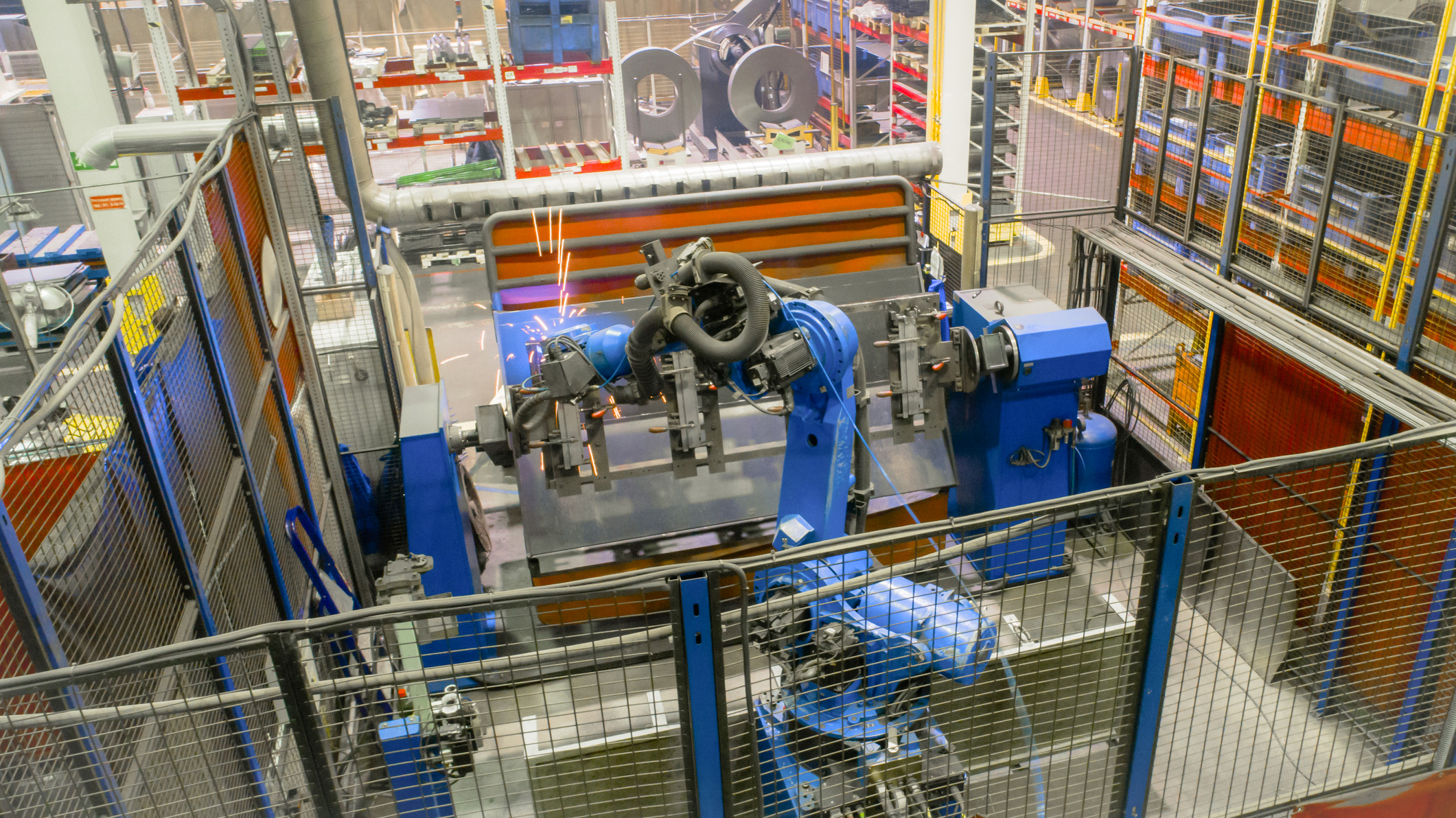
Certified Robot Safety System Aims to Remove Factory Cell Cages
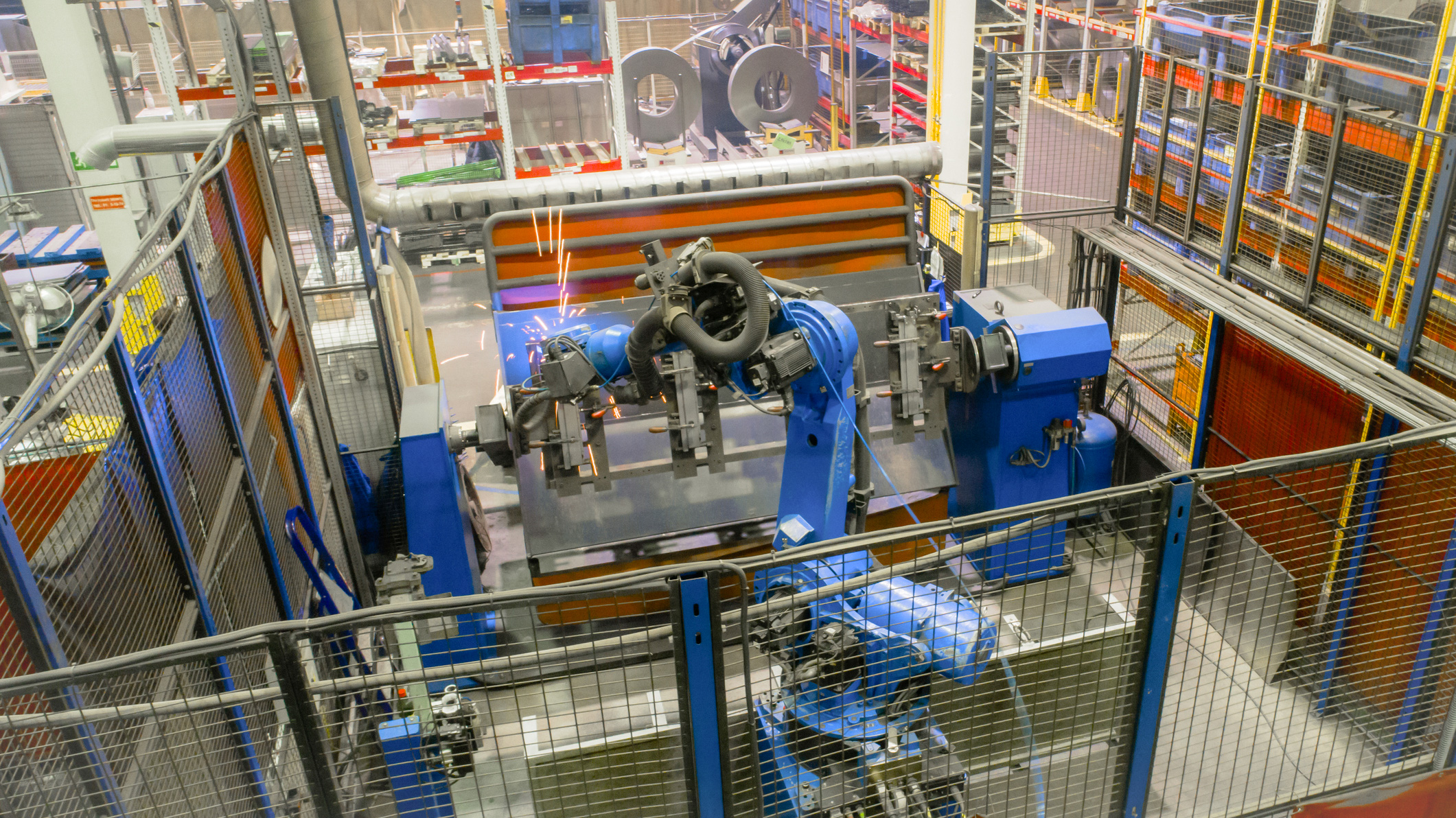
Robots have always been separated from human employees with fencing since they are powerful machines. Sensory Robotics claims that its recently certified SR-1 system has been developed to change the safety practice in the industry by substituting physical barriers with safety technology featuring 3D vision, sensors, and real-time control software.

The company states that SR-1 has been certified to comply with cULus 1740 and validated with ISO 13849 Performance Level d, a combination described by the company as allowing for deployment of the technology in manufacturing regulated environments both in the United States and Canada. For the industry, it means that factory adoption of any safety technology is usually focused not only on its demonstration but on its compliance with formal safety standards.
According to the company’s description, SR-1 constantly monitors the area of robot arm operation and creates dynamic virtual safety zones depending on human and robot movements. According to Sensory Robotics, the technology detects the presence of people in proximity to robotic cells and regulates the behavior of robot in real time in order to allow safe interaction between workers and high-speed industrial robots without protective cages.
“We designed SR-1 to continuously see people and adjust robot movements in real time,” CEO of the company Chris Edwards said. “This UL certification now allows our technology to be purchased and installed on industrial robots, enabling them to safely operate alongside humans without physical barriers.”
For U.S. manufacturers, the aspect of retrofitting may be particularly significant. The company states that the technology can be installed in existing industrial robotic production cells thus allowing the operator to update the equipment without changing it completely. It is particularly important for North American factories where there is a large installed base of robots, long capital cycles, and preference of manufacturers to implement only changes which do not require updating the current layout, tooling and robotic resources.
At the same time, the implementation of cage-free operation cannot be limited only to addition of camera system to existing robots. The robot safety guidelines by OSHA clearly state that industrial robot safety is a system problem including such elements as manipulator, controller, sensors, end-effector, power sources and communication interfaces. Besides, according to OSHA, proper safety approach depends on application-specific risk assessment, validation and periodic verification. In other words, certified safety product can provide new cell architecture but each specific installation should be engineered and serviced as a system.
It is the broader shift of standards which makes technologies like SR-1 remarkable. In the industry, safety practices in relation to industrial robots have been transitioning from mechanical isolation toward integrated sensing, control logic, software-based limitations and validated safety functions. It is quite logical: if the cell can safely change its speed, adaptation or stop depending on human position, manufacturers may gain additional floor space and workflow flexibility without necessity of physical isolation.
According to the company, elimination of physical cages can free space in factories, provide more flexible workflow and decrease the frequency of production interruptions. COO of Sensory Robotics Mark Gagas put it plainly and directly: The goal is simple. Keep people safe without stopping production every time someone enters a workspace. In traditional environments, a safety interruption can require a full robot shutdown and restart, sometimes taking up to 10 minutes per incident. Add that up across a production line, and those delays multiply to high operational costs.
The aspect of downtime is especially crucial for aerospace, automotive and other high-mix production industries where technicians, inspectors and material handlers need frequent access to robot work zones. The virtual zone solution, if integrated properly, provides opportunity of more flexible safety control than all-or-nothing approach of fencing. It does not require treatment of each human entrance as complete stop event, and it is possible to design a solution that modifies robot behavior depending on distance and tasks.
According to the company, the certification process has evaluated SR-1 reaction to equipment failures, disruptions of safety functions and potential risks for workers. It is exactly the type of evaluation which manufacturers and insurance companies tend to require before introducing new safety solutions to their factories. For Sensory Robotics, this is a milestone of shifting from the development and testing of the technology to its commercial deployment.
According to the company, they have seen interests in SR-1 from automotive, aerospace, logistics, manufacturing and defense industries. The company received funding in form of Department of Defense SBIR Phase II grant and support from University of Cincinnati’s innovation ecosystem but the more important thing for industry is not the financing but the fact that the cage-free safety solution for existing robot cells has become certified in accordance with the standards required by factories.
The more general lesson is that the future of industrial robot safety would not depend on removal of physical barriers alone. It will depend on effectiveness of integration of sensing, controls, validation and maintenance discipline. Sensory Robotics’ SR-1 becomes an important signal of such transition: it is not a short-cut to safety engineering but a signal that factory safeguarding is becoming more software-based and retrofit-friendly.
Jonathan Barrett is editor of AMI’s future mobility and autonomous systems section, with over two decades of experience in robotics, e-mobility, drone-vehicle convergence and transport mechanical systems.