Faraday Future Spins Off Robotics, Pivots to Under-100 Robotaxi Fleet
Faraday Future is moving from one difficult automotive strategy to another. After investing more than $3 billion in a luxury electric-vehicle business that sold fewer than 20 vehicles, the company has placed its robotics operation in a separately listed company and is proposing an initial robotaxi fleet of fewer than 100 vehicles.
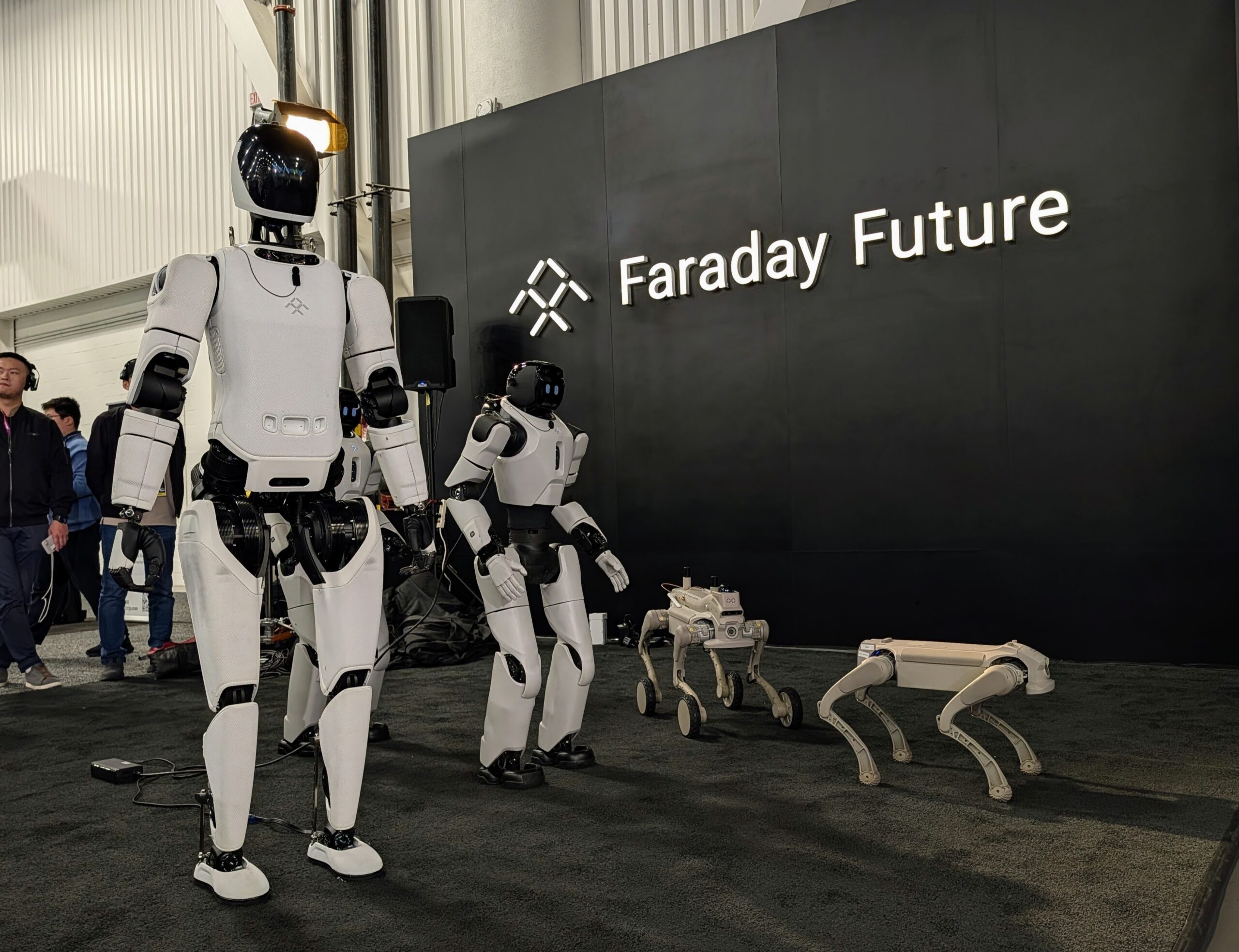
The structural change is complete, but the mobility service remains a plan. Faraday Future closed the robotics transaction on October 23 in an all-stock deal valued at $200 million. The robotics assets, intellectual property, data, contracts, employees and related liabilities moved to FF EAI Robotics Ecosystem Inc., while Faraday Future retained a controlling interest.
Faraday Future is now recruiting vehicles for a robotaxi fleet of fewer than 100 units. Executive chair Jerry Wang said most would be leased from other manufacturers, with Faraday Future handling charging, cleaning and maintenance as a rideshare operator. A larger fleet could follow in two to three years, depending on local regulations. The company’s existing electric vehicles could eventually provide a premium tier.
A fleet plan without a vehicle-sales ramp
Leasing vehicles would reduce the immediate need to finance and manufacture another fleet from scratch. It also changes the operating problem. Instead of relying primarily on vehicle sales, Faraday Future would need to keep cars available, clean, charged and maintained while coordinating whatever autonomous-driving platform, mapping, data and service infrastructure the operation uses.
No operating commercial robotaxi service or launch location has been identified. The initial scale fewer than 100 vehicles is also small beside established autonomous-vehicle competitors such as Waymo and Tesla. That could limit early capital exposure, but it would provide little room to absorb low utilization, regulatory delays or extended vehicle downtime.
Autonomy does not eliminate fleet labor. Charging, cleaning, inspections, maintenance, customer assistance and operational oversight remain necessary even when a driver is removed. A 2024 study modeling robotaxi operations found that autonomous services could achieve lower per-mile costs than conventional taxis under its scenarios, while labor remained a key operating expense. That finding aligns closely with Faraday Future’s proposed role as a fleet-service operator rather than solely a vehicle supplier.
The technical boundary is equally important. Youngjun Choi of Ernst & Young said autonomous mobility will not be won by hardware or software alone; vehicles, fleet operations, mapping, simulation, data and infrastructure must work as an integrated system. For a small leased fleet, integration includes managing interfaces across vehicles the operator may not have designed, the autonomy platform, charging equipment, maintenance processes and local operating rules.
Robotics enters a separate corporate structure
The robotics operation presents a sharper volume contrast with Faraday Future’s luxury-EV record. Wang initially reported more than 800 robot deliveries at a 30% gross margin. In an October 26 update issued after the transaction closed, FF EAI Robotics said cumulative shipments had risen above 1,100 and forecast approximately 2,000 shipments for 2026 at a positive gross margin. Those shipment and margin figures are company-reported, while the year-end total remains guidance.
The new structure is intended to place robotics away from Faraday Future’s approximately $200 million in liabilities and complicated capitalization. It is not a complete operational break: Faraday Future remains the controlling shareholder, YT Jia and Wang hold leadership roles at both companies, and transition-service and shared-technology agreements connect them after closing.
That arrangement gives the robotics business a distinct reporting platform while preserving access to technology and operational support developed inside Faraday Future. It also leaves execution risks on both sides. FF EAI Robotics must convert early shipments into repeatable manufacturing, support and customer demand, while Faraday Future must turn a proposed sub-100-vehicle fleet into a regulated, integrated and economically sustainable transport service.
The next meaningful milestone is therefore not a larger forecast. It is evidence that Faraday Future can secure vehicles, regulatory permission and an autonomy stack, then operate the first small fleet with sufficient utilization and reliability to justify expansion beyond 100 vehicles.
| More aerospace and engineering stories, right in your MSN feed. Follow AMI on MSN |
By Jonathan Barrett — Editor for AMI’s future mobility and autonomous systems section, with two decades covering robotics, e-mobility, drone-vehicle convergence, and transport mechanical systems.