Pennsylvania Professor Arrested Blocking Uber Eats Robot Required to Yield
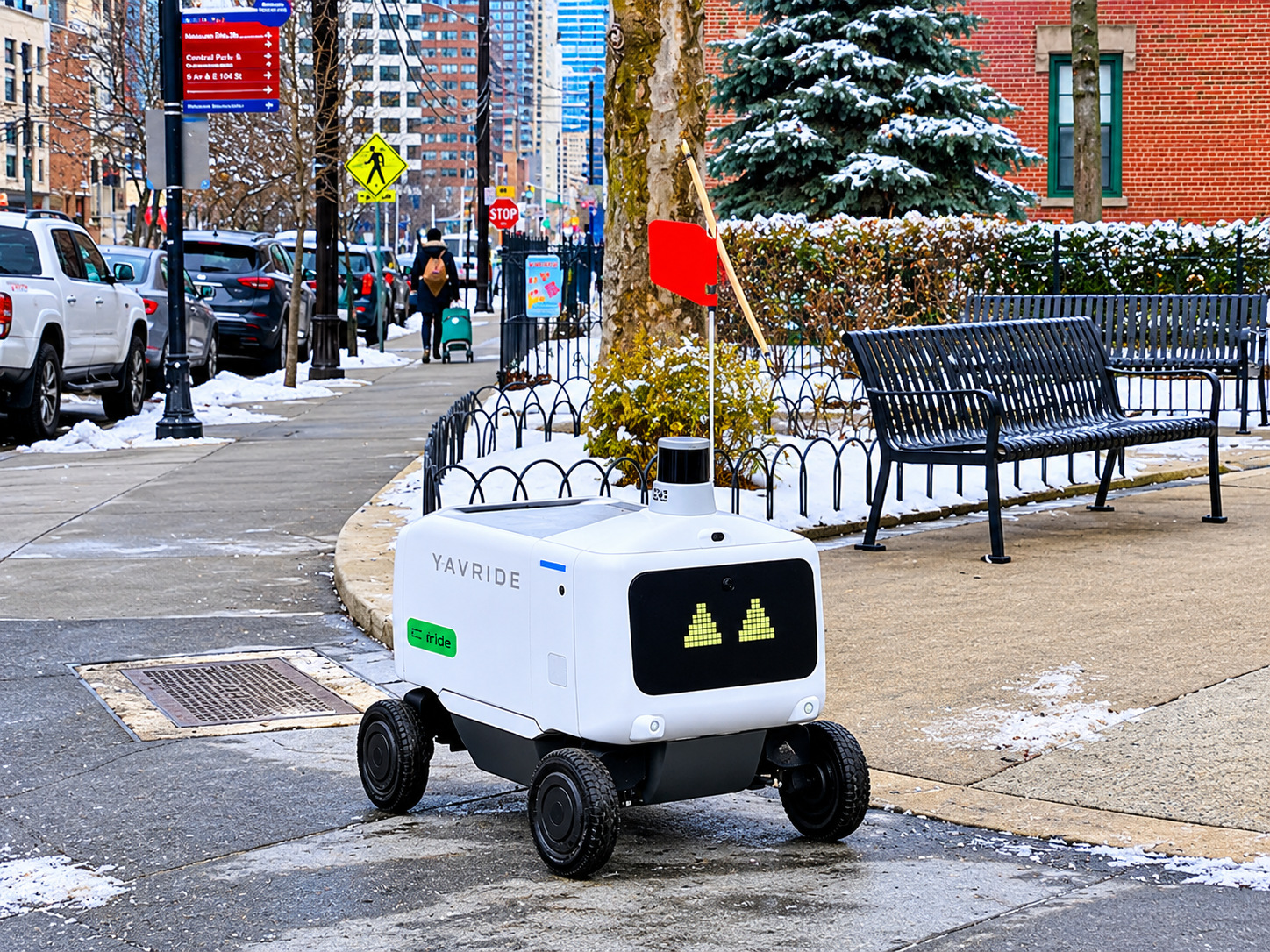
Pennsylvania gives autonomous delivery robots the legal status of pedestrians, but it does not put them ahead of people on the sidewalk. That tension became concrete in Philadelphia on October 14, when police handcuffed 78-year-old retired University of Pennsylvania professor Carolyn Marvin and cited her for disorderly conduct after she refused orders to stop blocking an Uber Eats delivery robot.

Police said Marvin ignored multiple commands to move. She said she thought she had “more rights than the robot” and viewed the obstruction as a symbolic protest against corporate machines occupying public space. Her citation resulted from the encounter and her refusal to comply with police orders; it has not established a final precedent on her claim that blocking the machine was protected expression.
The unusual legal framework comes from a Pennsylvania law enacted in 2020. It expanded the definition of “pedestrian” to include a “personal delivery device,” meaning a ground machine built to transport goods, capable of remote or autonomous operation and weighing no more than 550 pounds without cargo. The same law says the device is not a vehicle or motor vehicle.
A pedestrian classification with a lower sidewalk priority
Calling the robot a pedestrian gives it a recognized place within traffic law. A driver approaching one in a crosswalk must yield as the driver would to a person, according to Philadelphia attorney John Mattiacci’s description of the hierarchy. Yet the robot’s operator must make the machine “yield the right-of-way, or safely navigate around” every pedestrian and cyclist in a pedestrian area.
The result is a two-level rule. Against vehicles, the robot receives pedestrian protection. Among sidewalk users, it must defer to people and cyclists. That arrangement is intended to integrate a machine that moves between sidewalks and road crossings without treating it like a conventional car. It does not, however, grant a person an unrestricted right to hold the robot in place indefinitely or disregard a police direction.
This hierarchy also defines a fundamental control requirement. An autonomous delivery system must detect other sidewalk users, classify their movement and either stop or plan a safe path around them. Pennsylvania permits remote monitoring and override during advanced operations, meaning the autonomy is part of a wider system involving onboard sensing, control software, communications and a human operator who can intervene.
The law imposes physical and operating limits as well. A delivery device may be up to 32 inches wide, 42 inches long and 72 inches high. Its speed is capped at 12 mph in pedestrian areas and 25 mph on eligible roadways. It must carry lights, a braking system, identifying markings and a telephone number for reporting violations, accidents or insurance claims. Authorized operators must maintain at least $100,000 in liability coverage per incident.
Access depends on more than avoiding a collision
Yielding is only one part of sidewalk access. A stopped robot can still consume scarce passing width, particularly near curb ramps, street furniture or damaged pavement. That can impose a greater burden on wheelchair users, people with limited vision, parents with strollers and others who cannot easily step around an obstruction. The control problem is therefore not merely collision avoidance; deployment also depends on route selection, clearance and recovery when a machine becomes stuck.
Pennsylvania places general regulatory authority with the state Department of Transportation, although municipalities may prohibit devices from particular roads or pedestrian areas after determining, in consultation with the authorized entity, that their operation would create a hazard. Operators must submit an operating plan covering intended routes, training, maintenance, emergency stopping and accident procedures. New authorizations generally begin with a phase requiring an operator within 30 feet and in sight of the machine before remote monitoring can be approved.
Those provisions help explain why the public debate extends beyond whether a robot can technically navigate a sidewalk. Marvin cited possible delivery-worker displacement, sidewalk hazards and privacy concerns associated with embedded cameras. Labor unions and accessibility advocates also opposed the 2020 legislation over employment and pedestrian-safety concerns, while its supporters presented it as a technological advance. Uber Eats, which launched its Philadelphia robot-delivery fleet in March, did not respond to a request for comment about the incident.
Marvin said she previously delayed robots for 10 or 15 minutes and plans to resume doing so while watching for police. The next encounter will unfold under the same asymmetrical rule: the machine must yield to her as a pedestrian, while its pedestrian classification gives it a lawful role in the shared public route she is trying to contest.
| More aerospace and engineering stories, right in your MSN feed. Follow AMI on MSN |
By Jonathan Barrett — Editor for AMI’s future mobility and autonomous systems section, with two decades covering robotics, e-mobility, drone-vehicle convergence, and transport mechanical systems.