Tesla Model Y Lost Supervised Driving for Much of a 1,500-Mile Trip
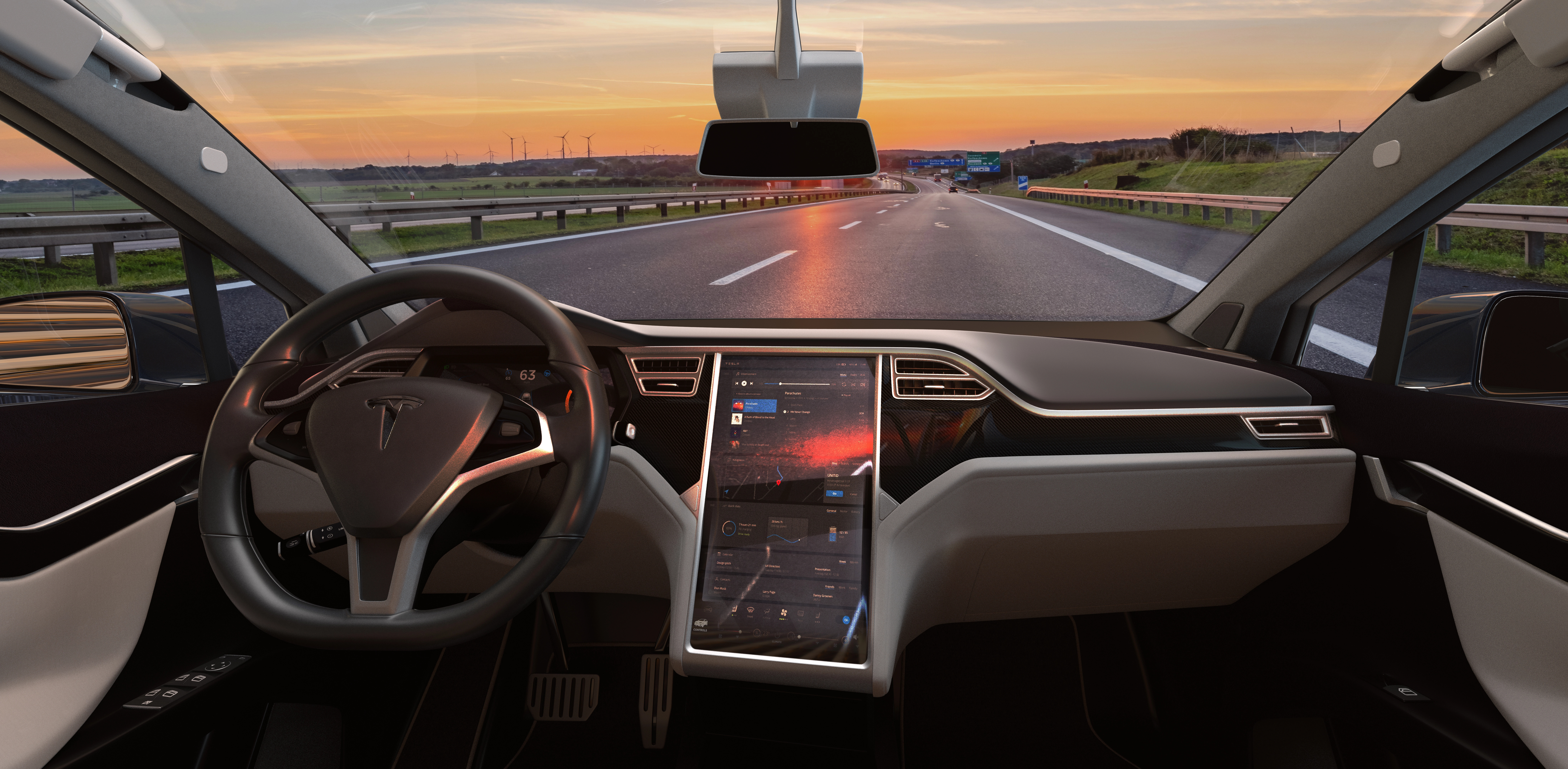
A feature intended to ease long-distance driving was unavailable when its owner needed it most. During an approximately 1,500-mile journey in a 2026 Tesla Model Y, the car’s paid Full Self-Driving (Supervised) system stopped working early in the trip and remained unavailable for much of the next two days.

The result was hours of manual driving across three consecutive 500-mile days for Arthur Frederick “Fritz” Hasler, an 86-year-old retired NASA scientist who pays approximately $99 a month for the system. He reported that maintaining lane position and accelerator input for extended periods increased the trip’s physical strain.
Hasler drove from northern Wisconsin to Lindon, Utah, with his wife and their rescue dog between October 18 and October 20, 2026. His base, rear-wheel-drive Model Y used Tesla’s Hardware 4 and Full Self-Driving (Supervised) version 14.3.12. The account, published November 1, was an individual owner’s travelogue rather than a controlled or instrumented assessment.
The useful function disappeared with little redundancy
According to Hasler, supervised driving became unavailable after a stop at a Minneapolis Supercharger. Smart cruise control also stopped working, leaving him without both automated lane control and speed and distance assistance. Cruise control returned after a partial camera recalibration, but the broader supervised-driving system remained down for much of two days.
Hasler attempted two types of system reboot and repeated the camera-calibration process. One calibration attempt moved back and forth for almost an hour, and the car at one point displayed a 15 mph limit on a road posted at 65 mph. The available information does not identify a confirmed cause for the prolonged outage.
Two large electric bicycles were being carried on a rear rack, and the vehicle detected an obstruction at the rear camera. That is a relevant system condition, but it does not by itself explain the complete sequence. Tesla’s assisted-driving guidance says cameras must remain unobstructed and warns that a rear-mounted bike rack can degrade performance or make the feature unavailable.
This illustrates a deployment boundary for camera-dependent automation: an accessory that is mechanically compatible with a vehicle can still interfere with its sensing architecture. Reboots address software state, while recalibration attempts to restore the geometric relationship between camera inputs and the vehicle. Neither guarantees recovery if the system continues to regard a sensor view or its calibration state as unsuitable.
When it worked, the workload benefit was clear
Hasler reported that the system centered the Model Y precisely in its lane, passed slower vehicles and returned to the right lane when operational. Navigation also routed the car around a road closure near Wausau, adding about five miles. Those functions explain why partial automation can be valuable on a long interstate journey even though the driver remains responsible.
The distinction is important because Tesla’s system is supervised automation, not an autonomous chauffeur. The driver must continuously monitor the road and be ready to take over. The Insurance Institute for Highway Safety describes partial automation as a combination of functions such as adaptive cruise control, lane centering and automated lane changing. IIHS says some drivers find these systems make long journeys easier, but there is little evidence that they make driving safer.
Availability is therefore part of the consumer value proposition even when safety performance is not being measured. A system can reduce steering and pedal workload while operating, yet its practical benefit falls sharply if it becomes unavailable for an extended portion of the journey. For a monthly subscriber, that reliability question is especially visible: the fee buys access to a capability, not a guarantee that it will remain usable under every vehicle configuration or operating condition.
The Model Y’s charging experience varied as well, although it did not stop the trip. An older Wausau Supercharger delivered about 50 kilowatts during a roughly 40-minute session, while a newer Menomonie stall maintained nearly 100 kilowatts. Both locations were busy, but the reported waits were short. Charging variability affected journey time; the driver-assistance outage affected the human workload between stops.
One owner’s journey cannot establish how often this software fails across the Model Y fleet. It does document a consequential operating case: the system provided meaningful interstate assistance when available, then transferred the entire driving task back to an 86-year-old subscriber for much of two demanding days.
| More aerospace and engineering stories, right in your MSN feed. Follow AMI on MSN |
By Jonathan Barrett — Editor for AMI’s future mobility and autonomous systems section, with two decades covering robotics, e-mobility, drone-vehicle convergence, and transport mechanical systems.