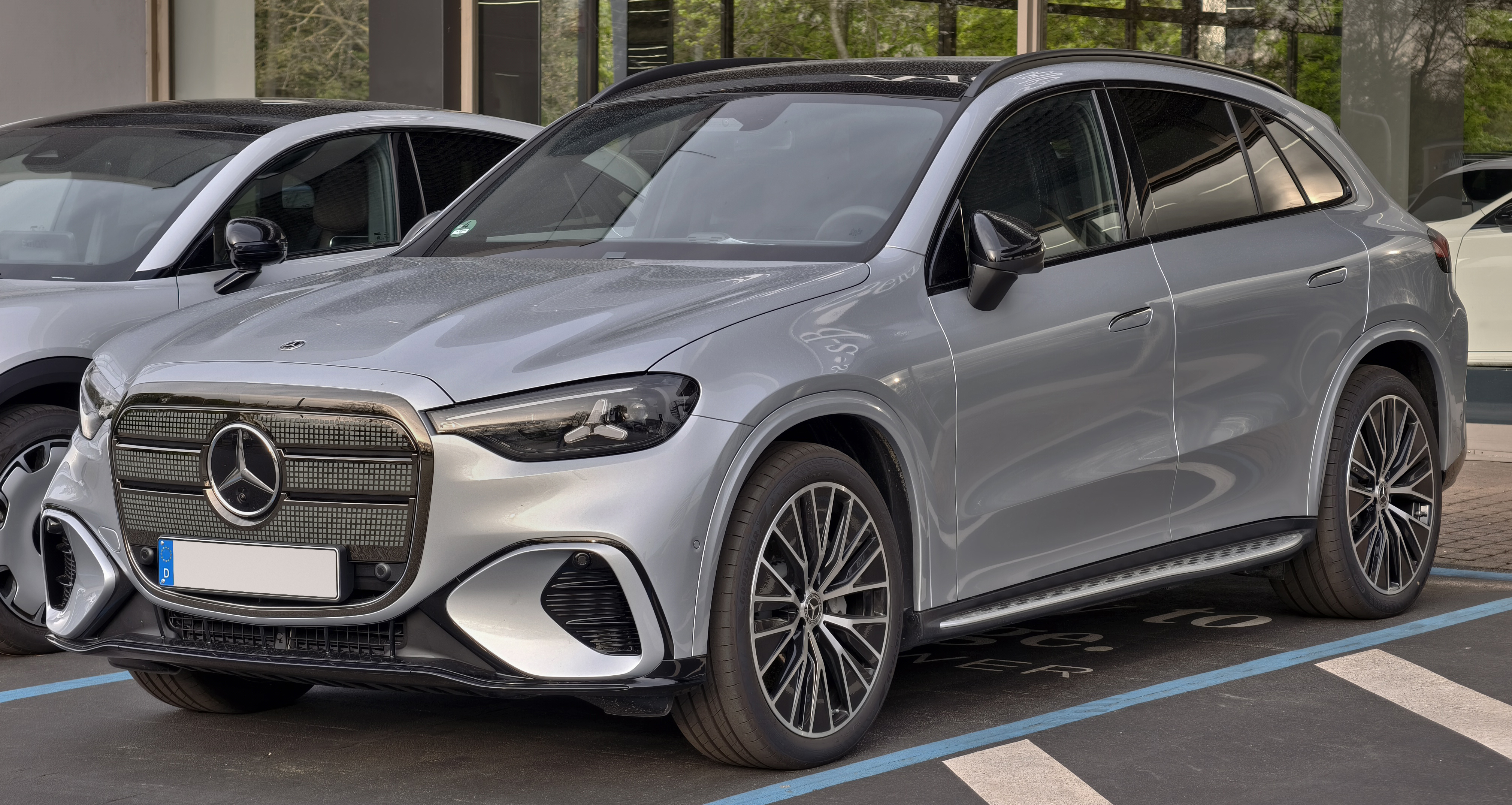
Mercedes GLC Electric Beats Range Rating by 61 Miles but Frustrates Inside
The 2027 Mercedes-Benz GLC 400 Electric presents an unusual split: its electric drivetrain delivered substantially more range than its official rating, yet the $85,950 tested vehicle made routine cabin interactions needlessly awkward. In Edmunds’ completed test, the SUV traveled 392 miles 61 miles, or 18.2%, beyond its 331-mile EPA rating.

That is an exceptional result for a dual-motor, all-wheel-drive luxury SUV weighing 5,615 pounds. Edmunds measured energy consumption of 28.4 kilowatt-hours per 100 miles, versus the EPA estimate of 33 kilowatt-hours per 100 miles. The test also took place on a 90-degree day in California, conditions that can add thermal-management demands rather than giving the battery an effortless laboratory run.
The GLC’s 94-kilowatt-hour battery therefore appears to be supported by an efficient overall system, not merely a large energy reserve. Battery capacity, motor efficiency, aerodynamics, accessory loads, tire selection and thermal controls all affect how far an electric vehicle travels. The measured result applies to this test and its conditions, but the 18.2% margin shows that the GLC can convert stored energy into useful road miles effectively.
Refinement extends beyond the range result
The electric powertrain produces 483 horsepower and 590 pound-feet of torque. Edmunds recorded a zero-to-60-mph time of 4.0 seconds, but acceleration was only one part of the GLC’s technical performance. The reviewer praised its progressive power delivery, compliant ride and quiet cabin, with a measured sound level of 63.6 decibels at 70 mph.
Those qualities address a difficult integration problem. A 5,615-pound vehicle must control substantial mass without feeling harsh or unsettled, and the GLC stopped from 60 mph in 111 feet while generating 0.88 g of lateral grip. Its regenerative-braking Auto mode uses forward radar to increase energy recovery as the SUV approaches another vehicle, reducing the amount of manual adjustment required from the driver.
The brake calibration was not flawless. Edmunds reported a small dead zone and a squishy pedal sensation. Blending regenerative and friction braking requires the pedal to deliver consistent feedback while the system changes how much deceleration comes from the motors and how much comes from the wheel brakes. The GLC’s smooth regeneration was a strength, but the reported pedal feel shows how difficult it is to make that transition fully transparent.
A responsive screen can still be awkward
The larger compromise sits across the dashboard. The display responds promptly, but it controls nearly every function other than the hazard lights and drive mode. Edmunds found its upright orientation physically awkward to use, turning a visually dramatic centerpiece into a recurring human-factors problem.
Responsiveness alone is not the same as usability. A driver also needs controls that are easy to locate, identify and operate with minimal time looking away from the road. This issue now extends beyond subjective interior preference: Euro NCAP’s 2026 testing protocols reward direct physical inputs for key driving functions, and its latest evaluations found meaningful differences between vehicles using well-positioned buttons and those relying heavily on touchscreens.
The GLC was not among the vehicles discussed in that Euro NCAP release, so the organization’s results are context rather than a safety score for this Mercedes. They nevertheless reinforce the design tension exposed by the Edmunds review: consolidating controls can simplify dashboard hardware while increasing the visual and physical work required for ordinary adjustments.
Luxury pricing raises the usability standard
Practicality also falls short of what the price suggests. The GLC includes a bin beneath its dual wireless charging pads, but Edmunds found the opening small and sometimes obstructed by the seat. Its front trunk holds 4.5 cubic feet. Rear cargo space was described as competitive with BMW and Volvo alternatives, although it trails the Tesla Model Y and Rivian R2.
These limitations become harder to dismiss at $85,950 as tested. Edmunds said a fully equipped BMW iX3 costs more than $10,000 less, while the Volvo EX60 tops out at $68,745. Price comparisons depend on equipment, but those figures frame the central value problem: the Mercedes commands a premium while asking occupants to accept compromised control ergonomics and unexceptional storage access.
The GLC 400 Electric demonstrates that long range, strong efficiency and excellent ride refinement can coexist in a heavy, powerful SUV. Its 392-mile result settles the powertrain question more convincingly than the cabin question. At this price, the remaining challenge is not extracting more miles from the battery; it is making each mile feel as effortless inside as the drivetrain makes it appear on the road.
| More aerospace and engineering stories, right in your MSN feed. Follow AMI on MSN |
By Thomas Caldwell — AMI’s senior editor for mechanical and mobility engineering, covering vehicle electronics, systems integration, electrification, chassis systems, propulsion, and safety policy.