Ukrainian Drone Alert Halts Samara Airport Flights as Oil Hub Is Reportedly Hit
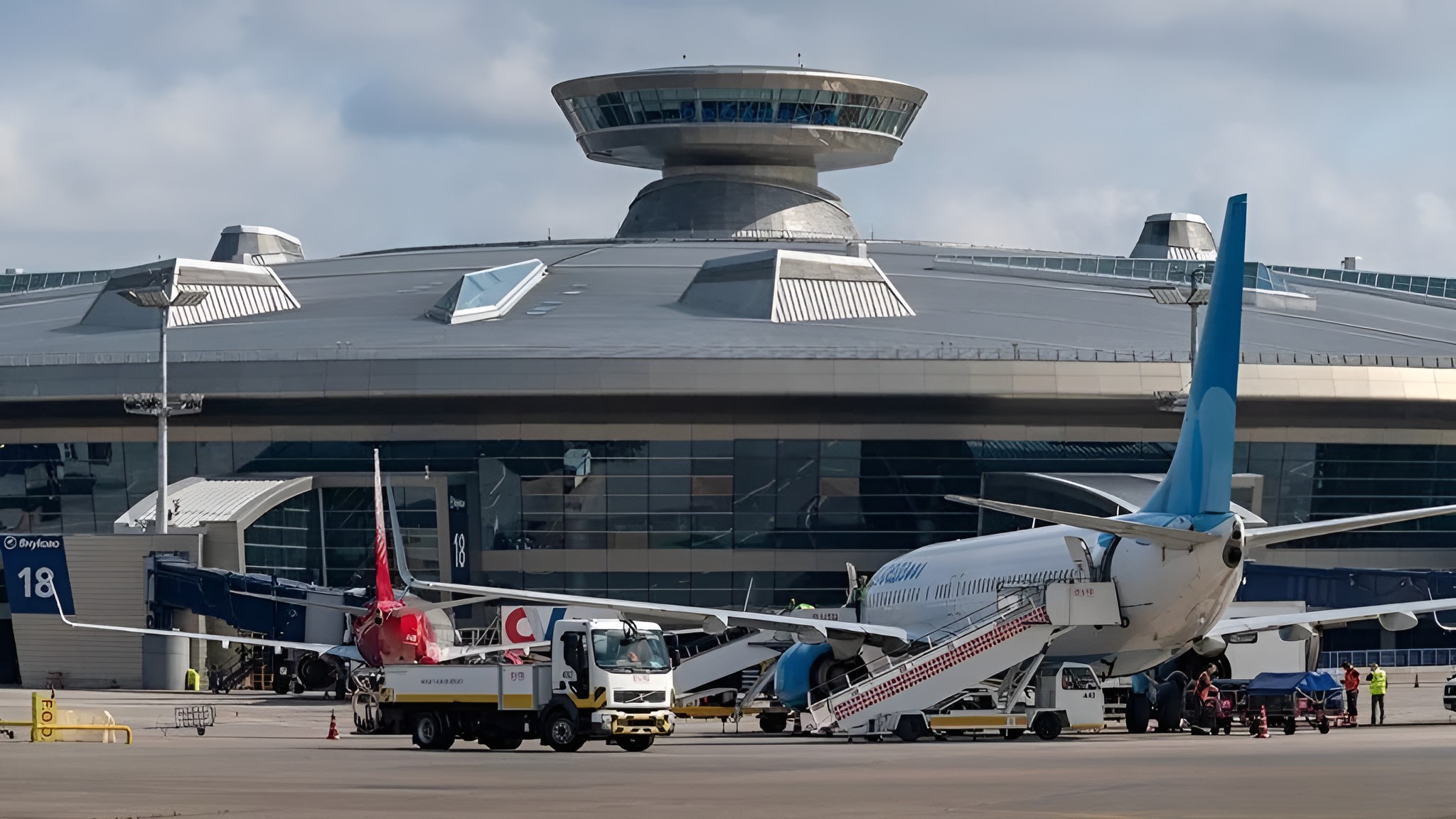
A Ukrainian drone attack reported in Russia’s Samara region on November 2 stopped flights at Kurumoch International Airport for two hours while air defenses responded to what the regional governor called an aerial barrage. A major Transneft oil-transport station was reportedly among the targets, but authorities have not confirmed damage, casualties or any interruption to oil operations.
The airport suspension is the clearest verified consequence. Governor Vyacheslav Fedorishchev said air-defense systems were responding and asked residents not to publish photographs or videos. Regional authorities confirmed the attack without providing a damage assessment.
The status of the oil facility is less certain. The exiled independent outlet Astra identified a Transneft production and dispatch station as at least one reported target after analyzing eyewitness photographs of a smoke cloud. NASA satellite imagery separately showed a large black plume in the same general area. Smoke establishes that a fire or combustion event occurred nearby; the available information does not establish what equipment was affected, how extensively it was damaged or whether oil movement stopped.
The airport shutdown required no confirmed impact
For civilian aviation, an unresolved aerial threat can be operationally consequential before investigators determine whether any drone reached its reported target. Airports and air-navigation authorities must manage the possibility of drones, defensive interceptions and falling debris while keeping civilian aircraft separated from uncertain activity. A temporary suspension reduces immediate exposure, but it can also hold departures, delay arrivals and create recovery work after restrictions are lifted.
The two-hour closure therefore represents more than a secondary effect of the reported attack. It shows how an alert can remove airport capacity even when no damage to the airport itself has been reported. Airlines and controllers must then restore schedules within the remaining runway, gate and crew constraints. The available information does not specify how many flights or passengers were affected at Kurumoch.
This decision framework is consistent with the broader conflict-zone approach described by the International Civil Aviation Organization. ICAO calls for governments, aircraft operators and air-navigation service providers to exchange current risk information, while airlines also perform their own assessments. Those assessments necessarily respond to uncertainty: waiting for a complete physical-damage report would come too late for an aircraft already approaching contested airspace.
Recent European disruptions show how quickly that uncertainty can propagate through an airport schedule. After separate drone sightings forced Brussels Airport to close temporarily in November 2025, the operator reported 41 cancellations and 24 diversions, with hundreds of travelers remaining overnight. Those figures do not describe Samara’s disruption, for which comparable totals were not provided, but they illustrate why even a limited-duration closure can produce effects that continue after an airport reopens.
Scale makes the oil report significant, not conclusive
The reported Transneft target is a large industrial site: it covers 216 hectares, contains 71 storage tanks and has total capacity of 1.6 million cubic meters. Its role in receiving and dispatching crude makes its condition relevant to a wider logistics network. Capacity, however, is not the same as the amount stored at the time, and smoke near the facility is not evidence that 1.6 million cubic meters were lost or placed at risk.
Assessing the energy consequence requires information that has not yet emerged: an official damage inspection, an operational status update or measurable evidence of reduced throughput. Without those indicators, claims of a supply interruption would run ahead of the confirmed facts. Large oil systems can also have operating buffers and multiple components, so visible damage to one area would not by itself define the effect on the entire network.
The regional response nevertheless placed simultaneous demands on two different systems. Air-defense personnel had to manage the aerial alert, while civilian aviation authorities removed traffic from the immediate operating environment. Industrial operators would also need to determine whether the reported facility could continue working safely. This is readiness pressure in practical terms: several organizations must react immediately, while the eventual physical result may remain unclear for hours or longer.
The description of an aerial barrage indicates a broader event than an isolated sighting, although no supported drone count is available. That prevents a firm assessment of the attacking force’s scale or production capacity. What can be measured is the asymmetry in operational burden: the warning alone was sufficient to suspend an international airport, while the possible effect on a 1.6-million cubic meter oil facility still awaits confirmation.
The next meaningful evidence will be operational rather than visual whether Kurumoch’s schedule returned to normal and whether Transneft reports any reduction in storage or oil movement. Until then, the two-hour loss of airport operations remains the established impact, while the energy consequence remains an unresolved risk around a very large facility.
| More aerospace and engineering stories, right in your MSN feed. Follow AMI on MSN |
By Stephen Wallace — Editor for AMI’s aerospace integration and unmanned mobility coverage, focused on drone manufacturing, VTOL systems, autonomous networks, and air-ground mobility links.