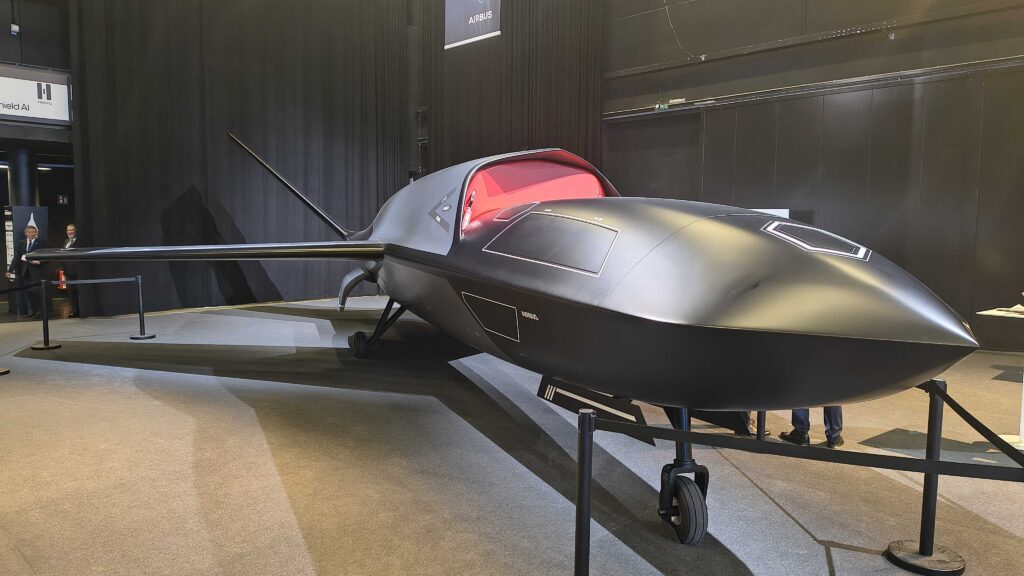
China Says Sichuan Carrier Launched and Recovered GJ-21 Stealth Drone
China says its 40,000-ton Type 076 amphibious assault ship Sichuan has launched and recovered a GJ-21 stealth reconnaissance-strike drone for the first time. The reported milestone demonstrates the defining aviation function of a warship designed around unmanned aircraft, but it does not yet establish how the Chinese navy will employ the drone in regular operations.
The People’s Liberation Army Navy has not released photographs or video showing the launch and recovery, and its announcement did not specify where the trial occurred, when it took place or how many cycles were completed. Only a graphic accompanied the claim, according to The War Zone’s account of the announcement. That leaves the service’s report as the basis for the milestone while Sichuan continues its test program.
A ship built around drone aviation
The Type 076 builds on China’s Type 075 landing helicopter dock, but its aviation architecture goes beyond the conventional helicopter operations associated with amphibious assault ships. Sichuan has an electromagnetic catapult for launching drones, dedicated unmanned-aircraft facilities and a tower supporting aviation operations.
Those additions make the ship more than a larger flight deck carrying remotely piloted aircraft. Catapult launch and shipboard recovery require the aircraft, deck equipment and ship systems to work as one controlled aviation system. The reported GJ-21 operation therefore represents a more meaningful integration step than merely placing an aircraft or mock-up aboard.
Sichuan was launched in 2024 and began its maiden sea trial in November 2025. Since then, it has conducted maritime testing and work-up drills involving onboard equipment, overall stability and aviation systems. Mock unmanned combat aircraft were previously observed on its flight deck, indicating deck-handling work before the reported flight trial.
The Chinese navy said the ship had “steadily conducted a series of scheduled maritime tests,” including commissioning onboard systems and assessing operational stability. A launch and recovery would move the test effort from individual shipboard equipment toward the combined operation of ship, launch system, recovery equipment and aircraft.
One successful report is not an operational air wing
Flight-deck aviation depends on repeatability. A useful unmanned-aircraft capability requires reliable launch and recovery equipment, aircraft handling between deck and hangar, maintenance support, control links and procedures that can function through sustained ship operations. The announcement provides no data on sortie rate, system reliability, recovery consistency or the number of aircraft the ship could support.
This is why the first reported cycle is significant without amounting to proof of full operational readiness. It indicates that the Type 076’s most distinctive hardware has reportedly performed its central task with the aircraft it was intended to support. The remaining work is turning that event into a repeatable system that crews can maintain and operate at sea.
Sichuan is currently the only Type 076 and China’s first vessel pursuing this drone-carrier concept. Its electromagnetic launch system distinguishes it from a conventional helicopter assault ship while preserving the broader functions of an amphibious platform. That combination could give the navy another source of fixed-wing aviation capacity without making the ship equivalent to a full-size aircraft carrier.
The GJ-21’s role remains unresolved
The GJ-21 is described as a low-observable unmanned aircraft intended for reconnaissance and strike missions. Aircraft operating from Sichuan could support its embarked marine complement or add capacity alongside China’s carrier groups, but the navy has not explained how the GJ-21 will be incorporated into operational doctrine.
That unresolved role is now the central question surrounding the program. The reported launch and recovery show what the Type 076 was built to do at a basic aviation level. They do not reveal how many drones it would carry, how routinely it could operate them or how unmanned missions would be coordinated with helicopters, marines and other naval aviation forces.
The next meaningful milestone will therefore be evidence of repeated, sustained shipboard operations rather than another isolated launch. Sichuan has reportedly completed the task that defines it as a drone-focused aviation ship; China has yet to explain how that capability will become an operational naval air wing.
| More aerospace and engineering stories, right in your MSN feed. Follow AMI on MSN |
By Stephen Wallace — Editor for AMI’s aerospace integration and unmanned mobility coverage, focused on drone manufacturing, VTOL systems, autonomous networks, and air-ground mobility links.