Artemis II Puts Orion and SLS Through Their Crewed Test
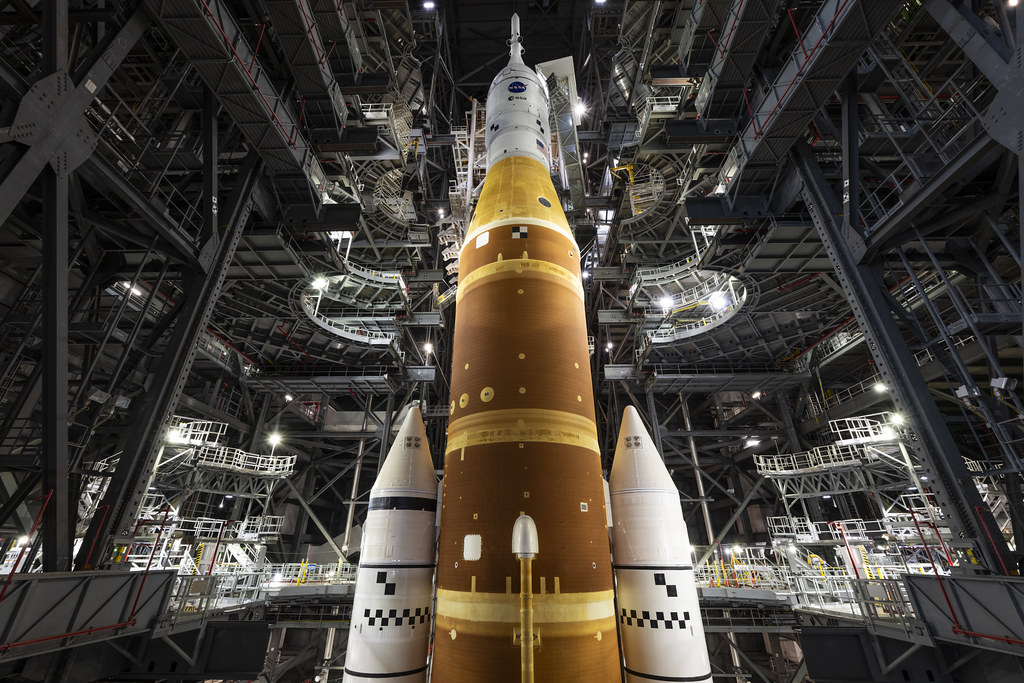
Artemis II has completed its lunar flyby and now is making its way back to Earth, thus providing NASA with a practical benchmark of the rebirth of American deep-space crewed space missions. The mission was launched on April 1 at Kennedy Space Center atop the Orion crew capsule and the Space Launch System (SLS) rocket, carrying NASA astronauts Victor Glover, Reid Wiseman, and Christina Koch, as well as CSA astronaut Jeremy Hansen. Should the mission go according to plan, it will end with the splashdown near California shore, rounding off the 10-day mission.

That particular achievement carries somewhat more weight as a technical milestone than as a series of records. This is not only the first crewed mission testing Orion and SLS, but also NASA’s first human flight beyond LEO in 50 years. From a program standpoint, it is a flight validation of hardware that NASA plans to use in its upcoming Artemis missions.
This particular piece of hardware is called Orion. Artemis II is the follow-up mission to Artemis I, that tested the basic architecture of the spacecraft’s round-trip mission without a crew aboard. The presence of a crew in this case means an entirely different set of engineering challenges. There is a need to provide life support, ensure habitability of the cabin, handle cockpit workload, design appropriate procedures and make sure that there is a safe splashdown of the spacecraft. Any issue, such as spacecraft toilets problems mentioned by the crew, becomes significant when there are real people flying in it.
This particular mission also demonstrates the operation of the transportation stack which hasn’t been used by NASA in the human spaceflight program for decades. According to media reports, Artemis II has flown away 252,756 miles from Earth in its outbound journey, surpassing the 248,655-mile human spaceflight distance record of Apollo 13, set in 1970. That is a symbolic figure, but the important message that it sends is that SLS and Orion aren’t experimental hardware or demonstration vehicles anymore. They have taken human beings into translunar space and around the Moon.
This is particularly important because of the way Artemis mission sequence works for NASA: it uses risk reduction through the gradual integration of systems. Artemis III is planned to happen next year and would test the docking procedure, needed for Artemis IV in 2028. Thus, Artemis II isn’t the end-point of a return-to-the-moon story, but the crewed flight that enables the further mission sequence to become more complex.
From this point of view, the achievements of the crew are more about indicating the maturing of the program. Artemis II is the first crewed lunar mission of the Artemis program, as well as the first crewed lunar mission with a four-person crew, compared to three-person crews during the Apollo era. Additionally, this mission is marked by several personal achievements: Christina Koch being the first woman leaving LEO, Victor Glover being the first person of color reaching lunar distance, and Jeremy Hansen being the first non-US astronaut participating in the lunar mission. It’s impressive firsts for each of the crew members, but the importance of the moment is that NASA is implementing a more advanced international and operational model of lunar architecture.
There is another angle to it: program management aspect. While Artemis I demonstrated SLS and Orion capabilities of completing the mission without a crew, Artemis II adds a human component to the process, thus demonstrating how the spacecraft functions with the real life support, procedures and decision-making process on board. Then only it makes sense to move forward, testing the docking procedures in Artemis III as a prelude to moon landing operation.
From the point of view of the general public, the simplest way to interpret Artemis II would be the following: while Apollo proved the concept of the lunar mission more than 50 years ago, NASA has to prove its modern transport stack the hard way, through incremental flights. Artemis II is that particular point where Orion and SLS graduate from experimental hardware to crewed vehicles.
Should Artemis II conclude with a nominal splashdown, it wouldn’t be only the historic flyby. It will be the most clear sign that NASA’s Moon mission stack is moving from the demonstration phase into disciplined progression, which is the only one that really matters beyond any individual records.
By David Whitaker – Associate editor for AMI’s aerospace and drone systems desk, translating flight systems, aircraft programs, spaceflight, and UAV developments into accessible technical stories.