Bridge Air Force One Highlights Retrofit Limits and Readiness Tradeoffs
The use of a temporary presidential aircraft has brought into focus a truth, known to any aerospace engineer: the emergency introduction of a highly specialized aircraft doesn’t allow mission systems to be integrated to a sufficient extent according to the standards established by the remaining fleet.

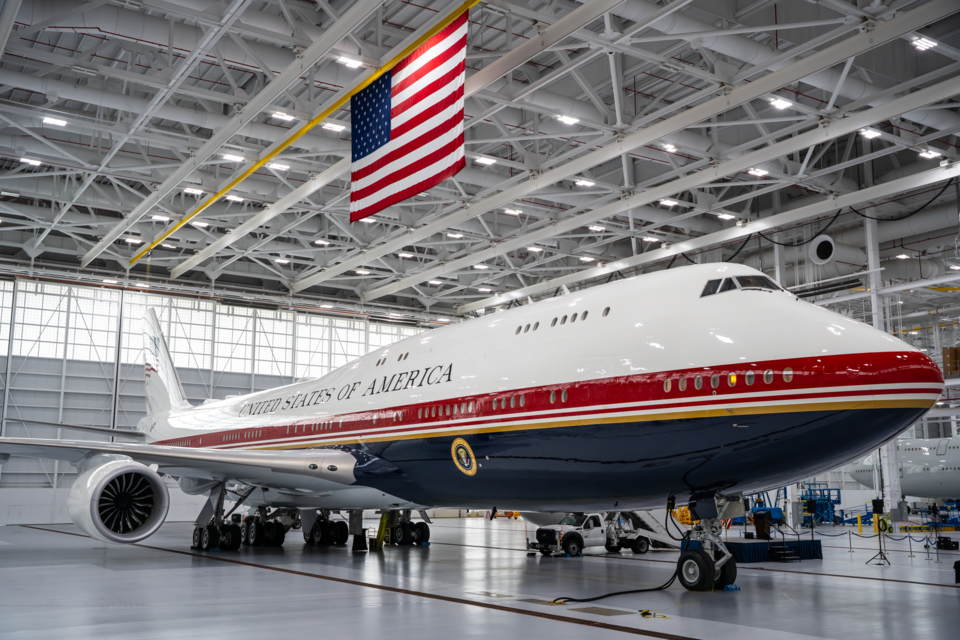
According to recent reports, the current temporary Air Force One (Boeing 747-8), unlike its predecessor (VC-25A aircraft), does not have all the defensive and communications systems that were installed on the latter. The issue has arisen against the backdrop of the NATO summit held in Turkey when the president traveled by the newer aircraft but returned to the USA on the older aircraft as recommended by the Secret Service due to the existing conflict with Iran. Upon landing in the UK, he has returned to the newer aircraft.
Both the White House and the Air Force have denied the concerns regarding the safety of the presidential mission. The communications director of the White House, Steven Cheung, has noted that the aircraft is “a state-of-the-art aircraft” equipped with “high-level security protocols”. According to the Air Force, no risk was taken in security, safety or mission communications but the existence of the bridge aircraft without all of the capabilities of the future replacement aircraft was confirmed.
This aspect is significant since Air Force One is not just a VIP transport plane with national colors. It is an executive airlift aircraft which should serve not only as a means of safe transportation but as an airborne command post as well. On these aircraft, the most complicated task is not refitting the interior and repainting the exterior of the fuselage. It is about integrating secure communications, defensive systems, power and data architecture, testing, crew training, maintenance and mission certification.
In the given situation, the bridge aircraft has been introduced to reduce the load on the older VC-25A aircraft while Boeing’s delayed next generation presidential aircraft go through the production process. The Air Force has claimed that the goal of the bridge program has been accelerated precisely in order to ensure the continuity of the presidential airlift operations as the maintenance load on the older aircraft has grown.
This explains why the capability gap does not necessarily indicate that the aircraft is unsafe. In aerospace programs, the first place in priorities goes to core mission functions and those mission sets which occur less frequently or which are harder to implement when the schedule takes the leading position. According to the Air Force, the team has “made trades on some of the less commonly used mission sets” while maintaining security, safety, and mission communications.
What is still unclear is what mission sets have been deferred. The reports claim that the aircraft lacks some of the complex countermeasures available on the legacy Air Force One aircraft, such as missile defense capability. Also, according to CBS News, the older aircraft has a laser technology and other systems to protect the aircraft from missiles, while the information regarding the presence of these systems on the 747-8 bridge aircraft has not been provided.
This is the typical pattern for presidential and military airlift missions. The defensive suite, secure network architecture and survivability characteristics are not something to be disclosed in a checklist. However, even at the higher level, the engineering reality is quite clear: the retrofit speed, certification depth and mission system completeness tend to contradict one another. With the schedule being reduced from years to months, the designer and operator have to make decisions about which systems must fly immediately and which can wait.
The former Air Force Secretary Frank Kendall was amazed that the aircraft was deployed abroad so quickly since there wasn’t enough time to implement all the typical modifications to Air Force One. This viewpoint is consistent with the common problem of the program management. Specialized government aircraft are not assessed simply by their ability to safely fly from one airport to another. They are assessed in terms of their ability to complete the entire mission under different conditions, including high-threat or high-consequence international travel.
The deployment of the bridge aircraft illustrates the downstream impact of the Boeing’s delayed VC-25B replacement program. When the delivery of the new aircraft is delayed for years, the operator has three options in terms of readiness: extend the service life of the older aircraft further, use the interim aircraft with its unique capabilities or use both of them simultaneously. None of these options is an ideal one. An old aircraft increases the maintenance load. An interim aircraft restores the capacity but cannot replicate all the features of the replaced aircraft.
For those who are interested in military aviation, this is not a political story but a case study of the retrofit engineering under schedule pressure. The Boeing 747-8 can be converted to a secure executive transport much faster than the clean sheet presidential mission, but this does not mean that all of the legacy defensive and communications systems will appear in time. The gap between the availability of the aircraft and mission maturity is where all the complexity lies.
The key conclusion here is that the readiness of presidential airlift is affected by two factors at the same time: aging legacy hardware and delayed next generation delivery. The bridge jet may help to reduce the pressure on the fleet, but this case proves that in aerospace, the accelerated fielding always implies design and integration tradeoffs that must be managed properly.
By David Whitaker — Associate editor for AMI’s aerospace and drone systems desk, translating flight systems, aircraft programs, spaceflight, and UAV developments into accessible technical stories.