U.S. Precision Machining Faces New Tooling and Abrasives Pressure
The precision machining is associated with spindle accuracy, thermal stability, software of machine tool and ability to maintain extreme tolerances. But what constraining factor do American manufacturing industries have? It doesn’t concern CNC machine tools availability. The problem is that abrasive, machinery, automation and production capacity should be available to provide tight tolerance machining.

Regarding more detailed issues of the industry in general, it’s important for aerospace, defense, medical and energy parts that depend on reliability of the machining process. Whatever might be the projected growth from $117.2 billion in 2025 to $243.8 billion in 2035 of the precision machining market, the issue that US manufacturers have is the bottle-neck consumables for finishing, costs of equipment imports, labor substitution with robotics and consolidation of proven domestic shops.
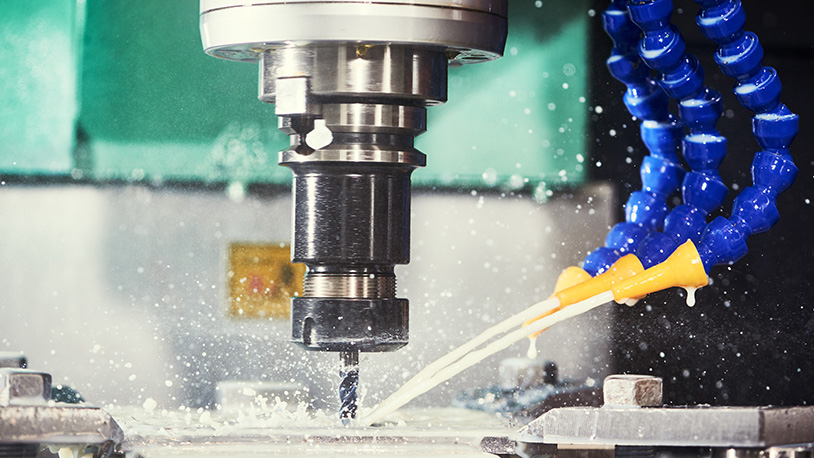
The nature of the job is partially to blame for the change of the constraining factor. About 73% of the total volume of precision machining is made up of CNC processes, while the share of milling operations is around 31%. It reflects the dependence of American manufacturing industries on certain types of processes programmable machine tools, precise positioning of the piece, predictable environment for cutting and finishing operations providing repeatable geometry and surface finish. Therefore, the performance of precision machining process requires more than just capabilities of machines. It requires the whole chain of processes, starting from raw material feeding up to the abrasive finishing.
One of the constraining factors on the supply side is the current situation in ultra-precision finishing. In October 2025, China introduced export restrictions on artificial diamond micropowders, wire saws and grinding wheels, adding licensing requirements from November. These are not some marginal consumables. They are essential materials for quality fine finishing and surface generation. Limited access to such materials may create problems for US shops producing high-tech parts due to longer lead-times, higher input costs or qualification problems of substitutes.
Moreover, there are tariffs. Imported machine tools became more expensive for US manufacturers due to US tariffs, thus increasing their acquisition and replacement costs. From the point of view of production manager, it causes the change in economic rationale of capacity expansion. Not only the throughput considerations motivate the purchase of a machine tool. The source of machine tool and its availability become the questions as well.
It’s one of the reasons why consolidation should be regarded as the capacity play rather than the financial one. In January 2026, Threadlock Precision acquired Kremin Inc., CNC machining company founded in Michigan more than 40 years ago and providing services for aerospace, defense and medical industries. Kremin is referred to as a tight-tolerance manufacturer providing services of Swiss machining, milling and turning and AS9100D certified. Such acquisition is strategically important for US aerospace and defense industries as it accumulates qualified capacity and customer-approved production experience.
Similar tendency could be seen in the previous expansion of OEM sheet metal fabrication capacity by Yijin Hardware. The common denominator here isn’t the machine architecture. It’s the capacity accumulation the additional floor space, the additional qualified production, the additional customer access and better scheduling. In the industry where machine availability, tooling supply and qualified manpower may be limited simultaneously, the existing qualified capacity becomes strategically important.
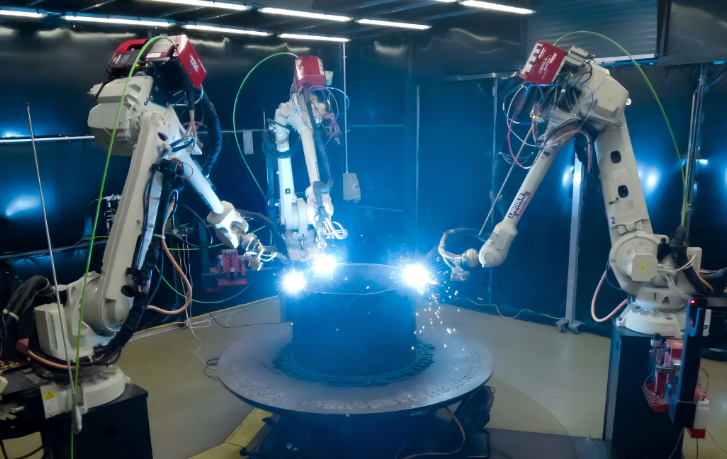
Automation is another important variable. According to the International Federation of Robotics, the number of operational industrial robots in manufacturing exceeded 4.6 million units in 2024, growing by 9% year-over-year. It’s the fourth year of annual installations of more than 500,000 robots and the global robot density in manufacturing has more than doubled since 2016. For machining industry it means that the direction of development is clear increased automation for loading, tending, handling, inspection and increased process consistency of CNC machines.
For US shops, automation isn’t only the issue of labor substitution. It’s the issue of utilization improvement. As the imported machine tools became more expensive and the qualified machinists harder to find, the improvement of machine utilization becomes critical. Tending robots, pallet systems and automation of part handling increase machine utilization without changing the conditions of cutting. Therefore, automation becomes the solution to supply chain problems rather than marketing buzz.
The metal exposure is the key problem. Metals used for precision machining constitute almost 77% of total, while automotive use constitutes 27%. The global car production exceeded 75.5 million units in 2024 and creates persistent demand for machining and capacity competition between industries. Asia Pacific constitutes almost 39% of regional market share, driven by China, Japan, South Korea and India. For US manufacturers, concentration is especially important as it shows how far machining capacity, tooling flow and upstream manufacturing capacity is located outside the US.
Another interesting parallel is the way other regions deal with their problems. EU diversified its metal sourcing as the response to supply chain pressure and metal imports between the members grew by about 5%. The lesson for US manufacturers is obvious the resilience is built via diversification of sourcing, depth of domestic qualification and process planning that takes into account slow or expensive imports.
Therefore, in practical terms it means that the precision machining enters more constrained era. Competitive advantage won’t be achieved through having the nominally capable machine. It’ll be achieved through providing abrasive, automation, qualified process and redundancy of production providing sustainable productivity of machine. Tolerance capability will continue to matter for aerospace and other specialized industries. However, the resilience of tooling, abrasives and US capacity will become the competitive advantage in production.
By Edward Collins – Senior editor for AMI’s performance systems and mechanical design coverage, with focus on powertrains, drivetrain systems, manufacturing precision, materials, and high-performance engineering.