


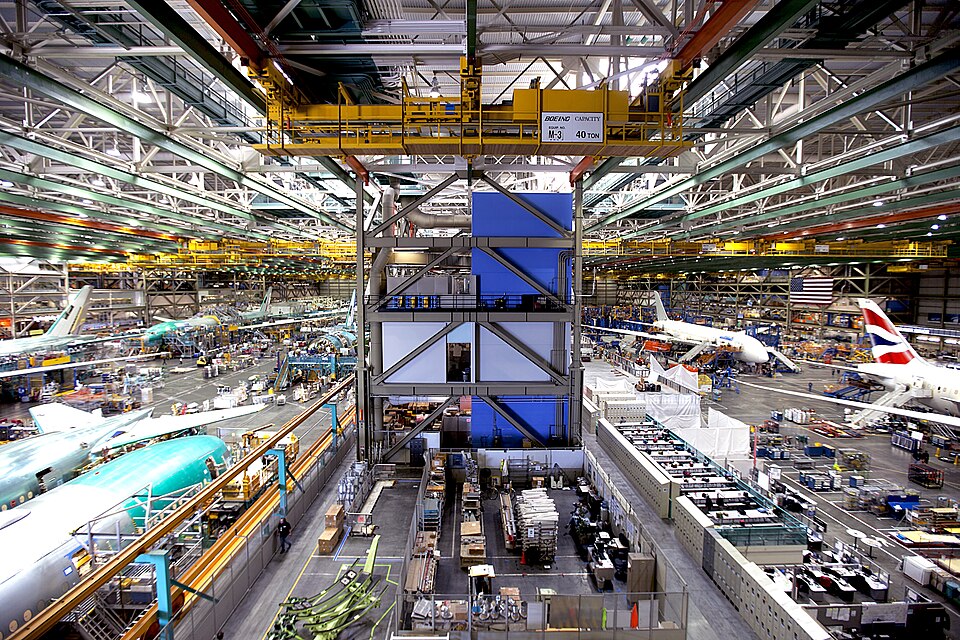
FAA Returns Boeing Delivery Certification After Eight-Month Quality Comparison
The Federal Aviation Administration returned Boeing’s authority to issue airworthiness certificates for all newly built 737 MAX and 787 aircraft on July 20, 2026, restoring the final regulatory approval needed before those airplanes can be delivered. In its July 17 announcement, the FAA said eight months of alternating certificate issuance produced comparable production-quality findings whether Boeing’s authorized unit or federal inspectors handled the step. The change normalizes an end-of-line delivery function; it does not end federal surveillance of Boeing’s factories or engineering compliance.

The distinction matters because an individual aircraft’s airworthiness certificate is not the same as the type certificate approving an aircraft design. It is an aircraft-specific authorization issued at the end of production, after confirming that the completed airplane conforms to its approved design and is in a condition for safe operation. Without that certificate, a newly manufactured aircraft cannot proceed through the normal delivery process to an airline.
Alternating approvals created a direct comparison
The FAA had partially restored Boeing’s certificate-issuance authority in September 2025. For the next eight months, Boeing and the agency issued certificates on alternating weeks for 737 MAX and 787 aircraft. That structure gave the regulator a practical comparison of quality findings under the two arrangements rather than relying solely on a policy review.
The FAA reported no meaningful difference in production-quality findings based on which organization issued the certificates. It therefore determined that Boeing could safely resume the function for every newly produced aircraft in both programs. The agency did not publish the comparison’s detailed thresholds, aircraft counts or underlying dataset, so the decision should not be read as a quantified declaration that every production issue has been resolved.
Boeing performs the delegated work through its Organization Designation Authorization unit. Under the FAA framework, approved organizations can carry out specified certification functions on the government’s behalf. Boeing’s unit is an independent group within the company that represents the FAA when conducting delegated work. The regulator renewed Boeing’s broader authorization for three years in May 2025, but the latest action specifically concerns issuance of airworthiness certificates for new 737 MAX and 787 aircraft.
Federal attention shifts upstream, not away
The practical oversight change is where FAA personnel concentrate their effort. Boeing’s authorized unit will handle the final certificate, while federal inspectors continue inspections, audits and monitoring across the production system. The FAA identified critical assembly activities, production-quality trends, conformity with the approved type design and compliance with engineering requirements as continuing areas of attention.
The agency will also assess Boeing’s Safety Management System and safety culture. A Safety Management System is intended to establish formal processes for identifying hazards, evaluating risk and tracking corrective action. In a manufacturing environment, that system-level scrutiny can reveal recurring process weaknesses earlier than an end-of-line review of one completed aircraft. The FAA’s stated rationale is that its inspectors can spend more time identifying and addressing potential risks earlier in production while retaining surveillance over the delegated certification work.
That division of labor is the central tradeoff. Returning certificate issuance to Boeing can produce a more routine delivery path, but delegation remains dependent on the manufacturer’s internal independence, documentation and conformity controls. FAA audits and production monitoring provide the external check; the restored authority itself is not a release from regulatory requirements.
Different restrictions led to the same restored function
The FAA stopped allowing Boeing to issue airworthiness certificates for 737 MAX aircraft in 2019 following the Lion Air and Ethiopian Airlines crashes and the model’s worldwide grounding. It withheld the same authority for the 787 in 2022 because of production-quality concerns. More recently, scrutiny of Boeing’s manufacturing controls intensified after the January 2024 Alaska Airlines 737 MAX 9 door-plug blowout.
The July decision therefore represents a measured return of one clearly defined responsibility across two aircraft programs with different regulatory histories. The FAA has not specified when it will conduct another formal review, and the available announcement does not quantify any effect on delivery rates.
For Boeing’s production system, the immediate result is narrower and more concrete: its authorized unit once again completes the final airworthiness signoff for every new 737 MAX and 787. The stronger engineering takeaway is that the FAA used eight months of comparable findings to move its resources upstream, where assembly controls and emerging quality trends can be examined before an airplane reaches final delivery certification.
By David Whitaker — Associate editor for AMI’s aerospace and drone systems desk, translating flight systems, aircraft programs, spaceflight, and UAV developments into accessible technical stories.




