Amazon Leo Seeks 5,105 Satellites for Direct Phone Coverage, Pending FCC Review
Amazon filed an application with the Federal Communications Commission on July 24, 2026, seeking authority to deploy as many as 5,105 low-Earth-orbit satellites that could connect directly with unmodified mobile phones. The proposed Amazon Leo direct-to-device system would support voice, data, text messaging, and emergency communications, according to the company’s regulatory filing as reported by SpaceNews. The scale is substantial, but the practical boundary is equally important: the FCC has not authorized the constellation, and none of its proposed service performance has been demonstrated through an operational deployment.

The application expands Amazon Leo, formerly Project Kuiper, beyond its previously authorized 3,236-satellite broadband architecture. That earlier system is designed around dedicated user terminals. The new proposal instead targets the much harder link between an orbiting spacecraft and a standard cellular handset with limited antenna area and transmission power.
Why the spacecraft architecture matters
Amazon’s proposed satellites would combine phased-array antennas, onboard digital processing, and optical inter-satellite links. Those elements address different parts of the direct-to-device problem. Phased arrays electronically manage radio beams without mechanically steering a large antenna assembly. For a moving low-orbit satellite, that enables the network to direct service toward coverage areas and maintain links as spacecraft pass overhead. Onboard digital processing would let satellites handle and route signals in orbit rather than functioning only as simple relays between a phone and a ground gateway.
Optical inter-satellite links would provide laser-based connections among spacecraft. In principle, that allows traffic to move across the constellation before descending to an available ground station, adding routing flexibility where terrestrial infrastructure is sparse or disrupted. It does not eliminate the need for gateways, spectrum coordination, or integration with mobile networks, but it can reduce dependence on an immediate ground-station hop for every connection.
Together, those systems outline a network intended to do more than deliver basic emergency messages. Amazon regulatory counsel said the proposed satellites would support a progression toward voice and data services while retaining connectivity outside terrestrial coverage. That remains a design objective, however, rather than a confirmed service level. The available information does not establish handset throughput, call capacity, latency, coverage continuity, or performance under congested conditions.
FCC approval is only one deployment gate
The FCC review is expected to examine spectrum coordination, orbital-debris mitigation, and protection against interference with terrestrial wireless systems. These are core operating constraints, not administrative details. A direct-to-device network has to share or coordinate radio access while detecting signals from low-power consumer hardware, all without degrading existing services.
Orbital management will also be material because Amazon is requesting authority for a constellation larger than its already authorized broadband system. More spacecraft create more coverage and capacity opportunities, but they also increase production, launch, tracking, maneuver, and end-of-life disposal obligations. The filing describes spacecraft lifetimes of six to eight years and a plan to lower retired satellites for disposal, details the FCC can assess as part of its debris review.
Several program parameters remain unresolved in the supplied public record. Amazon has not confirmed a satellite production schedule, detailed deployment milestones, a launch manifest for this additional system, or the mobile-network partners that would bring service to subscribers. Those omissions matter because a satellite-to-phone architecture is not delivered by spacecraft alone; it requires qualified flight hardware, spectrum rights, ground infrastructure, network integration, and compatible commercial service arrangements.
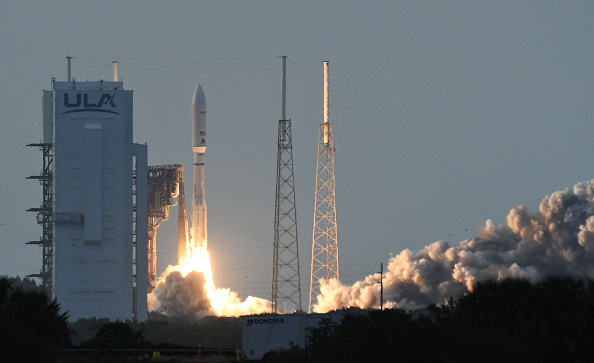
Amazon is targeting 2028 for the proposed system’s initial deployment or commercial start, subject to regulatory approval and hardware qualification. The company does have relevant industrial infrastructure, including a 100,000-square-foot payload-processing facility at Kennedy Space Center in Florida, and it has arranged launch services through United Launch Alliance, Arianespace, and SpaceX for its broader satellite program. That foundation may support deployment, but it does not by itself establish a schedule for the newly proposed 5,105 satellites.
The engineering proposition is clear: use a large, digitally routed low-orbit network to extend cellular service beyond ground-tower coverage without requiring consumers to carry a separate satellite terminal. The next meaningful evidence will not be the constellation number alone. It will be the FCC’s decision, followed by qualified spacecraft, coordinated spectrum, launch assignments, and measured handset performance. Until those gates are cleared, Amazon Leo’s direct-phone network is a large and technically ambitious application not an operational service.
By David Whitaker — Associate editor for AMI’s aerospace and drone systems desk, translating flight systems, aircraft programs, spaceflight, and UAV developments into accessible technical stories.