Navy Removed USS South Dakota’s Three Senior Leaders Without Notifying Congress
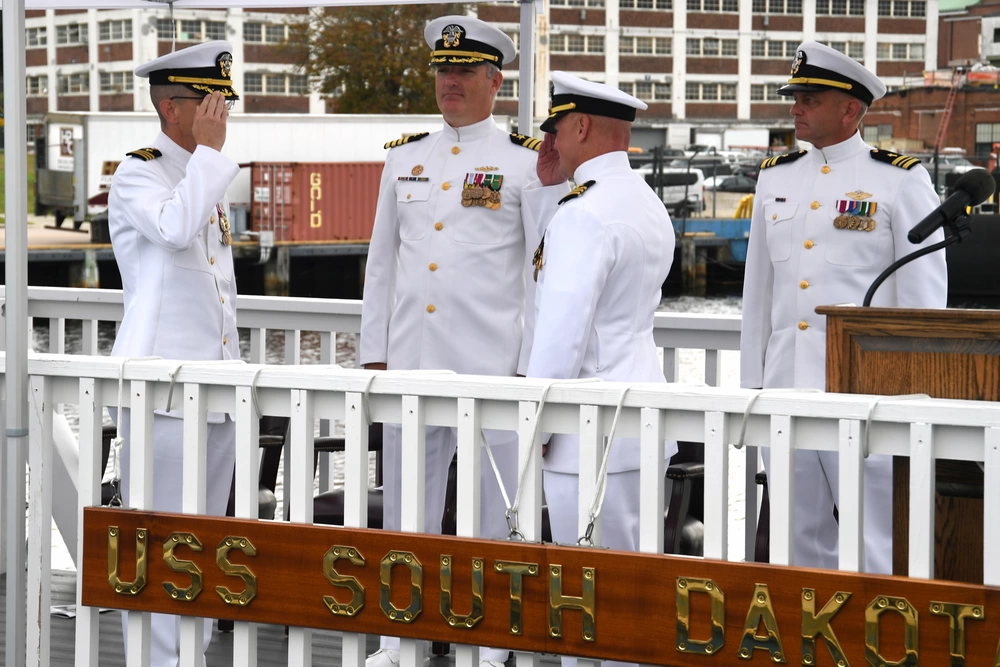
The Navy removed the USS South Dakota’s commander, executive officer and top enlisted sailor on October 14, but did not notify the House Armed Services Committee. In a November 12 letter to Navy leadership, congressional overseers linked the removals to an alleged grounding incident and demanded details about the submarine, its crew and the decision to withhold notification.
The Navy has not publicly explained why the three leaders were removed or released findings about the reported seabed collision. Its silence leaves two related matters unresolved: what happened to the Virginia-class nuclear-powered attack submarine, and why an unusually broad leadership action was not communicated through customary oversight channels.
A complete command-team change carries operational weight
Removing one commanding officer is a major personnel action. Replacing the commander, second in command and chief of the boat at the same time reaches across the submarine’s senior officer and enlisted leadership. Those three positions form the command triad responsible for directing the ship and maintaining leadership continuity across its crew.
The removals do not, by themselves, establish the cause of the reported incident or identify individual misconduct. They do create an immediate command-readiness issue: the Navy must restore senior leadership continuity while separately determining the submarine’s material condition, maintenance needs and ability to return to its assigned work.
No public information establishes whether USS South Dakota sustained structural damage, requires repairs or has lost operational availability. Those are precisely among the gaps identified by Reps. Joe Courtney and Adam Smith, who hold senior oversight roles on the House Armed Services Committee and its seapower subcommittee.
Their letter asks whether a grounding or another mishap occurred, what events preceded the removals and whether there were injuries. It also seeks a preliminary damage-cost assessment, details about any structural damage and an expected maintenance timeline. The lawmakers requested answers by November 20.
Those questions connect personnel accountability to fleet readiness. A submarine can receive a new leadership team through administrative action, but any physical inspection, repair or recertification burden would be a separate engineering and maintenance problem. Until the Navy supplies those findings, the leadership changes cannot be used as a reliable measure of damage severity or repair time.
The oversight dispute centers on a customary channel
The notification issue is narrower than a claim that the Navy violated a statutory reporting requirement. Courtney and Smith acknowledged that the established information-sharing practice is not expressly written into law. Congress had relied instead on timely, good-faith notification of at-sea incidents, accidents and removals from a ship’s command triad.
That arrangement gives defense committees information needed to evaluate personnel safety, fleet readiness, maintenance demands and possible funding consequences. It also allows lawmakers to distinguish a contained personnel matter from a broader problem involving training, procedures or material condition.
The USS South Dakota case strains that system because nearly a month passed between the October 14 removals and the lawmakers’ formal complaint. According to their letter, the committee still had not received an official notification detailing the commander’s dismissal when the letter was issued.
Past incidents involving USS Fitzgerald, USS John S. McCain, USS Hartford and USS Connecticut were cited by the lawmakers as examples in which communication helped Congress make decisions concerning safety and readiness. Those cases do not establish what occurred aboard USS South Dakota, but they show the disclosure standard against which the current response is being judged.
The Navy’s refusal to comment also departs from its longstanding practice of publicly announcing major command removals. Personnel investigations can impose legitimate limits on what can be released, while details involving submarine operations may warrant additional protection. Neither consideration inherently prevents the Navy from confirming a leadership action, acknowledging an incident at a high level or providing classified details to the appropriate congressional committee.
The next facts must come from the Navy
The dispute may reach acting Navy Secretary Hung Cao’s coming confirmation hearing as he seeks the permanent position. Courtney and Smith addressed their letter to Cao and Adm. Daryl Caudle, placing responsibility for the response at the Navy’s senior civilian and uniformed levels.
The Navy now faces a defined set of questions rather than a demand for operationally sensitive submarine details. Congress wants the basis for removing the full command triad, the submarine’s condition, any effects on its crew and maintenance schedule, and an explanation for the absence of notification.
Until those answers arrive, the confirmed development remains consequential but incomplete: USS South Dakota lost all three of its senior leaders in one action, while the committee responsible for overseeing fleet readiness says it was left without the information needed to assess why.
| More aerospace and engineering stories, right in your MSN feed. Follow AMI on MSN |
By David Whitaker — Associate editor for AMI’s aerospace and drone systems desk, translating flight systems, aircraft programs, spaceflight, and UAV developments into accessible technical stories.