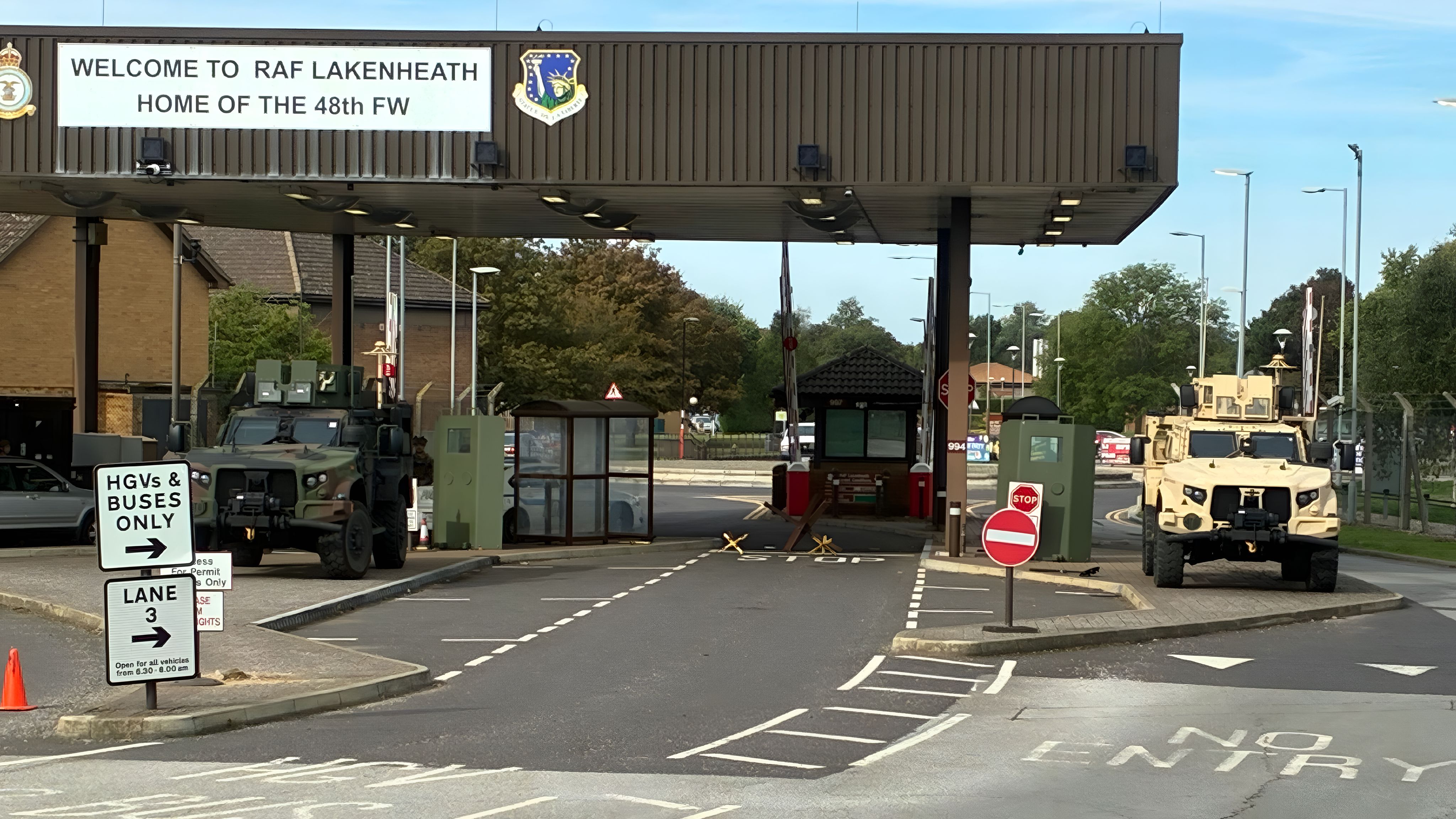
RAF Lakenheath Personnel Sheltered After Suspected Drones Reported Near Base
Personnel at RAF Lakenheath in eastern England were directed to shelter on 13 November after suspected unauthorized drones were reported near the installation. An emergency alert marked “REAL WORLD” instructed personnel to enter the nearest protected facility and remain there until further notice. The US Air Force confirmed that security personnel responded, while British authorities said the situation was quickly resolved. No personnel were injured, and no aircraft or infrastructure were reported damaged.
The immediate danger passed, but the central questions remained open: Authorities had not publicly identified the suspected drones or established who operated them. The British Ministry of Defence said its police teams and Suffolk Police assisted and that British authorities continued coordinating with American forces. Local lawmaker Nick Timothy said officials had told him there was no threat to the surrounding community.
Why RAF Lakenheath draws attention
RAF Lakenheath is in Suffolk, approximately 110 kilometers from London, and hosts the US Air Force’s 48th Fighter Wing. The wing operates F-35A Lightning II stealth fighters and F-15E Strike Eagle multirole aircraft, making any unexplained activity near the base a significant security and operational concern even when it causes no physical damage.
The shelter order is the clearest confirmed consequence of the incident. It temporarily changed how personnel moved and worked while security forces assessed an uncertain airborne report. There is no indication that the suspected drones reached the aircraft, interfered with flying operations or damaged base systems.
The episode occurred while US military facilities in Britain were operating under heightened security following reports of possible threats linked to Iran. Authorities had not identified an operator, however, and had not publicly connected the suspected drone activity at Lakenheath to Iran or any other state or organization.
For a protected installation, detecting an object is only the first part of the problem. Security teams must determine whether a report represents an aircraft, a lawful drone flight, an unauthorized civilian device or a deliberate surveillance attempt. Identification can remain unresolved even after the immediate alert ends, particularly when officials have limited information about the object’s operator, purpose or flight path.
Britain is recording more drone incidents near military sites
Lakenheath sits within a broader increase in reported drone activity around British defence facilities. The UK government recorded 266 uncrewed-aircraft incidents near defence sites in 2025, compared with 126 in 2024. That count covers reported incidents rather than confirmed hostile incursions, but the increase has driven changes in policy, surveillance and response authority.
Under measures announced through the Armed Forces Bill, authorized defence personnel would receive stronger powers to act against drones considered threatening to military sites without waiting for police assistance. The government also said it allocated more than £200 million to counter-drone technology for the year and introduced restricted airspace at 40 defence locations. Automated detection and tracking systems are operating at multiple sites.
Those measures illustrate the manufacturing and integration challenge behind base protection. Sensors, command systems and response equipment must operate continuously, exchange reliable tracking data and help personnel distinguish a credible threat from ordinary activity. Speed matters, but so does classification accuracy: A rapid warning can protect people and equipment, while repeated uncertain alerts can disrupt operations and consume security resources.
A separate report in Germany
The wider European security context also includes a separate incident at a German military facility, where three unidentified drones were reported near newly deployed Arrow-3 missile-defence systems. German forces attempted to intercept the drones but did not succeed, and authorities opened an investigation into suspected reconnaissance activity.
No connection has been established between the German report and the incident at RAF Lakenheath. Together, they show the same unresolved airspace-management problem rather than a confirmed common campaign: Small unidentified aircraft can trigger protective action around high-value installations before authorities know who launched them or why.
RAF Lakenheath has returned to normal security and force-protection measures, but the inquiry into the circumstances continues. The base suffered no reported injury or damage; the remaining task is identifying what prompted a real-world shelter warning at an installation operating two of the US Air Force’s principal fighter types.
| More aerospace and engineering stories, right in your MSN feed. Follow AMI on MSN |
By Stephen Wallace — Editor for AMI’s aerospace integration and unmanned mobility coverage, focused on drone manufacturing, VTOL systems, autonomous networks, and air-ground mobility links.