Three Romanian F-16 Drone Shootdowns Test NATO Air-Defense Readiness
Romanian Air Force F-16s destroyed a third unauthorized drone on July 26, 2026, extending a sequence that began with interceptions on July 24 and 25, Romanian officials confirmed. The third drone was brought down over the Black Sea five minutes after entering Romanian airspace. Together, the three responses test more than fighter availability: They show that radar surveillance, identification, command authority and NATO Air Policing must operate as one time-sensitive air-defense system.

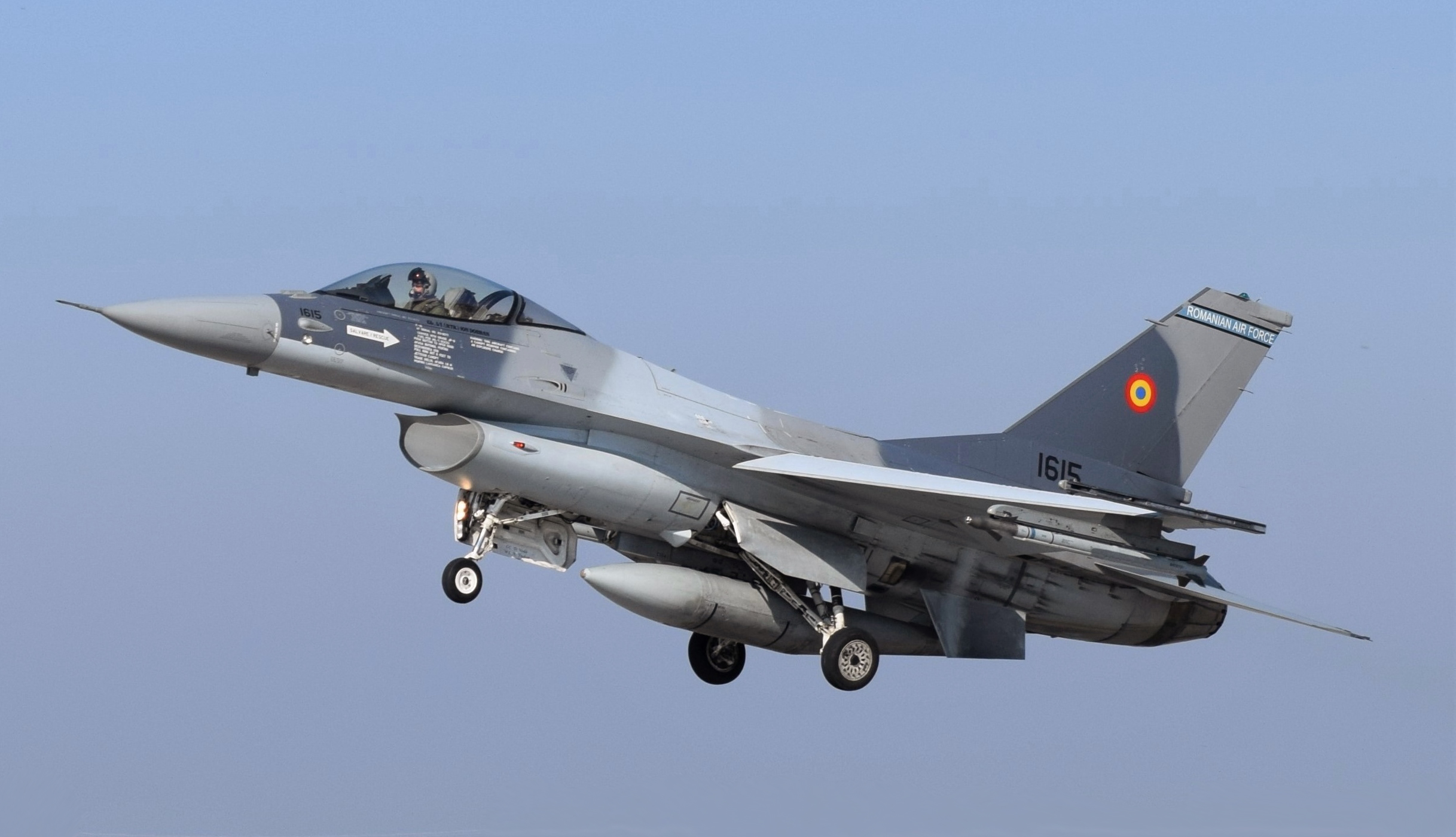
The clearest view of that chain comes from the July 25 interception. Romanian Defense Ministry radars detected an unauthorized aircraft near the Ukrainian border at 8:22 a.m. Two Romanian F-16s standing alert under NATO’s Air Policing mission responded, and one destroyed the drone at 8:34 a.m. a 12-minute interval from detection to neutralization. It fell in an uninhabited area about 9.6 kilometers west of Sfântu Gheorghe in the Danube Delta, where ministry teams were expected to investigate.
That followed Romania’s first such shootdown since the start of Russia’s full-scale invasion of Ukraine. On July 24, surveillance systems detected another unauthorized drone, prompting Italian Air Force Eurofighter Typhoons assigned to NATO Air Policing to scramble initially. Romania then deployed two F-16s with authorization to fire. A Romanian fighter destroyed the aircraft at 11:02 a.m. over an uninhabited part of Buzău County, approximately 114 kilometers from Bucharest.
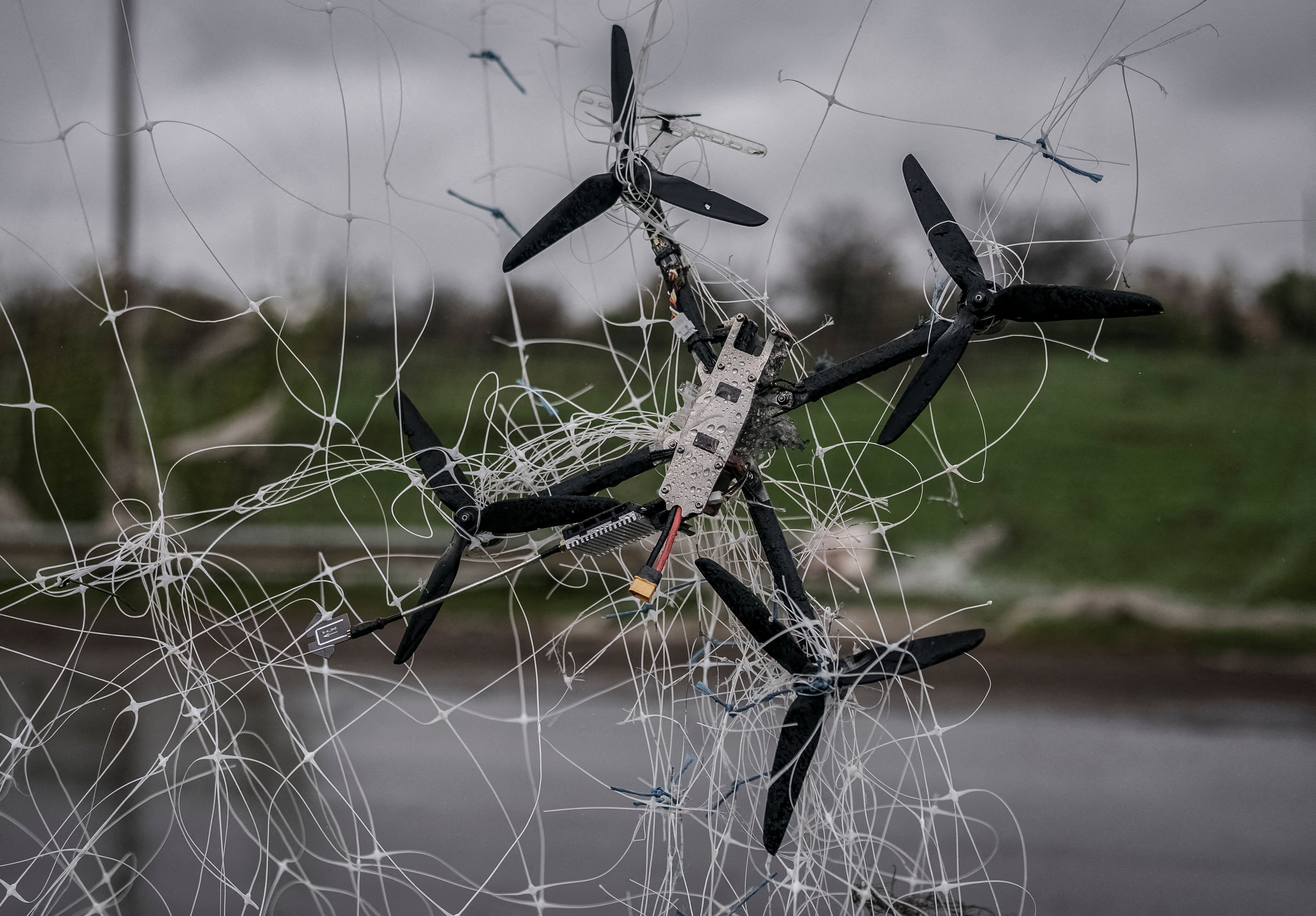
Romanian officials subsequently identified the July 24 aircraft as a Shahed-type drone used by Russia. Investigations into the July 25 and July 26 aircraft remained underway, however. Their type, operator, origin and intended mission therefore should not be treated as established.
A chain is only as strong as its decision process
The 12-minute response on July 25 is significant because an interception does not begin when a fighter reaches a drone. Radar operators first must detect and maintain a usable track. Controllers and command authorities must classify the contact, assess its path and coordinate an aircraft already positioned to respond. Pilots must then locate and identify a relatively small target before any engagement is authorized.
That makes the episode a systems-integration result rather than an F-16 result alone. The fighters supplied speed, sensors and an airborne response, but they depended on persistent ground surveillance and a functioning command network. NATO Air Policing added another layer: Italian fighters participated in the initial July 24 response, while Romanian aircraft completed the interception. Repeated incursions can therefore test national and alliance procedures simultaneously, including how tracks and responsibilities pass between organizations.
Romania also entered these incidents with a legal authority that had been missing earlier in the regional drone problem. Parliament adopted legislation in 2025 allowing the military to shoot down aircraft breaching national airspace under specified conditions. That authority matters operationally because detection without a defined decision path can leave pilots and controllers waiting while an unidentified aircraft continues moving. The three shootdowns indicate that Romania could move from surveillance through authorization to action, although officials have not disclosed the identification criteria, sensor configuration, weapons or complete command sequence.
Fighter interception is not the complete counter-drone design
The results also expose a force-design tradeoff. Alert fighters provide reach, flexibility and an onboard pilot capable of responding to uncertain air contacts. They are valuable when the target’s identity and behavior are unclear. But using crewed combat aircraft for every drone incursion places demand on aircraft availability, flight hours, maintenance crews and alert infrastructure. No reliable comparison of interceptor and target costs has been released for these events, so claims about the economics of the engagements would be premature.
Romania is consequently pursuing a layered answer. Defense Minister Radu Miruță connected the incursions to further investment in radar, modern aircraft, counter-drone equipment, trained personnel and wider air-defense modernization. Romania also integrated the mobile, ground-based MEROPS counter-drone system at the end of June, while NATO members are acquiring additional ground-based interceptors. Separately, Romania has contracted for new short- and very-short-range air-defense systems that include radars, launchers, training and logistical support.
Those layers serve different operating needs. Fighters can cover broad areas and investigate ambiguous contacts, while ground-based systems can provide persistent local protection without requiring an aircraft launch for every track. Radar coverage, communications and command rules must connect both approaches; adding interceptors without integrating detection and decision systems would not create a complete counter-uncrewed-aircraft capability.
Romania’s three consecutive interceptions demonstrate a functioning response chain under real alert conditions, but not a solved drone-defense problem. The durable measure of readiness will be whether the country can repeat that performance while assigning the right sensor, command authority and interceptor to each intrusion and preserving scarce fighter capacity for the missions that genuinely require it.
By Stephen Wallace — Editor for AMI’s aerospace integration and unmanned mobility coverage, focused on drone manufacturing, VTOL systems, autonomous networks, and air-ground mobility links.