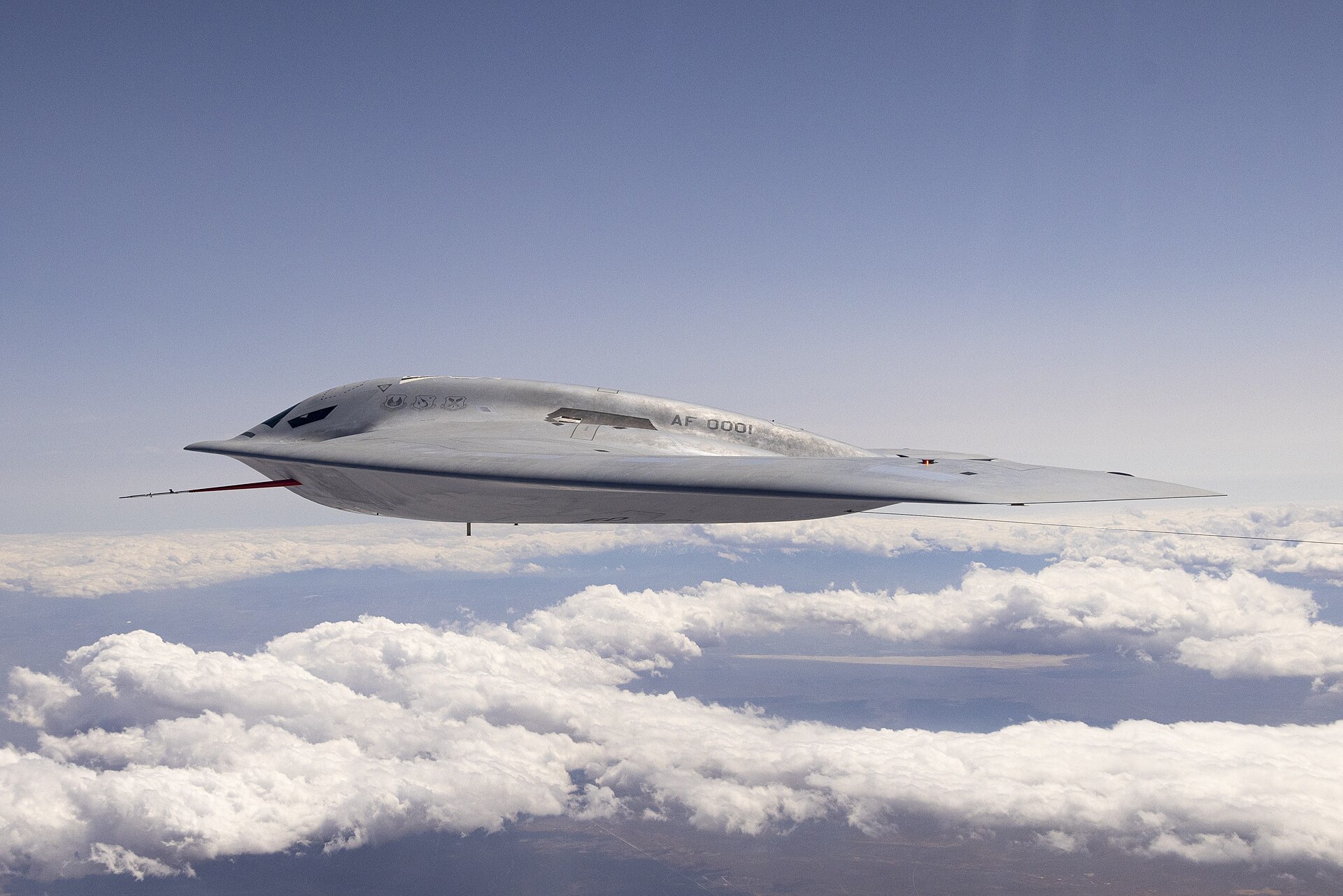
First Operational B-21 Stealth Bombers Remain Due at Ellsworth in 2027
The first operational Northrop Grumman B-21 Raider stealth bombers remain scheduled to arrive at Ellsworth Air Force Base in South Dakota in 2027, Gen. Dale White confirmed Wednesday, July 29, during Life Cycle Industry Days in Dayton, Ohio. White, who oversees a portfolio of critical major weapon systems, said the aircraft would be “on the ramp” next year, according to an official Air Force account of his address. The confirmation keeps the operational-fielding date projected in February intact.

The date matters because the B-21 is not operational today. It remains in initial production while flight testing, mission-system work and preparations at its first operating base proceed in parallel. The first test aircraft began flying at Edwards Air Force Base in California in 2023, and a second joined the flight-test program in 2025 as the Air Force worked to integrate weapons and critical mission systems.
A 25% capacity increase supports the schedule
The industrial piece behind the 2027 target is a reported 25% expansion in B-21 production capacity. Northrop Grumman is manufacturing the bomber, and the Air Force says $4.5 billion in previously authorized funding supported the capacity increase.
Capacity, however, is not the same as completed output. Expanding factory space, tooling, staffing or supplier capability can create room to build aircraft more quickly, but it does not establish that the production system has already reached its intended rate. The program is designed to ramp gradually toward approximately seven aircraft per year, with no disclosed date for achieving that level.
That distinction is important for interpreting the 2027 fielding promise. White’s statement confirms the planned arrival of operational aircraft at Ellsworth; it does not confirm that mature annual production has been reached. Early deliveries can proceed while a manufacturing line continues moving up its learning curve, stabilizing supplier flow and increasing throughput.
For a low-rate, complex aircraft program, the practical test is whether production expansion remains synchronized with flight-test findings and configuration changes. Aircraft built during an active test program may require updates as systems mature. The available information does not identify the extent of any such work on the B-21, but managing design changes without disrupting delivery is a standard constraint when testing and production overlap.
Flight testing and funding remain open milestones
The two-aircraft flight-test progression provides visible evidence that the program has advanced beyond a single test asset. It does not, by itself, establish that weapons integration, critical mission-system integration or the broader test campaign is complete. The Air Force has not provided completion dates for those activities in this update.
Funding also carries an important boundary. The fiscal 2027 budget request proposes $6.1 billion for the B-21 program, but requested money is not enacted money. Until the budget process is completed, that amount remains a proposal rather than confirmed program funding. The already authorized $4.5 billion supporting expanded capacity is therefore the firmer industrial milestone.
The longer-range requirement gives that expansion context. The Air Force seeks at least 100 B-21s over the coming decades to replace portions of its aging B-1B Lancer and B-2 Spirit fleets. A fleet objective of that size depends on more than getting the first aircraft to South Dakota: it requires repeatable production, a stable supplier base, trained personnel and sustained funding across many budget cycles.
Ellsworth’s 2027 arrival is consequently best read as the beginning of operational fielding, not the completion of the B-21 transition. The schedule is still holding, flight testing now involves two aircraft, and manufacturing capacity has grown by 25%. The unresolved measures are equally clear: completion of systems integration, enactment of fiscal 2027 funding and the date at which production can actually approach seven bombers per year. Those milestones will determine whether the first arrival becomes a durable fleet ramp rather than a stand-alone delivery achievement.
By David Whitaker — Associate editor for AMI’s aerospace and drone systems desk, translating flight systems, aircraft programs, spaceflight, and UAV developments into accessible technical stories.