LINK Control Failures Put NASA’s Swift Observatory Rescue at Risk
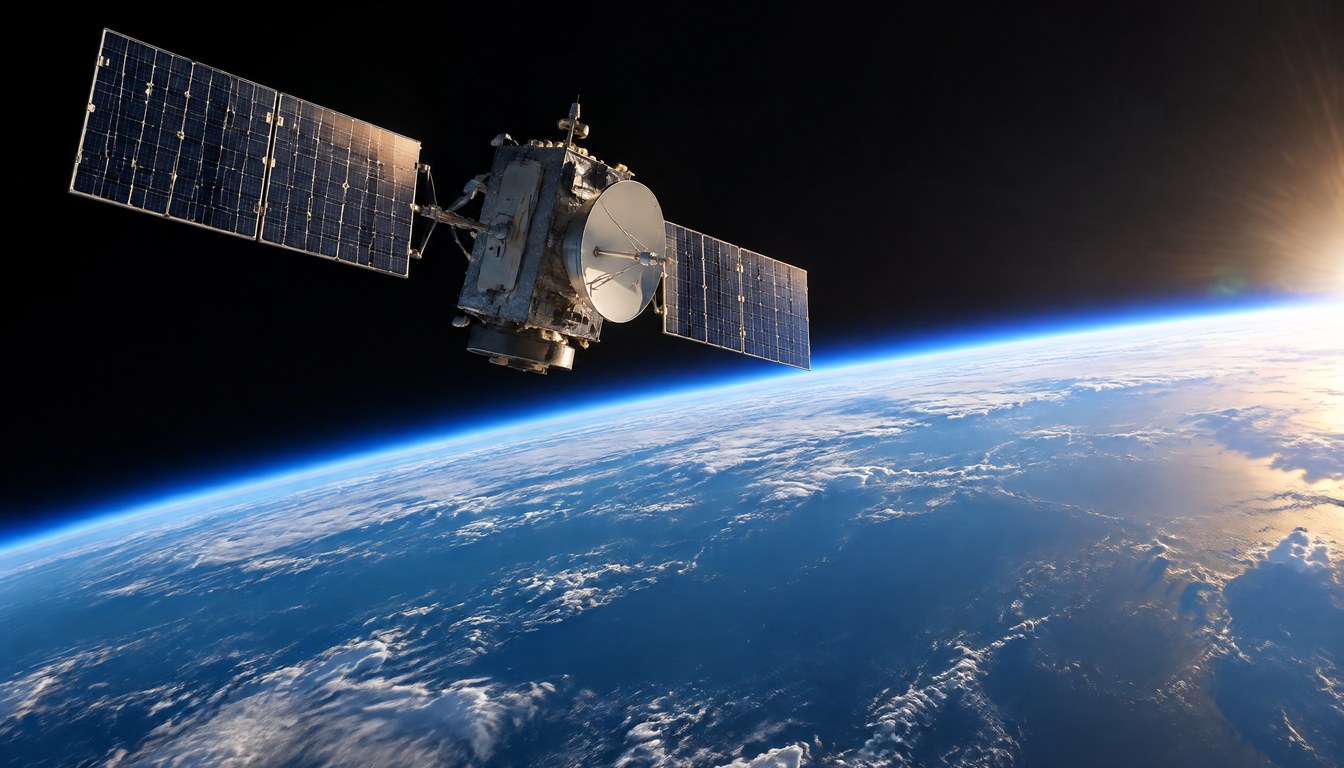
Katalyst Space’s LINK rescue spacecraft lost most of its reaction-wheel control and some cold-gas-thruster functionality over the weekend, putting its time-sensitive attempt to save NASA’s descending Neil Gehrels Swift Observatory in doubt. In a July 28 commissioning update, NASA said the control problem caused LINK to spin and communicate sporadically. Two of its three reaction wheels are currently inoperable, and engineers must regain stable control before deciding whether LINK can safely approach, capture and boost Swift.

Katalyst’s preliminary investigation attributed the wheel losses to a power-system problem. NASA said LINK remains power positive and in communication with its operators, while its other major subsystems are functioning as expected. Those are important signs of spacecraft health, but they do not establish that the rescue can proceed.
The immediate recovery effort is using LINK’s gimbaled electric-propulsion system to arrest the spin. Katalyst reported that a series of burns reduced the rotation rate from approximately 9 degrees per second to approximately 4 degrees per second. The company said the burns were producing the intended effect, although stabilization has not yet been confirmed.
Why two failed wheels matter
Reaction wheels orient a spacecraft by changing the speed of internal flywheels. The resulting exchange of angular momentum turns the spacecraft without consuming propellant. A three-wheel arrangement provides control around three axes, so losing two wheels leaves LINK unable to rely on its original control architecture for fully stabilized pointing.
The cold-gas system presents a separate constraint. Those thrusters support the fine maneuvering needed as LINK closes in on Swift. NASA has described only “some loss of functionality,” without specifying the extent, so it is too early to determine how much proximity-control authority remains. What is clear is that the combination of two unavailable wheels and degraded thrusters directly affects the systems needed for precision rendezvous.
Electric propulsion offers a recovery path, but not a simple replacement. LINK’s xenon-fueled thrusters were intended to move the servicing craft toward Swift and then raise the observatory’s orbit over several months. Their gimbals allow thrust direction to be adjusted, giving engineers another means of countering the spin. Using them for attitude recovery, however, requires a revised controller built around the actuators that remain available.
Katalyst is developing that controller by remapping available actuators, retuning its control algorithms and validating the changes in simulation before activating them in orbit. If stable attitude is restored, the company also plans to update LINK’s guidance, navigation and control software for the degraded hardware configuration.
Stopping the spin is only the first gate
A successful stabilization burn would not automatically clear LINK to capture Swift. NASA and Katalyst must then assess spacecraft health and determine whether a revised approach can be conducted safely. That distinction matters because maintaining broad attitude control in open space is not the same task as maneuvering near an uncrewed observatory that was never designed for servicing.
The schedule leaves limited margin. LINK launched July 3 aboard a Northrop Grumman Pegasus XL rocket from Kwajalein Atoll in the Marshall Islands. The $30 million mission was commissioned because space weather increased atmospheric drag on Swift, accelerating its orbital descent. Without a boost, the observatory is expected to reenter and break up by the end of the year; if it drops too low, an attempted rescue will no longer be practical.
Swift has operated since 2004, far beyond its planned two-year mission. It studies gamma-ray bursts and other transient phenomena in visible, ultraviolet, X-ray and gamma-ray light. Its continued scientific value is why NASA accepted the challenge of capturing a spacecraft with no original provision for robotic servicing.
LINK’s recovery now has two distinct tests: engineers must first prove they can control the servicing spacecraft with its reduced hardware, then prove that configuration is precise and dependable enough for proximity operations. The electric-thruster burns have reduced the spin, but the mission’s decisive engineering question remains unresolved: whether improvised control authority can meet the much tighter demands of approaching and capturing Swift before the observatory falls beyond rescue range.
By David Whitaker — Associate editor for AMI’s aerospace and drone systems desk, translating flight systems, aircraft programs, spaceflight, and UAV developments into accessible technical stories.