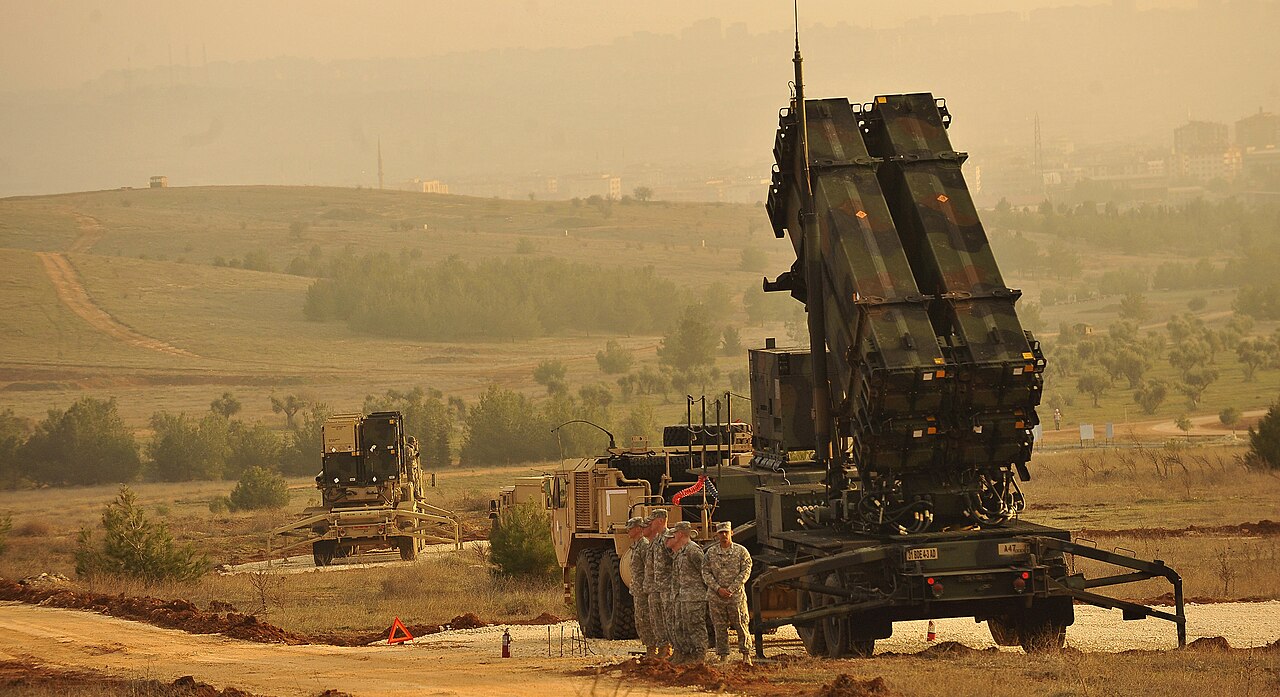
Patriot and Terminal High Altitude Area Defense Restock Could Take Over Three Years
Restoring U.S. Patriot and Terminal High Altitude Area Defense interceptor inventories to their pre-war levels could take slightly more than three years, according to a July 30, 2026 assessment by the Center for Strategic and International Studies. That timeline could stretch further if operational demand remains high, leaving fewer interceptors available for another major conflict or for allied support while manufacturers expand production.

The estimate is not an official Pentagon inventory projection. CSIS calculated that U.S. forces may have expended as much as 67% of the Patriot inventory and 48% of the THAAD inventory since the war with Iran began. Its estimated remaining stocks range from 759 to 827 Patriot interceptors, down from 2,330, and 234 to 278 THAAD interceptors, down from 452. The Pentagon did not provide specific official inventory figures in its statement on the issue.
Retired Marine Col. Mark Cancian, a senior adviser with the CSIS Defense and Security Department, said present inventories should remain sufficient to support operations against Iran for some time. The wider readiness issue is opportunity cost: every interceptor used now is one that cannot simultaneously be reserved for a different contingency or transferred to an ally or partner.
Large contracts do not produce missiles immediately
The Army is giving industry a longer and stronger demand signal. On July 29, it awarded Lockheed Martin a $53.86 billion modification that converts the Patriot Advanced Capability-3 production arrangement into a seven-year procurement. The official contract notice puts the agreement’s cumulative face value at $58.62 billion and its estimated completion date at March 31, 2035.
That ceiling should not be confused with missiles already delivered or even cash immediately released. The contract notice said no funds were obligated at the time of the award. Congressional approval of the Pentagon’s next fiscal-year budget remains one variable in how quickly orders, supplier investments and deliveries can proceed.
Lockheed Martin has said the additional Patriot funding should allow it to triple production capacity for the advanced PAC-3 Missile Segment Enhancement interceptor by the end of 2030. The future tense matters. Capacity expansion requires qualified suppliers, equipment, facilities, trained labor and validated production processes before a higher annual rate becomes real output.
THAAD faces a similar lag. Lockheed Martin received a nearly $35 billion agreement in June intended to quadruple interceptor production over seven years. Separately, the government, Lockheed and L3Harris established a seven-year framework covering propulsion components for both PAC-3 MSE and THAAD. L3Harris said its THAAD portion is expected to quadruple production of the interceptor’s propulsion hardware, but the framework was still expected to be finalized later in 2026.
Lead time is the central constraint
Virginia Burger of the Project on Government Oversight characterized three years as a conservative minimum. She said industry typically takes 42 months to complete a Patriot contract and 53 months for a THAAD contract because these interceptors depend on complex supply chains and tightly integrated computing, software and hardware.
Those figures explain why procurement value and replenishment speed are not interchangeable. A multiyear agreement can justify factory construction, supplier tooling and workforce hiring by giving companies predictable demand. It cannot compress every material order, component qualification, assembly step and acceptance requirement into an immediate inventory increase.
The restock calculation is also a moving target rather than a simple factory-output forecast. It depends on the starting inventory, the number of interceptors delivered each year and the number expended or transferred during the same period. Continued heavy use could therefore offset part of the planned production increase even as factories raise their output.
The new agreements address a real industrial problem: suppliers need sustained demand before committing capital to specialized production. But the clearest readiness measure is delivered, accepted interceptors not contract ceilings or planned factory rates. On the available estimates, the United States is beginning a multiyear rebuild, and another burst of demand could push recovery well beyond three years.
By David Whitaker — Associate editor for AMI’s aerospace and drone systems desk, translating flight systems, aircraft programs, spaceflight, and UAV developments into accessible technical stories.