Senate Block Leaves Qatar-Origin Air Force One Conversion Spending Open
A Senate objection on Wednesday prevented a proposed ban on further Pentagon spending for the Qatar-origin Boeing 747-8 used for presidential service from passing by unanimous consent. Sen. Deb Fischer objected on the Senate floor to Democratic Leader Chuck Schumer’s request to adopt the Presidential Airlift Security Act, leaving the Pentagon able to pursue additional taxpayer-funded conversion work. The procedural action did not authorize new spending, establish a conversion budget or approve a specific package of modifications.

That distinction matters because the central cost question remains unanswered. Schumer called the aircraft a $400 million gift and said taxpayers could face hundreds of millions of dollars in modification expenses, but those were his assertions rather than a Pentagon estimate. No official total has been provided for the aircraft’s acquisition, initial conversion, additional work or long-term operation.
A commercial 747 conversion is more than an interior refit
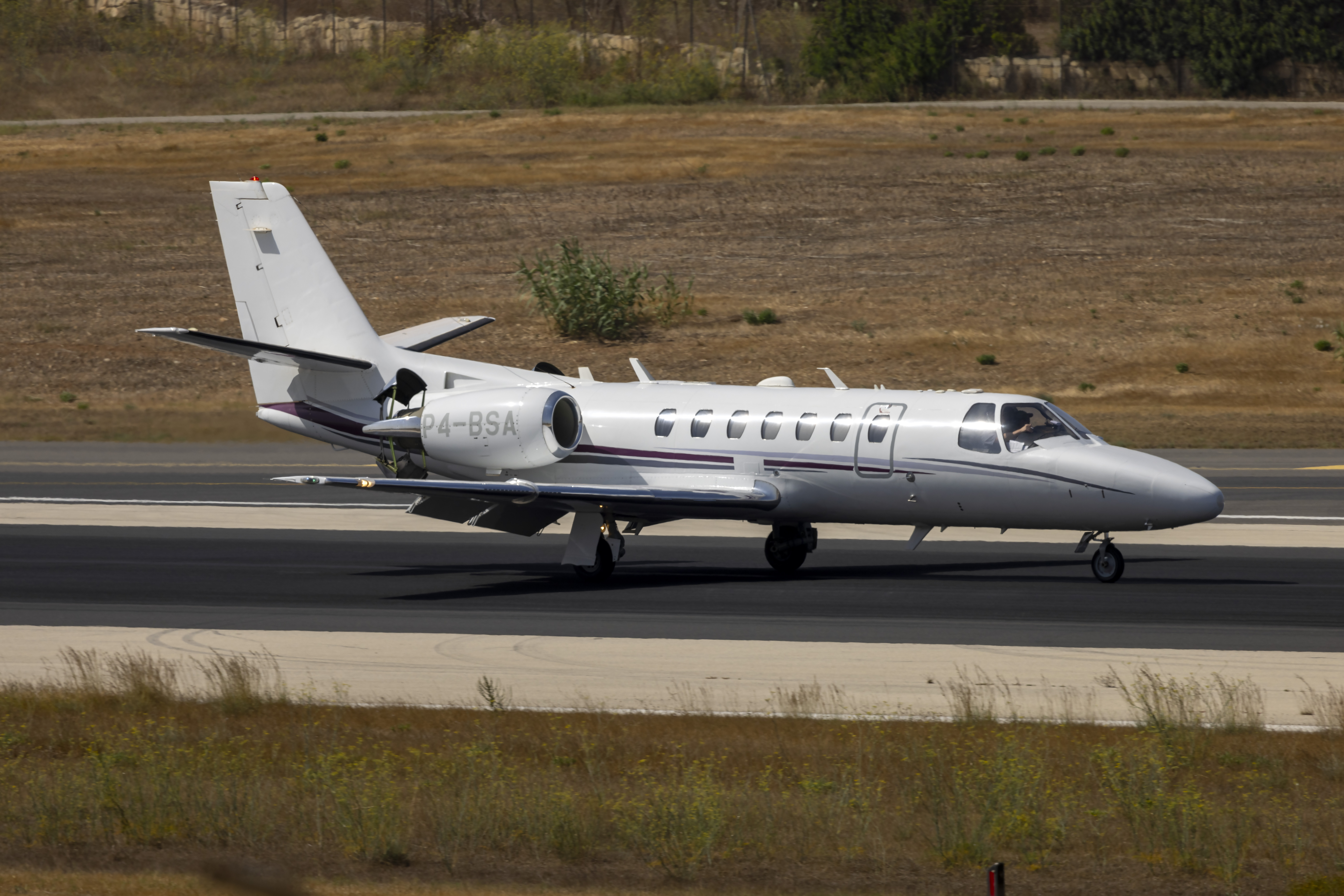
The aircraft has already undergone an accelerated conversion by L3Harris and entered presidential service as an interim, or bridge, aircraft. FlightGlobal reported that the conversion and certification took 10 months, with major elements of the existing interior retained to limit structural changes. That approach helps explain how the aircraft reached service much faster than the two purpose-built presidential 747 conversions now underway at Boeing.
It does not, however, establish that the bridge aircraft has reached its final configuration. President Trump said Sunday that it would be “maxed out,” indicating that more work was contemplated. Neither the scope of that work nor its price, schedule, certification basis and resulting service plan has been publicly specified in the information available.
For a highly modified aircraft, those categories are tightly connected. Added equipment can affect electrical generation and distribution, cooling demand, structural loading, wiring routes, weight and balance, electromagnetic compatibility and maintenance access. Any material configuration change must also be documented and evaluated under the applicable military airworthiness process. A compressed installation schedule can reduce calendar time, but it does not remove the engineering integration or verification burden.
Cost comparisons require careful boundaries
The bridge aircraft should not be treated as directly equivalent to Boeing’s two full presidential-aircraft replacements. Boeing is modifying those aircraft under a $3.9 billion fixed-price development contract signed in 2018, while subsequent government-funded changes have lifted the cumulative contract value above that initial figure. The Air Force has said the government will not bear Boeing’s internal cost growth for work covered by the fixed-price arrangement.
Boeing’s experience nevertheless illustrates why conversion costs cannot be inferred from the donor aircraft’s market value. The company has attributed recent program expenses to structural and wiring installation, added production resources and airworthiness-certification requirements. The first of those two aircraft is now targeted for 2028, four years later than the original 2024 expectation. A bridge conversion with a narrower configuration can be completed faster, but that speed may purchase less capability, a shorter service period or additional upgrade phases rather than full equivalence.
Security-related conclusions also require restraint. Schumer said the Qatar-origin aircraft was not sufficiently secure for a recent return flight from Turkey, while The New York Times attributed the aircraft change to a security precaution and reported that the newer jet did not have all the features of the older presidential aircraft. Those accounts are not public engineering findings, and sensitive protective configurations should not be inferred from them. The confirmed point is narrower: subsequent statements about further outfitting leave the final configuration and its operational boundaries unclear.
The proposed ban may reach beyond one aircraft
Fischer said the legislation’s wording could also impede the Survivable Airborne Operations Center program because that effort uses aircraft acquired from Korean Air. That separate program is intended to provide a hardened airborne command post during a nuclear conflict. Her argument does not determine the bill’s legal effect, but it identifies an important procurement issue: a restriction written around foreign-origin aircraft could capture more than the Qatar-origin 747 if it is not limited by aircraft, contract or mission.
The Senate action therefore settled only the immediate procedure. It did not decide how much additional work the bridge aircraft needs, what taxpayers may pay, how long it will remain in service or whether a narrower spending restriction could avoid affecting another command-aircraft program. Until the Pentagon defines the remaining configuration, certification path and service plan, the public-cost debate lacks the baseline needed for a credible estimate. In complex aircraft conversions, the airframe’s purchase price is only the starting point; requirements stability and integration scope determine the real bill.
By Thomas Caldwell — AMI’s senior editor for mechanical and mobility engineering, covering vehicle electronics, systems integration, electrification, chassis systems, propulsion, and safety policy.